
 English
  Arabic
  Spanish
  German
 Glass kitchenware sourcing from China has become second nature for brands operating at scale. The manufacturing infrastructure exists, the pricing works, and the quality—when you find the right partner—holds up against anything produced elsewhere. But the gap between a smooth sourcing operation and a frustrating one comes down to how systematically you approach manufacturer selection, quality verification, and logistics coordination. Brands with IKEA-level expectations need suppliers who understand what that actually means in practice.
Finding Borosilicate Glass Manufacturers Who Can Actually Deliver
The search for reliable borosilicate glass kitchenware suppliers in China starts with understanding what separates capable manufacturers from those who simply claim capability. Production infrastructure matters enormously here. A facility spanning 40,000 square meters with 100 advanced machines represents the kind of scale that supports consistent high-volume output without quality degradation. Daily capacity of 200,000 pieces indicates genuine manufacturing depth, not just ambitious projections.
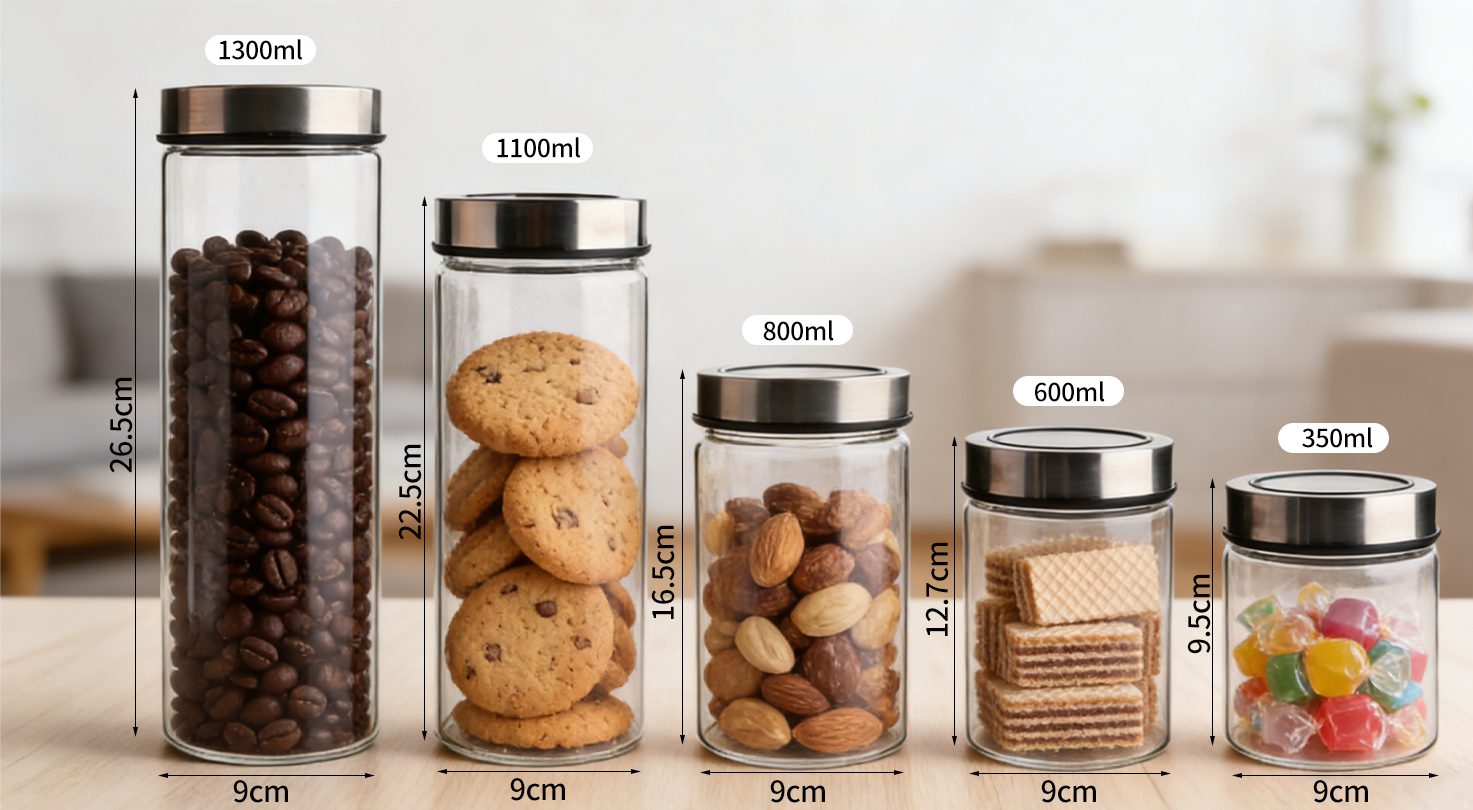
Vetting potential partners requires looking beyond marketing materials. Manufacturers specializing specifically in heat and cold-resistant borosilicate glass products—jars, water bottles, cups—demonstrate focused expertise rather than scattered capabilities. This specialization typically translates to better process control and more predictable outcomes.
| Criteria | What to Evaluate | Benchmark Capability |
|---|---|---|
| Production Capacity | Ability to meet demand efficiently. | 200,000 pieces daily |
| Facility Size | Scale of operations and potential for expansion. | 40,000 sq.m |
| Advanced Machinery | Use of modern technology for precision and consistency. | 100 advanced machines |
| Product Specialization | Expertise in specific glass types (e.g., borosilicate). | Specializes in heat/cold-resistant borosilicate glass |
| Certifications | Compliance with international quality and safety standards. | 120 testing certs (FDA, CE, LFGB) |
The certification count tells you something meaningful. Holding 120 testing certifications including FDA, CE, and LFGB indicates a manufacturer who has invested in meeting diverse market requirements rather than chasing only the easiest export opportunities.
Quality Control That Matches Global Brand Standards
Maintaining consistent quality for glass kitchenware exports requires more than good intentions. The manufacturers who serve major global brands have built systematic quality assurance into every production stage. Multi-stage inspection protocols catch problems early, from raw material verification through final product assessment. This approach costs more to implement but prevents the far greater expense of defective shipments reaching customers.
Thermal shock testing deserves particular attention for borosilicate products. The material’s low thermal expansion coefficient provides inherent resistance to temperature extremes, but manufacturing variations can compromise this property. Rigorous testing confirms that each production batch maintains the durability customers expect when pouring boiling water into a glass container.
Brands sourcing from China typically employ layered verification strategies. Third-party inspections at multiple production stages provide independent confirmation. Some brands station their own quality teams at manufacturing facilities, working directly with suppliers to implement defect prevention rather than just defect detection. This collaborative approach tends to produce better long-term results than adversarial inspection relationships.
How do IKEA-style brands ensure quality control for glass products sourced from China?
These brands combine third-party inspections at various production stages with dedicated quality teams stationed at manufacturing facilities. The teams work directly with suppliers to implement strict audit protocols and verify adherence to international standards like FDA and CE. This dual approach maintains consistent product quality while building the kind of supplier relationship that prevents problems rather than just catching them.
Custom Design and OEM Services That Protect Your Investment
Translating brand concepts into manufacturable borosilicate glass products requires genuine design-for-manufacturing expertise. The best Chinese manufacturers offer comprehensive custom design services alongside OEM and private label capabilities. But customization only creates value when intellectual property remains protected.
Manufacturers holding significant patent portfolios—45 appearance patents and 32 IP rights, for instance—demonstrate institutional commitment to protecting proprietary designs. This matters because a supplier who respects their own intellectual property typically extends that respect to client innovations.
The practical customization range covers glass body shape, capacity, opening dimensions, and surface treatments. A 500ml wholesale glass water bottle can be configured to match specific brand requirements while remaining feasible for mass production. The design collaboration process should identify manufacturing constraints early, before tooling investments lock in approaches that create quality or cost problems at scale.
What are the key considerations for intellectual property protection when manufacturing glass kitchenware in China?
Execute Non-Disclosure Agreements before sharing any proprietary designs. Register patents and trademarks in China specifically, since local registration provides stronger legal protection than relying solely on home-country filings. Select manufacturers with established IP policies and their own patent portfolios. A supplier who has invested in protecting their innovations understands why protecting yours matters.
Managing Global Distribution of Fragile Products
Shipping glass kitchenware internationally introduces complexity that many brands underestimate initially. The fragility factor requires specialized packaging approaches, and customs documentation for glass products varies significantly across destination markets. Manufacturers experienced in exporting to North America, South America, Europe, and Oceania have developed processes that minimize breakage and clearance delays.
Supply chain transparency becomes particularly valuable when shipping fragile items across oceans. Clear communication and tracking throughout the shipping process—from factory loading through final delivery—allows brands to manage inventory planning and customer expectations accurately. Problems still occur, but visibility enables faster response.
Shipping options should accommodate different timeline and budget requirements. Air freight works for urgent orders or samples. Ocean freight provides cost efficiency for bulk shipments when timing allows. The right manufacturer offers flexibility across these options rather than forcing all orders into a single logistics model.
Cost optimization extends to shipping route selection and consolidation opportunities. Manufacturers handling significant export volume develop relationships with freight forwarders that translate into better rates and more reliable service. These efficiencies compound over time as shipping patterns become predictable.
Making the Numbers Work on Chinese Glass Manufacturing
The cost-benefit calculation for Chinese glass manufacturing involves more variables than unit pricing alone. Flexible minimum order quantities—as low as one piece for samples—allow brands to test market response before committing to large production runs. This reduces the inventory risk that kills many new product launches.
Bulk order efficiencies become substantial at scale, but only when quality remains consistent. Returns and warranty claims erode margins quickly, making quality control investment directly relevant to profitability. The manufacturers offering the lowest unit prices often generate the highest total costs once defect rates factor in.
| Cost Factor | Impact on Investment | Optimization Strategy |
|---|---|---|
| Minimum Order Quantity | Affects initial capital outlay and inventory risk. | Flexible MOQ (1000 piece for samples) |
| Unit Production Cost | Influences overall product profitability. | Bulk order efficiencies, optimized manufacturing processes |
| Quality Control | Reduces defects, returns, and reputational damage. | Rigorous multi-stage QC, 120 certifications |
| Logistics | Impacts shipping costs and delivery timelines. | Efficient international shipping logistics |
| Customization | Allows for unique product differentiation. | OEM/ODM services, IP protection |
Long-term partnership value often exceeds short-term price advantages. Suppliers who understand your quality requirements, design preferences, and logistics constraints can anticipate needs and prevent problems. Building this mutual understanding takes time but pays dividends in operational efficiency and product consistency.
Why Long-Term Supplier Relationships Matter
Stable manufacturing partnerships provide predictability that transactional sourcing cannot match. Xuzhou Jianmei Glass Products Co., Ltd. has operated since 2014, building the kind of institutional knowledge that supports consistent performance across changing market conditions. A 200-employee team dedicated to glass manufacturing represents depth that smaller operations cannot replicate.
The trust required for effective long-term partnerships develops through demonstrated reliability over multiple order cycles. Communication transparency, consistent quality delivery, and responsive problem-solving build confidence that survives the inevitable complications of international manufacturing relationships.
Brands benefit from suppliers who invest in the relationship rather than optimizing each transaction independently. Shared success creates alignment that makes difficult situations easier to navigate and good situations even better.
Partner with Jianmei Glass
Xuzhou Jianmei Glass Products Co., Ltd. brings focused borosilicate glass manufacturing expertise to brands seeking reliable Chinese sourcing partners. With 45 patents, 120 certifications, and daily capacity of 200,000 pieces, the infrastructure exists to support demanding production requirements. Contact [email protected] to discuss how this capability might serve your kitchenware line.
Frequently Asked Questions About Sourcing Glass Kitchenware from China
What certifications are essential for borosilicate glass products imported from China to Western markets?
FDA certification covers the US market, CE marking addresses European Economic Area requirements, and LFGB certification matters specifically for Germany. These certifications verify product safety, material compliance, and adherence to health standards that customs authorities and retailers expect. Reputable manufacturers maintain current documentation for all relevant certifications and provide copies readily during the qualification process.
What is the typical minimum order quantity for custom glass kitchen products from Chinese manufacturers?
MOQ requirements vary significantly based on customization complexity and manufacturer policies. Many factories set high minimums that exclude smaller brands or test orders. Specialized manufacturers like Xuzhou Jianmei Glass Products Co., Ltd. offer flexibility down to single pieces for samples, allowing brands to validate designs and market response before committing to production volumes.
How do Chinese glass manufacturers ensure the heat and cold resistance of borosilicate kitchenware?
The resistance comes from borosilicate glass composition itself, which has a low thermal expansion coefficient that prevents cracking under temperature stress. Manufacturing quality determines whether this inherent property survives the production process. Reputable manufacturers conduct thermal shock testing on production batches, often exceeding minimum industry standards, to verify that jars, water bottles, and cups perform safely under extreme temperature variations.