
 English
  Arabic
  Spanish
  German
 Finding a trustworthy borosilicate glass manufacturer in China takes more than a quick search and a few emails. The material itself demands precision—get the composition wrong, and you end up with glass that cracks under heat or fails chemical resistance tests. I’ve seen buyers burned by suppliers who looked good on paper but couldn’t deliver consistent quality at scale. This guide walks through ten criteria that separate reliable manufacturers from the rest, covering everything from production capacity to intellectual property protection.
What Makes Borosilicate Glass Different from Standard Glass
Borosilicate glass earns its reputation through chemistry. The combination of silica and boron trioxide creates a material that handles temperature swings from -20°C to 300°C without cracking. That thermal shock resistance matters when you’re making bakeware that goes from freezer to oven, or lab equipment that faces repeated sterilization cycles. The low thermal expansion coefficient—around 3.3 x 10^-6 /°C compared to 9 x 10^-6 /°C for soda-lime glass—explains why it holds up where ordinary glass fails.
Chemical stability rounds out the picture. Borosilicate glass resists acids and alkalis, making it the default choice for laboratory beakers, pharmaceutical vials, and medical syringes. In consumer products, this translates to borosilicate glass cup and borosilicate glass water bottle that won’t leach chemicals or degrade over time.
The practical differences become clear when you compare the two materials side by side:
| Feature | Borosilicate Glass | Soda-Lime Glass |
|---|---|---|
| Thermal Resistance | High (up to 300°C), excellent thermal shock | Moderate (up to 150°C), poor thermal shock |
| Chemical Durability | High (resistant to acids, alkalis) | Moderate (susceptible to certain chemicals) |
| Thermal Expansion | Low (approx. 3.3 x 10^-6 /°C) | High (approx. 9 x 10^-6 /°C) |
| Density | Lower | Higher |
| Applications | Labware, kitchenware, medical, industrial | Windows, bottles, common glassware |
Assessing Production Capacity and Technical Expertise
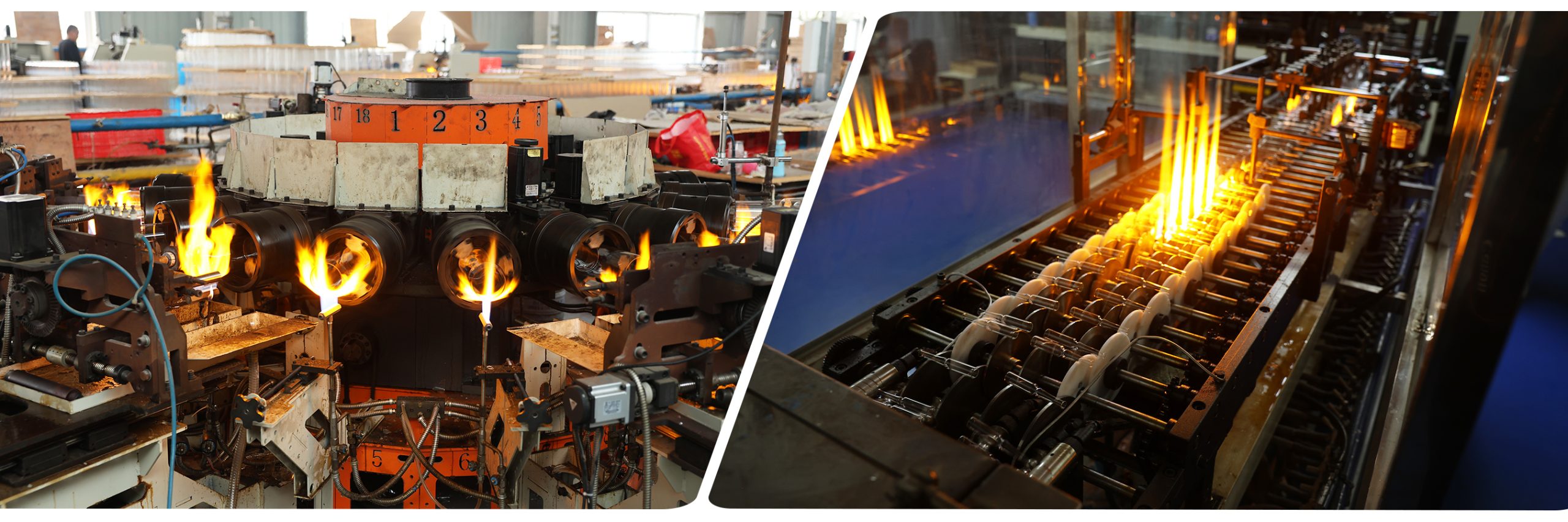
A manufacturer’s infrastructure tells you whether they can actually deliver what they promise. Xuzhou Jianmei Glass Products Co., Ltd. operates a 40,000 sq.m facility with over 100 advanced machines, producing 200,000 pieces daily. Numbers like these matter because borosilicate glass production requires precise temperature control during molding and careful annealing to prevent internal stress. Smaller operations often lack the equipment consistency needed for high-volume orders.
Technical expertise shows up in customization capabilities. A capable borosilicate glass manufacturer should handle OEM work across glass body shape, size, opening design, logo application, and packaging. Products like borosilicate glass Food Storage Jars and borosilicate drink glass water bottle require different production approaches, and the manufacturer needs experience with each variation.
How to Verify Production Capabilities and Scale
Paper claims need verification. Start with virtual factory tours to see actual operations—watch how workers handle materials, check whether quality control stations exist at each production stage, and note the condition of machinery. Third-party audits from firms like SGS or Bureau Veritas provide independent assessment of facilities and processes.
Request production reports covering output history, defect rates, and lead time performance. Sample orders reveal more than any document: evaluate whether the samples match specifications, check consistency across multiple pieces, and time how long delivery takes.
Checklist for Factory Assessment:
* Facility size and workflow layout
* Machinery type, age, and maintenance records
* Automation level on production lines
* Raw material storage conditions
* Quality control checkpoint locations
* Worker training documentation
* Environmental compliance certifications
Quality Control Systems and International Certifications
Certifications separate serious manufacturers from those cutting corners. Xuzhou Jianmei Glass Products Co., Ltd. holds 120 testing certifications including FDA, CE, and LFGB. These aren’t just badges—they represent documented compliance with specific testing protocols for food contact safety, chemical migration limits, and material composition.
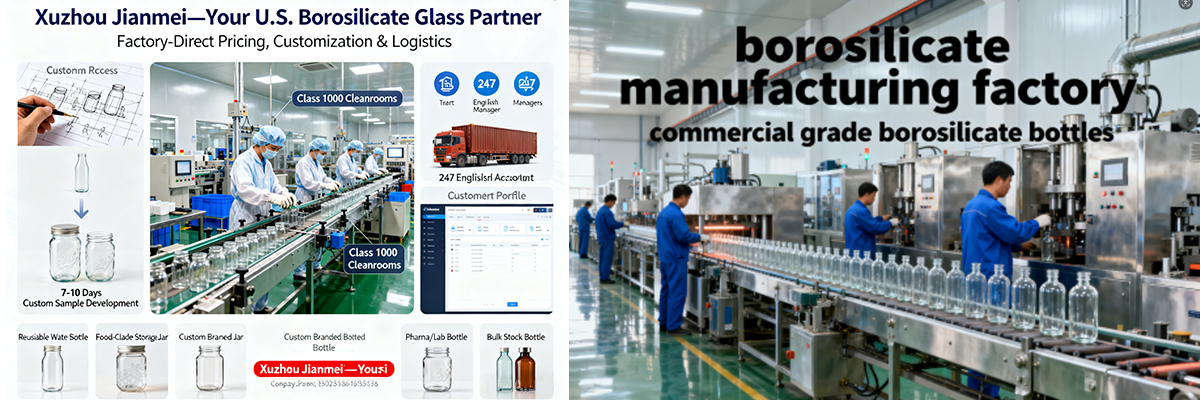
Effective quality assurance spans the entire production process. Raw material traceability ensures consistent glass composition. In-process checks catch defects before they multiply. Final testing verifies heat resistance, chemical stability, and leak-proof performance for products like borosilicate glass cup items. BPA-free and lead-free certification matters for any food-contact application.
Key Quality Certifications for Borosilicate Glass Products
Each certification addresses specific market requirements:
- FDA (Food and Drug Administration): Required for food and beverage contact products sold in the United States. Covers material safety and manufacturing hygiene.
- CE (Conformité Européenne): Mandatory for European Union market entry. Demonstrates compliance with health, safety, and environmental standards.
- LFGB (Lebensmittel-, Bedarfsgegenstände- und Futtermittelgesetzbuch): German food contact standard, often considered stricter than general EU requirements. Tests for chemical migration and material safety.
- ISO 9001: Quality management system certification. Indicates documented processes and continuous improvement practices.
Why International Certifications Matter for Export
Certifications function as market access keys. Without FDA approval, products face rejection at U.S. customs. Missing CE marking blocks European distribution. Beyond legal compliance, certifications build buyer confidence—retailers and distributors increasingly require documentation before placing orders.
| Certification | Region/Scope | Significance |
|---|---|---|
| FDA | United States | Food contact safety, material approval |
| CE | European Union | Health, safety, environmental compliance |
| LFGB | Germany/Europe | Food contact materials, comprehensive safety testing |
| ISO 9001 | Global (Management) | Quality management system, consistent production |
| SGS | Global (Testing) | Independent third-party product testing and verification |
Intellectual Property Protection Strategies
IP concerns rank among the top worries for buyers sourcing from China, and for good reason. Designs can be copied, molds can be reused for competitors, and proprietary specifications can leak. Xuzhou Jianmei Glass Products Co., Ltd. holds 45 appearance patents and 32 IP rights—a track record that signals respect for intellectual property rather than just lip service.
Protection requires multiple layers. Non-disclosure agreements establish legal obligations around confidentiality, though enforcement depends on the manufacturer’s integrity. Patent registration in China provides local legal protection—Chinese courts increasingly enforce IP rights, but only for registered patents. Manufacturing contracts should explicitly address who owns designs, molds, and tooling after production ends.
Practical Steps for IP Protection with Chinese Manufacturers
- Draft comprehensive NDAs: Cover all proprietary information including designs, specifications, and business terms. Have agreements reviewed by legal counsel familiar with Chinese law.
- Register patents in China: File design and utility patents through China’s National Intellectual Property Administration. Registration creates enforceable rights.
- Define ownership in contracts: Specify that all custom molds, tooling, and designs remain your property. Include provisions for mold destruction or return.
- Research manufacturer reputation: Check references, look for IP-related complaints, and verify their patent holdings.
- Consider escrow for sensitive files: Third-party escrow services add security for design files and milestone payments.
Building Communication and Long-Term Partnerships
Technical capabilities matter, but partnerships fail over communication breakdowns more often than production problems. Clear expectations, regular updates, and responsive customer service prevent small issues from becoming major disputes. Time zone differences and language barriers require extra effort—manufacturers who invest in English-speaking staff and structured communication protocols demonstrate commitment to international clients.
Transparency in pricing builds trust. Hidden fees for tooling, packaging, or shipping adjustments create friction. Manufacturers who provide detailed quotes and explain cost drivers make budgeting predictable. Regular production updates, including photos and inspection reports, keep buyers informed without requiring constant follow-up.
Balancing Cost and Minimum Order Requirements
Unit price comparisons miss the full picture. A slightly higher per-piece cost from a reliable borosilicate glass manufacturer often delivers better value than rock-bottom pricing from a supplier with quality inconsistencies or delivery delays. Factor in defect rates, rework costs, and the expense of managing supplier problems when evaluating total cost.
Minimum order quantities affect cash flow and inventory risk. Xuzhou Jianmei Glass Products Co., Ltd. offers a 1000 pieces MOQ for samples and custom orders, allowing buyers to test designs and market response before committing to large production runs. This flexibility supports product development without requiring substantial upfront investment.
What MOQ Should You Expect for Custom Borosilicate Glass
MOQ varies based on product complexity and tooling requirements. For prototypes and market testing, single-piece minimums provide maximum flexibility. Standard production runs typically require several hundred to several thousand units, depending on the product. Negotiation points include tooling cost amortization, tiered pricing for volume commitments, and payment terms that balance manufacturer risk with buyer cash flow needs.
Making the Final Decision on Your Manufacturing Partner
Selecting a borosilicate glass manufacturer requires weighing multiple factors: production capacity, quality systems, certifications, IP protection practices, communication quality, and cost structure. No single criterion determines success—a manufacturer might excel at production volume but fall short on customization flexibility, or offer competitive pricing but lack necessary certifications for your target markets.
The evaluation process itself reveals important information. Manufacturers who respond promptly, provide detailed documentation, and welcome verification demonstrate the transparency that predicts good partnership behavior. Those who dodge questions or resist audits signal potential problems.
Frequently Asked Questions About Sourcing Borosilicate Glass
What advantages does borosilicate glass offer over soda-lime glass for consumer products?
Borosilicate glass handles temperature extremes that would crack ordinary glass. The material withstands freezer-to-oven transitions, repeated dishwasher cycles, and hot liquid contact without degrading. Chemical resistance means no leaching into food or beverages, making it the safer choice for borosilicate glass cup and borosilicate glass water bottle products. The durability translates to longer product lifespan and fewer warranty claims.
How does R&D capability affect custom product development?
Manufacturers with strong R&D teams solve design challenges that would stall production elsewhere. They optimize wall thickness for thermal performance, develop new shapes that maintain structural integrity, and troubleshoot manufacturing issues before they affect production schedules. Patent portfolios indicate innovation history—Jianmei’s 45 appearance patents reflect ongoing development work relevant to custom borosilicate glass cup and borosilicate glass Food Storage Jars projects.
Can small businesses test products before committing to large orders?
Xuzhou Jianmei Glass Products Co., Ltd. supports small-batch testing with a 1000 pieces MOQ for samples and custom orders. This approach lets businesses validate designs, test market response, and refine specifications before scaling production. Sample programs reduce risk for new product launches, particularly for items like borosilicate drink glass water bottle where design details affect consumer acceptance.
What sustainability factors should buyers evaluate?
Environmental certifications like ISO 14001 indicate documented environmental management systems. Beyond certifications, ask about energy efficiency in furnace operations, waste glass recycling rates, and wastewater treatment practices. Labor practice verification through factory audits addresses social responsibility concerns. Material traceability ensures raw material sourcing meets ethical standards.
What problems commonly arise when importing borosilicate glass from China?
Quality inconsistencies between samples and production runs frustrate many buyers. Communication gaps lead to specification misunderstandings. IP concerns persist despite contractual protections. Logistics complications—shipping damage, customs delays, documentation errors—add unpredictability. Working with established manufacturers who have export experience and comprehensive certifications reduces these risks. Xuzhou Jianmei Glass Products Co., Ltd.’s track record in North America, South America, Europe, and Oceania demonstrates capability in managing international supply chains.
Partner with Xuzhou Jianmei Glass Products Co., Ltd. Today
Ready to partner with a leading expert in borosilicate glass manufacturing? Xuzhou Jianmei Glass Products Co., Ltd. offers unparalleled quality, custom solutions, and robust intellectual property protection. With extensive certifications and a flexible MOQ, we’re your trusted partner for innovative glassware. Contact us today for a bright cooperation and bring your vision to life! [email protected]
If you’re interested, check out these related articles:
custom glassware the new global wave in festival consumption
why is glass an essential star product for your shelves
unlock your brand potential with uv printing
what are the advantages of using insulated glass cups