 English
  Arabic
  Spanish
  German
 Sourcing custom glass water bottles for fitness brands requires more than a logo; it demands production-level attention to material specifications and quality verification to deliver bottles that withstand gym conditions. As a glassware manufacturing operations manager with over ten years overseeing borosilicate production, I have seen many brand owners focus on aesthetics while overlooking the technical factors that determine whether a bottle leaks in a gym bag or cracks after a fall. This guide walks through the specifications, customization options, and factory verification steps that turn a concept into a reliable, gym-ready product.
How Fitness Brands Benefit from Glass Water Bottles
Fitness consumers are increasingly choosing glass over plastic for hydration. Glass does not leach chemicals, does not retain odors, and offers a clean taste that aligns with wellness values. In our experience, brands that introduced borosilicate glass water bottles saw a stronger response from health-conscious buyers and gym operators. The material also reinforces a premium brand image, which helps justify higher retail prices and repeat purchases. A glass bottle signals quality the moment a customer holds it, and many fitness influencers now showcase their branded glass bottles in social media content, creating organic promotion. Additionally, glass is fully recyclable and accepted in eco-friendly markets, supporting brand sustainability claims.
How to Specify Technical Specs for Gym-Ready Bottles
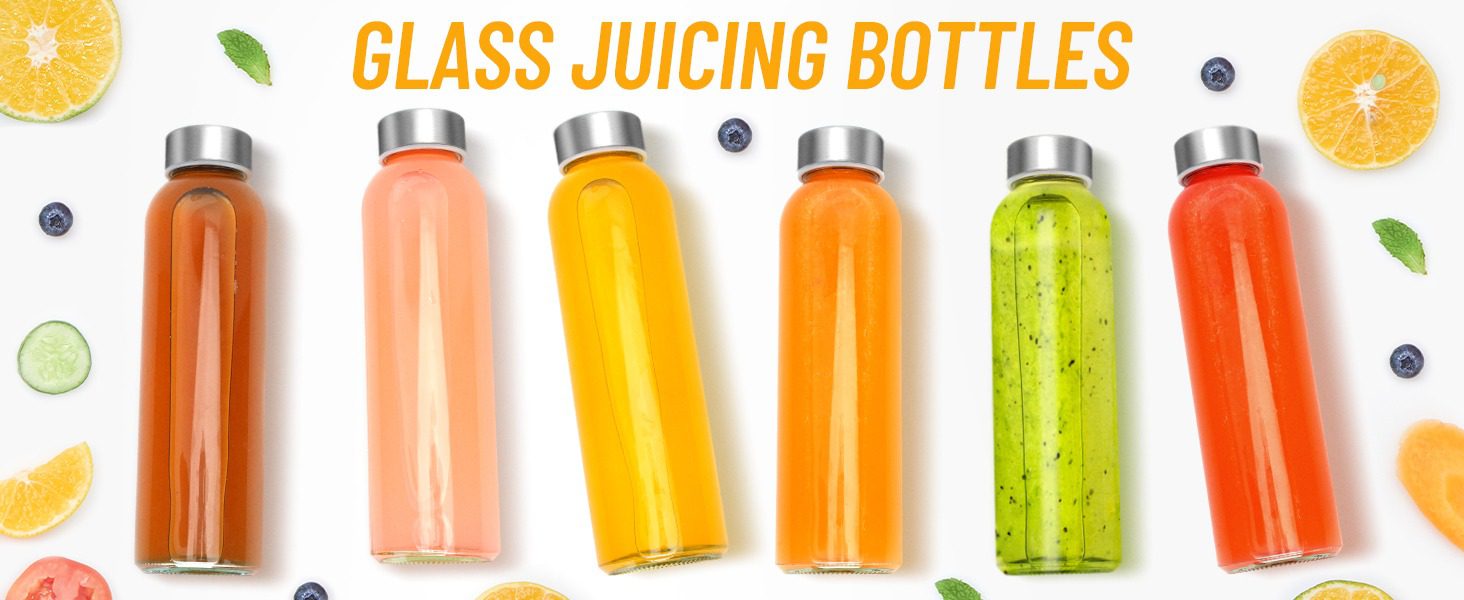
For a water bottle to survive gym use — being tossed into a locker, dropped on the floor, or filled with hot and cold drinks — it must meet specific technical requirements. The most important decision starts with glass type. We use high-borosilicate glass (3.3 expansion coefficient) that withstands temperature extremes from -20°C to 300°C without cracking. Soda-lime glass, by contrast, can shatter under sudden temperature changes.
| Property | Borosilicate Glass | Soda-Lime Glass |
|---|---|---|
| Thermal shock resistance | Excellent | Poor |
| Temperature range | -20°C to 300°C | 0°C to 100°C typical |
| Impact resistance | Higher | Lower |
| Cost | Higher | Lower |
A minimum wall thickness of 2 mm provides the impact resistance needed for repeated drops. We test bottles with a 1.2 m drop onto concrete; our borosilicate bottles pass while soda-lime fails. Leak-proof design is equally critical. The cap must include a silicone seal or O-ring that creates a watertight closure even when the bottle is tossed into a gym bag. In our production line, each bottle undergoes an air pressure leak test before packing. Designs with screw-top lids and stainless steel collars, like our 500 ml and 1000 ml borosilicate water bottles, have proven reliable in thousands of units.
How Does Borosilicate Glass Handle Temperature Swings?
Borosilicate glass has a very low thermal expansion coefficient, so it expands and contracts minimally when hot water is poured in or when moved from a hot car to an air-conditioned gym. We perform thermal shock tests: a bottle filled with boiling water is immediately plunged into ice water. Borosilicate passes without cracking; soda-lime typically shatters. This property is essential for a fitness bottle that may hold hot tea or iced water.
What Cap Designs Prevent Leaks in Gym Bags?
The most leak-resistant caps combine a threaded connection with a silicone gasket seated inside the cap. Flip lids and straw lids can work but must be tested under pressure. We have removed flip-top caps from fitness bottles after field reports of leaks when inverted. For gym use, we recommend a simple screw cap with a silicone O-ring, which achieves a reliable seal with fewer moving parts. All our fitness-oriented bottles are tested with the cap attached and the bottle inverted for 24 hours.
How to Customize Your Fitness Brand Water Bottle
Once you decide on the technical foundation, the next step is customizing the bottle to represent your brand. There are two main paths: using an existing mold shape or creating a new one. An existing mold saves time and upfront cost; you can choose from shapes like straight-walled, tapered, or contoured bottles with capacities from 500 ml to 1000 ml. In our product library, the 750 ml and 1000 ml borosilicate bottles with wood lids have been popular choices for fitness brands because the wide mouth accommodates ice cubes and fruit infusers.
If you want a truly exclusive design — perhaps a bottle with a unique silhouette, grip grooves, or a specific capacity not in our catalog — we develop a custom mold. The mold cost typically ranges from $3,000 to $5,000, and after the mold is made, the per-unit cost drops significantly when ordering quantities above 1,000 pieces. We handle the entire design process from sketch to 3D rendering, mold making, and sample production.
Logo customization options: silk screen printing (1-2 colors, durable, cost-effective for bulk orders); laser engraving (permanent, no ink, works on clear glass, gives a premium etched look); and decal transfer (full-color graphics, higher per-unit cost). For fitness brands, time markings can be added via silk screen, and silicone sleeves can be custom-colored to match your brand palette.
What Does Custom Mold Development Involve?
Mold development begins with your concept drawing. Our engineers create a 3D model, which you review. Once approved, a steel mold is machined; this takes 15 to 25 days. We then produce sample bottles for your evaluation. If any dimension, weight, or balance needs adjustment, we modify the mold. The sample stage typically includes two rounds. Only after final approval do we move to mass production. Our experience with over 45 design patents means we understand the nuances of translating a sketch into a functional glass product.
How to Choose the Right Logo Application Method?
For most fitness brands starting out, silk screen printing in white or a single brand color is the most economical choice and works well on clear glass. Laser engraving creates a subtle, high-end look that appeals to premium lines but is limited to monochrome. Decal transfers allow full-color logos but may add $0.30 to $0.50 per unit. We can walk you through sample pricing for each method so you can compare the effect on your target shelf price.
How to Verify a Manufacturer’s Quality Control
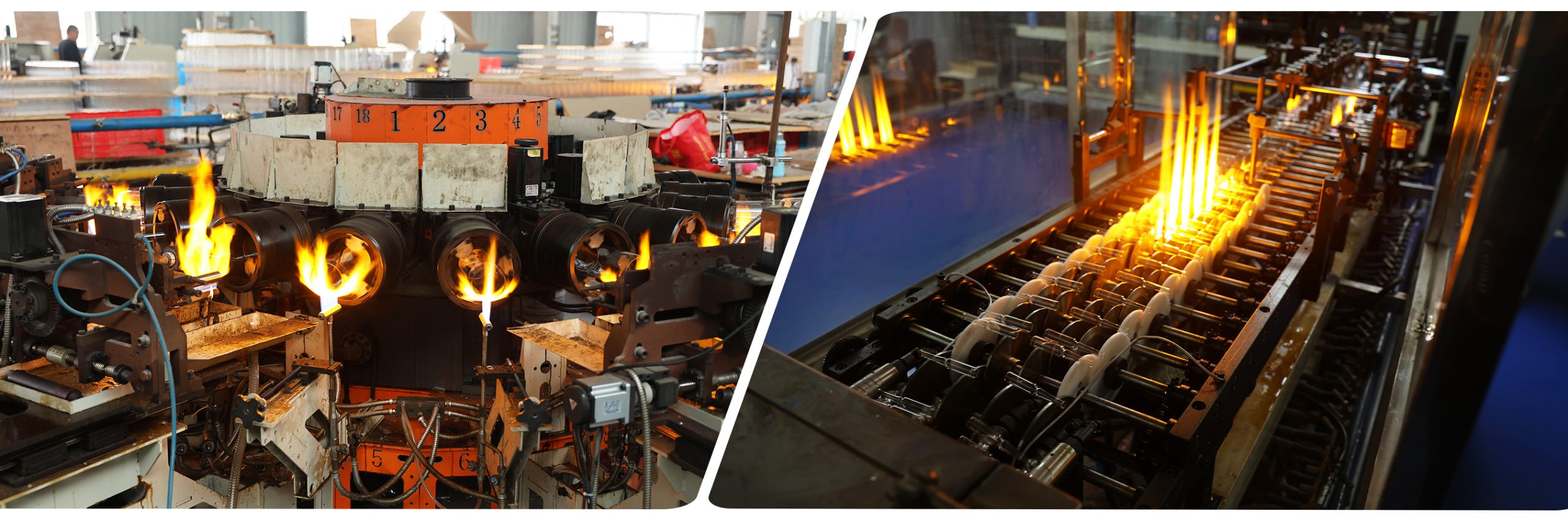
Even a beautifully designed bottle fails in the market if it leaks or breaks after a few uses. Before placing a bulk order, verify the factory’s quality control procedures. At our facility, quality control starts with the raw material. We use only 3.3 borosilicate glass tubes from certified suppliers. The glass passes through an annealing furnace with precisely controlled cooling rates to eliminate internal stress. Bottles that are not properly annealed can crack spontaneously days after manufacturing, a failure that cannot be detected by visual inspection but shows up in end-use.
On the finished product line, we perform four key tests:
1. Leak test: 100% of bottles are pressurized with air and submerged in water to detect leaks.
2. Thermal shock test: sampled bottles are cycled from boiling water to ice water.
3. Drop test: bottles are dropped from 1.2 m onto a concrete surface in multiple orientations.
4. Food-safety testing: we send samples to accredited labs for heavy metal migration (FDA, LFGB, SGS compliance).
Every shipment includes a test report from the batch. I advise buyers to request these certificates and, if possible, conduct a pre-shipment inspection through a third party. An inspector can verify that the correct logo, cap, and packaging are used and that random samples pass leak and drop tests.
If your program involves custom molds and specific certification requirements, it is worth confirming the mold amortization period and per-unit cost before finalizing your BOM; reach out to our team for a detailed quote at [email protected].
What Certifications Prove a Bottle Is Food-Safe?
For the US market, the FDA 21 CFR standard for food contact materials is essential. For Europe, LFGB mirrors FDA but with stricter migration limits for certain substances. Additionally, SGS testing adds third-party credibility. Every batch we ship comes with a compliance certificate from an ISO 17025 accredited lab. We can email example certificates for your review.
How Can You Inspect a Factory Before Shipment?
We recommend an AQL (Acceptable Quality Level) inspection based on ISO 2859. An inspector will check a random sample of bottles for visual defects, dimensions, logo accuracy, lid fit, and leak resistance. This can be arranged by you directly or through a service; we also offer our own pre-shipment inspection report. The cost is modest compared to the risk of receiving non-conforming goods.
How to Balance MOQ, Lead Times, and Packaging
When planning your first order, several commercial factors determine total cost. Minimum order quantities (MOQ) vary based on whether you use an existing mold. With a standard shape and no mold fee, our MOQ is typically 500 pieces per SKU. With a custom mold, the MOQ is 1,000 pieces to amortize the mold cost over enough units. We can split that quantity across multiple capacities if they share the same mold design.
Lead time from final sample approval to container-ready goods is 30 to 45 days, depending on order volume and complexity. Samples for evaluation can be produced in 10 to 15 days and shipped express. We recommend ordering samples early in your development cycle so you have time to test them in your market.
Packaging adds the final touch. Options range from plain white boxes to full-color branded boxes with die-cut foam inserts. A branded box increases perceived value and is ideal for retail or gift sets. Labels with barcodes and care instructions are also available. We can coordinate packaging design and confirm that the final package passes any drop tests required for e-commerce fulfillment.
The most successful fitness brands we work with treat the first order as a partnership, not a transaction. They involve our engineering team early to avoid costly mold revisions later. If you are ready to develop your custom water bottle, share your design ideas or capacity requirements with us. We will provide a detailed quotation including mold fees, unit pricing, and a production timeline. Contact Zhang Wei at [email protected] to start the conversation.
Common Questions About Sourcing Fitness Bottles
How long does it take from mold approval to production start?
Once the mold is approved, we typically require 15 to 20 days to manufacture the mold before sample production begins. Including sample evaluation and potential revisions, total time from approval to bulk production start can range from 25 to 35 days. Rush orders can be accommodated if your launch schedule is tight; please inform us of your deadline so we can adjust production priorities.
Can I order different capacities in one shipment?
Yes. We often combine 500 ml, 750 ml, and 1000 ml bottles in one container to help you meet minimums across multiple SKUs. Each capacity may require its own mold if the shape differs, but if you design a bottle that scales proportionally, the same mold base can sometimes be adapted. We will advise on the most cost-efficient approach.
What if my sample does not meet expectations?
We provide two rounds of sample revisions at no extra charge. If the sample fails a drop test or logo quality is insufficient, we adjust the mold or production parameters and produce new samples. Most issues are resolved within the sample phase, and we keep you informed of the adjustments made. Open communication throughout the process minimizes surprises.
Is borosilicate glass truly better than normal glass for gym use?
Yes. Borosilicate glass survives thermal shock that would shatter ordinary glass, and its higher mechanical strength reduces breakage in active environments. Our internal tests show that a borosilicate bottle can endure dozens of drops from 1.2 m without cracking, while soda-lime fails after one or two drops. For a gym product that will be handled roughly, the material choice is not optional; it is essential.
How do I protect my design when working with a Chinese factory?
We sign a mutual NDA before sharing any design details. Our company has 45 design patents and a strict policy against sharing client designs. Your intellectual property remains yours. If you need additional protection, we can set up separate mold ownership agreements. If you are ready to discuss your custom water bottle design, share your requirements with us at [email protected] and we will provide a mold feasibility and cost analysis.
If you’re interested, check out these related articles:
stainless steel vs glass bottles supplier guide for importers
changing glass bottle strategies for global brands
why 60 of buyers transferred orders to this chinese factory
five key points for year round promotions