 English
  Arabic
  Spanish
  German
 A well-designed glass mug gift set starts on the production floor, not in a graphic designer’s studio. The packaging structure, the printing method chosen for the brand mark, and the lead time needed to produce everything in sequence shape the final product more than most buyers realize. We have seen branding projects miss holiday retail windows because the packaging tooling took three weeks longer than expected—a delay that could have been avoided by understanding the factory timeline upfront.
Why Source Glass Mug Gift Sets Directly from the Factory
Factories that produce borosilicate glass mugs daily bring more to a gift set project than a lower unit price. Our facility in Jiangsu runs 100 molding and annealing machines across 40,000 square meters, producing 200,000 pieces per day. This scale means raw material procurement is consistent, and quality control procedures are applied to every batch, not just the final sample. For gift set buyers, that consistency translates to uniform mug wall thickness, matching logo placement, and identical packaging fit from the first box to the last.
Working directly with the manufacturer also removes a layer of communication delay. When a brand needs to adjust the foam insert depth because the mug handle sits higher than the CAD model predicted, the change happens on the same production campus—not through a trading company that forwards the message. Our quality engineers inspect the glass form and the packaging together, which reduces the risk of fitting issues that only surface when a filled box is drop-tested. Direct sourcing also gives you access to the factory’s existing certifications. We hold over 120 testing certifications, including FDA, LFGB, and CE, so the documentation package for customs clearance is already available from our records rather than requiring third-party retesting on every order.
Packaging Strategies That Protect Glass and Boost Shelf Appeal
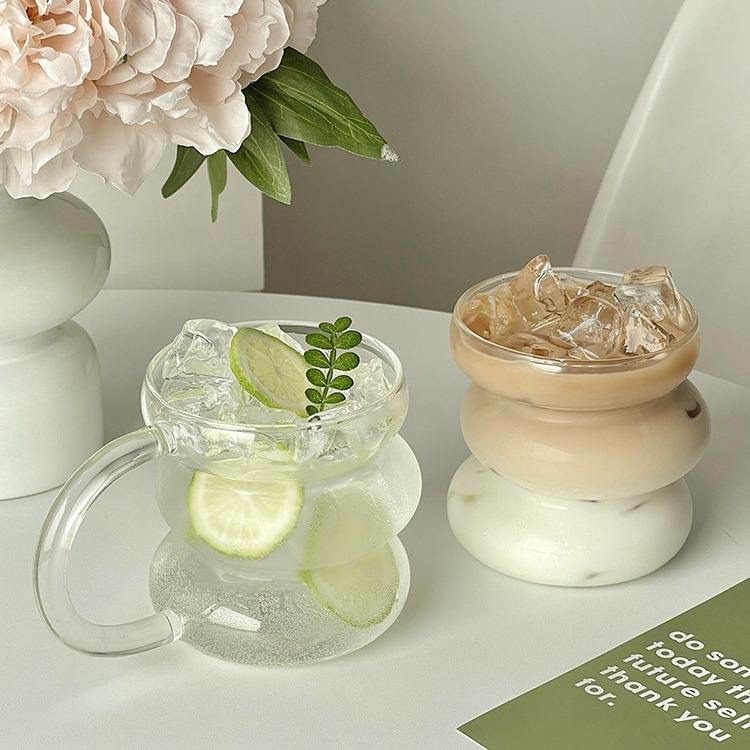
Packaging for a glass mug gift set serves two functions that often pull in opposite directions: protect the glass during international transit and present the set as gift-ready on a retail shelf. The structure that does both well is rarely an off-the-shelf box. We custom-engineer the insert to match the specific mug profile—the diameter of the base, the height of the handle, and the lip curvature—so the glass does not shift inside the carton during vibration testing.
The outer material then carries the branding weight. A rigid magnetic-close box with a matte finish and foil-stamped logo creates a premium unboxing for a corporate gift program, while a kraft cardboard sleeve with a die-cut window lets a café chain show the printed mug through the packaging without a second box layer. Both approaches protect the glass; the choice comes down to price position and the retail environment.
| Packaging Type | Protection Level | Per-Unit Cost | Best For |
|---|---|---|---|
| Kraft sleeve with EPE foam insert | Medium | Low | Retail shelf sets, subscription boxes |
| Rigid magnetic-close box with flocked insert | High | High | Corporate gifts, luxury retail |
| Wooden box with laser-engraved logo and foam | High | Medium-High | Premium gifting, whiskey mug sets |
The insert material matters as much as the outer box. We use closed-cell polyethylene foam for shipments that will travel long sea routes; it absorbs shock without shedding particles onto the glass surface. For program accounts where sustainability is part of the brand story, molded pulp inserts from recycled fiber offer chip protection while supporting a plastic-free claim. The trade-off is that pulp absorbs moisture in humid transit, so a desiccant is added, and the shipping carton requires a moisture barrier layer—a small cost increase that avoids a wet, stained box at the destination.
Choosing the Right Branding Method for Your Mug Gift Sets
On a high borosilicate glass surface, not every printing method produces the same durability or visual register. We run three primary decoration methods in-house, and the right one depends on order volume and the level of detail in the logo.
Silk screen printing applies ceramic ink through a mesh stencil and then fires the ink into the glass surface at around 600°C. The result is a permanent mark that resists dishwasher cycles and does not scratch off. It is the most cost-effective method for runs above 1,000 pieces, but each color requires a separate screen, so multi-color logos carry a setup charge per screen.
Laser engraving works differently: it removes a micro-layer of glass, creating a frosted, permanent mark. This method suits single-color, fine-line logos and text, and because no ink is used, it aligns with brands that market “chemical-free” decoration. Setup is faster than silk screen, making it economical for smaller runs of 300 to 500 pieces.
UV digital printing prints directly onto the glass and cures instantly under UV light. It allows full-color gradients and photographic reproduction without screen costs, so it becomes the best choice for complex, multi-colored branding on runs under 1,000 units. The trade-off is that UV-printed images sit on the surface and will eventually wear with repeated commercial dishwasher cycles—acceptable for gift sets that are kept on a desk or shelf, but not for daily-use restaurant service ware we produce for hospitality accounts.
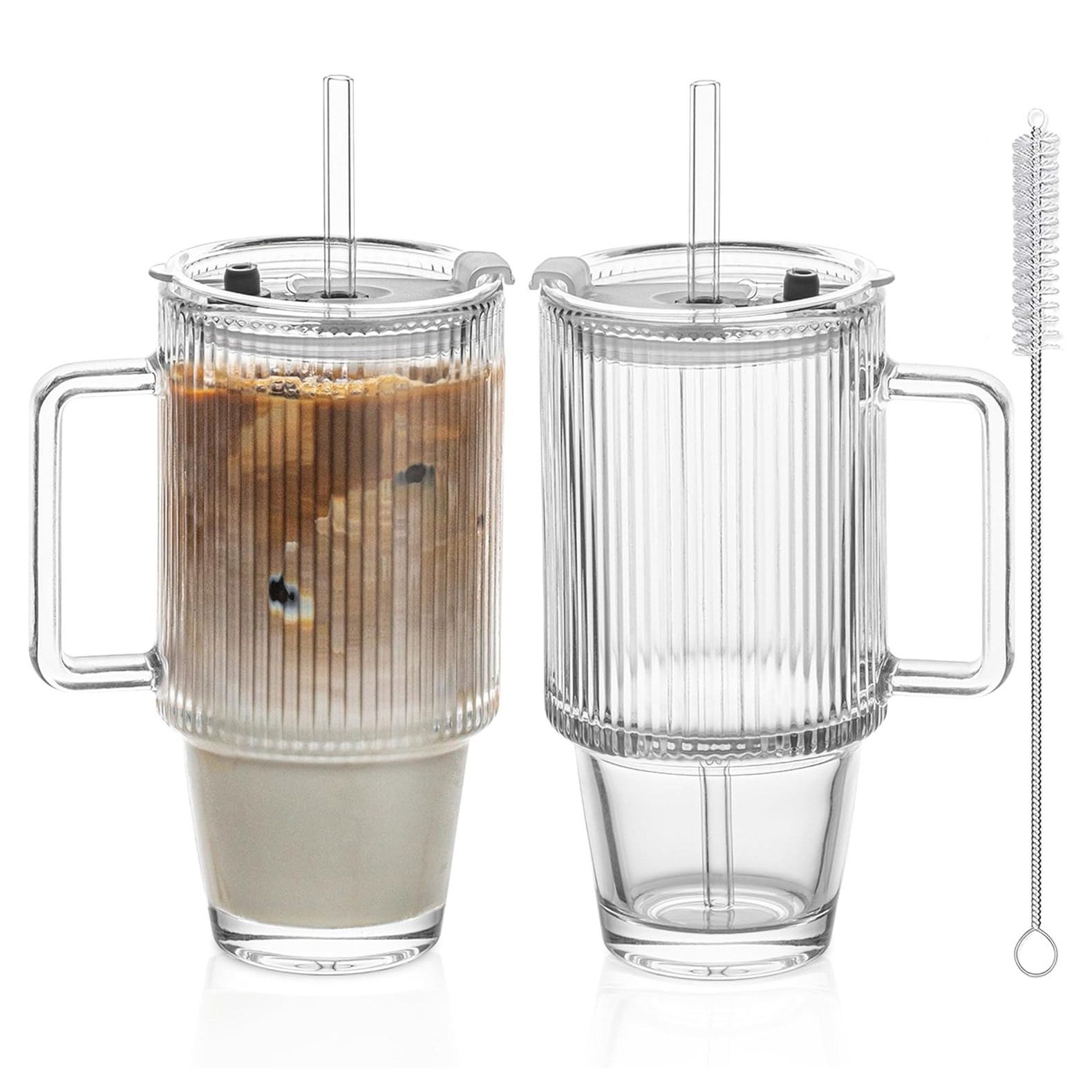
If your program involves different mug shapes within the same gift set—a traditional mug for coffee and a taller latte mug together—it is worth confirming that the same branding method applies cleanly to both profiles before committing to a single decoration process. Reach out at [email protected] with your artwork and mug selection, and we will advise on the most durable match.
Custom Molds for Exclusive Mug Shapes: What Brands Need to Know
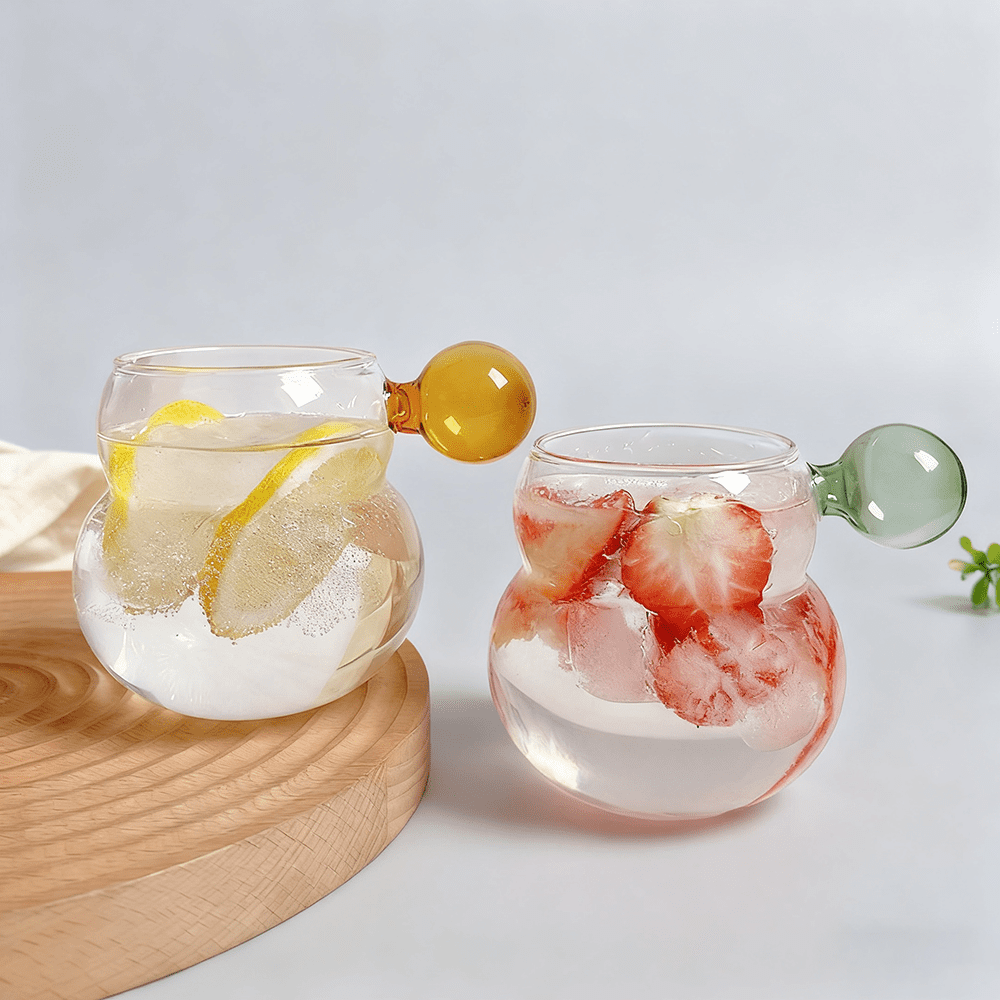
A gift set built around a standard straight-wall mug is straightforward to source. The moment a brand wants a flared rim, a faceted base, or a gourd-shaped beer mug that will not be mistaken for a competitor’s product, a custom mold becomes the starting point. We hold 45 appearance patents, many of them for custom mold designs, so this process is part of routine production planning here, not a one-off experiment.
The mold itself is machined from stainless steel to the brand’s 3D design file, with the parting line positioned to minimize visible seam and the cavity polished to a finish that produces clear glass without secondary fire-polishing. Mold fabrication typically takes 15 to 25 days, depending on complexity. Once the mold is ready, a sample run of 50 to 100 pieces is produced for the brand’s approval. Only after that sample is signed off does the mold enter the production schedule.
The cost of the mold is a one-time charge, and it belongs to the brand—if the brand ever moves production to another factory, the mold can ship with them. Budget roughly $800 to $2,500 for a single-cavity mug mold, with multi-cavity molds scaling up from there. The production savings come later: a custom mold that cycles 16 cavities per pressing station amortizes its cost across 50,000-plus units, at which point the per-unit cost of the exclusive design approaches that of a standard shape.
Managing Production Timelines and MOQ for Seasonal Gifting
The most frequent timeline mistake we encounter is a brand assuming that printing adds no time because the mug is already produced. In reality, decoration and packaging are separate process steps that follow glass forming and annealing, and each requires its own setup time. A reasonable planning sequence from finalized design to container-loading is eight to ten weeks for a first-time custom gift set project.
For reorders using an existing mold and packaging die, the timeline compresses to four to six weeks because the tooling is already qualified and the decorating screens or laser settings are stored in our production system.
Minimum order quantity depends on the level of customization. For a standard mug shape decorated with a single-color silk screen and placed in a stock gift box, we can accept orders as low as 500 pieces. Once a custom mold and custom insert tooling enter the picture, the MOQ rises to 3,000 pieces per design to cover the setup costs. We have supported brands that order 1,000-piece batches with custom packaging by billing the tooling separately and running the production alongside other orders, but this requires advance scheduling and does not work during the peak August-to-September pre-holiday crunch.
I have learned to tell buyers that the safest way to hit a holiday shelf date is to have the packaging engineer on the kickoff call. The week that gets saved by catching an insert misalignment at the CAD stage rather than the sample stage is the week that gets your gift set into the distribution center before the seasonal cutoff.
Quality Control and Shipping: Ensuring Your Gift Sets Arrive Intact
Glass mugs in gift packaging cross an ocean, a port, a warehouse, and a last-mile delivery truck before reaching the end buyer. The packaging must survive a series of impacts that test both the cushioning and the internal bracing. We conduct ISTA 3A drop tests on every new gift set configuration before shipping approval: the box is dropped from a height of 76 cm onto a concrete surface on six faces, four edges, and one corner. A pass means no glass breakage and the insert still holding the mug in position.
For brands importing into the European Union, we also provide LFGB compliance documentation on the glass composition and the packaging material, confirming that no harmful substances migrate from the glass or the ink into food or drink. For the US market, our FDA-registered facility meets the requirements under 21 CFR for food contact substances, and the glass itself is tested for lead and cadmium leachates at third-party labs.
The final check happens at our loading dock: a random sample of filled gift boxes is opened, inspected for scuffing on the outer box and for correct insert placement, and photographed. Those inspection images are sent to the buyer along with the packing list. When the container arrives, the buyer can compare the actual condition of the boxes to those pre-shipment photos—if there is damage, the cause can be traced to transit handling rather than to the factory’s packing.
Common Questions About Custom Glass Mug Gift Set Production
What is the minimum order quantity for custom glass mug gift sets?
It depends on the degree of customization. For existing mug designs with a one-color silk screen logo in a standard gift box, MOQ is 500 pieces. When a custom mold and custom packaging tooling are required, the practical minimum rises to 3,000 pieces per design. We can run smaller batches if the tooling cost is billed separately and production is scheduled during non-peak months, but this arrangement requires early coordination.
Can I include different glass products in the same gift set?
Yes, and we do this regularly for brands assembling a full drinkware collection—for example, a 300ml espresso mug and a 500ml latte mug in one box. The packaging insert is engineered with separate cavities for each product, and the branding method must be compatible with all included shapes. Both mugs come from the same production facility, which simplifies quality control and lead time.
How long does it take to produce custom-branded glass mugs?
For a first-time project with custom packaging and branding, plan eight to ten weeks from design approval to container dispatch. Repeat orders with existing tooling and stored print settings typically ship in four to six weeks. The Molding, Annealing, and Decoration stages each have fixed cycle times, so compressing the schedule below these windows is not feasible without compromising quality.
What certifications do your glass mugs have for food contact safety?
Our facility holds FDA registration under 21 CFR, LFGB certification for the European market, CE marking where applicable, and SGS testing reports. Every mug produced is BPA-free, lead-free, and food-grade. Certification documents are provided with each shipment, and third-party testing reports for heavy metal leaching can be included for buyers who need them for their own regulatory filings.
How do you ensure glass mugs don’t break during shipping?
We pass each gift set configuration through an ISTA 3A drop test before the packaging design is approved. The test simulates the drops and impacts of parcel delivery and ocean freight. Once the insert and outer box pass, that exact specification is locked for production. Pre-shipment inspection photos of randomly selected boxes are sent to the buyer before loading, so any transit damage can be isolated to the carrier rather than the factory packing. For your next order, send us your destination and retail environment details, and we will recommend the packaging specification that matches your distribution chain.
If you’re interested, check out these related articles:
five golden rules for finding excellent suppliers a procurement guide for borosilicate glass products
the ultimate guide daily actions to protect the earth
high borosilicate glass innovations driven by europes sustainability surge
valentines day and year round hot sellers