 English
  Arabic
  Spanish
  German
 If your beer mug lineup looks like everyone else’s, you are not competing on product — you are competing on price. A gourd-shaped glass beer mug changes that equation. The silhouette is immediately recognizable, feels better in the hand than a straight-sided mug, and communicates craftsmanship before the first pour. Over ten years of managing high borosilicate glass production, I have seen shape-driven SKUs pull 30% higher reorder rates from bars and retailers than standard cylindrical designs, simply because they photograph well and people remember them. This article walks through what makes the shape work, what it takes to manufacture it reliably, and how to source it so your brand owns the look, not your competitor.
What Makes the Gourd Shape a Branding Asset
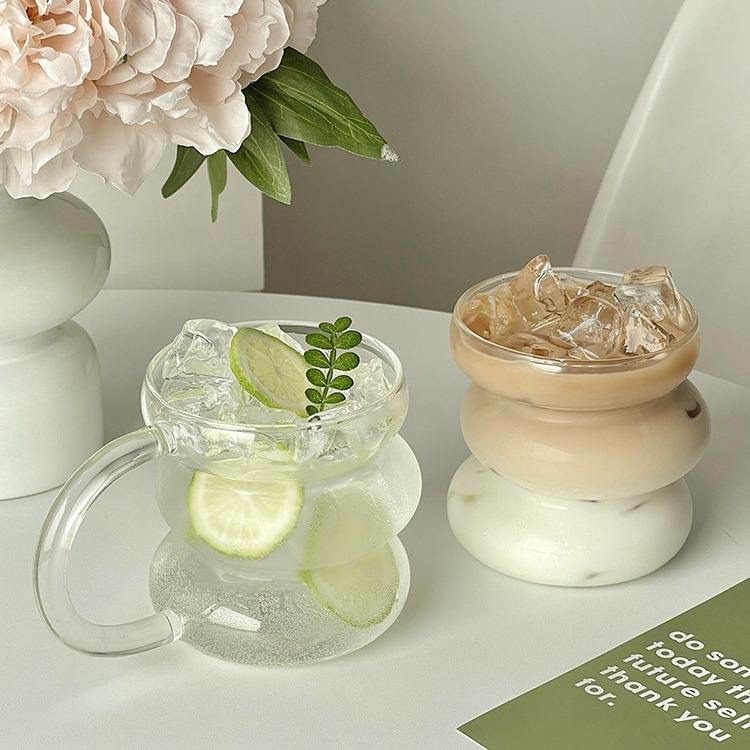
A standard beer mug is a cylinder or a slight taper. A gourd shape curves inward at the waist before flaring out at the base, creating a profile that feels traditional but looks unexpected. From a branding standpoint, the shape solves two problems. First, it is distinctive enough that customers associate it with the establishment — no one forgets which bar served them in a gourd mug. Second, the narrowed waist provides a natural grip point that reduces accidental slips compared to a straight-walled mug, especially when hands are cold or wet.
Retailers and brewery supply buyers consistently look for glassware that photographs well on social media. The curved lines of a gourd-shaped glass beer mug catch light at multiple angles, producing more visual depth than a flat-sided vessel. In our production facility, we have built molds for hundreds of custom shapes, and the ones with compound curves always generate longer supplier relationships because they are harder for competitors to copy quickly. The mold cost is higher — we will get to that — but the retail premium it commands usually covers the investment within the first production run.
Borosilicate Glass and the Demands of Gourd Molding
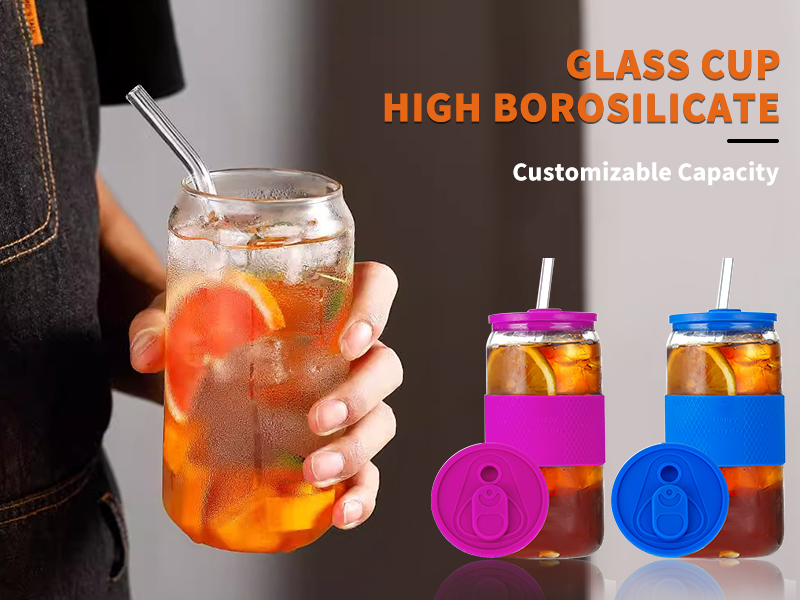
Most of the technical risk in a gourd-shaped glass beer mug sits in the mold pull and the annealing curve, not in the glass chemistry. However, choosing the right glass formulation determines whether the mug survives daily use in a busy bar or arrives at the customer with a hairline crack from thermal shock.
Why Borosilicate Glass
Soda-lime glass is cheaper, and many entry-level beer mugs use it. It works fine for ambient-temperature beer. The problem shows up when the mug goes from a hot dishwasher to a chilled beer pour, or when a restaurant stacks mugs fresh out of a sanitizer. Soda-lime glass has a thermal expansion coefficient roughly three times higher than 3.3 borosilicate glass. That means under a 60 °C temperature differential, soda-lime is far more likely to crack.
For a gourd shape, thermal stress concentrates at the waist — the narrowest wall section — because that is where the glass cools unevenly during molding. Using 3.3 borosilicate glass reduces the cracking risk at that stress point to near zero within normal service conditions. All of the mugs we produce for beer service use 3.3 borosilicate glass, and our factory tests them from -20 °C to 150 °C as part of the standard outgoing quality check. If a buyer wants to push the temperature ceiling higher — say, for mugs that double as hot sake vessels — we can adjust the annealing schedule, but 150 °C already exceeds what any commercial dishwasher or freezer will throw at it.
Mold Design and Annealing
The gourd shape requires a two-part blow mold with a precisely matched waist insert. The curve that makes the mug attractive is the same curve that creates demolding difficulty. If the waist diameter drops too abruptly, the freshly blown parison sticks to the mold wall or tears during opening. We solve this by engineering a slight draft angle into the waist transition — invisible to the eye but critical for consistent release across thousands of cycles.
After molding, the mug enters a controlled annealing lehr. The annealing time for a gourd-shaped mug runs about 20% longer than for a straight tumbler of the same wall thickness because the curved geometry develops residual stress pockets where the radius changes. Our line uses temperature profiling with multiple thermocouple zones to ramp down evenly, avoiding the stress birefringence that causes delayed fractures in shipment. When you receive a batch of gourd mugs from a manufacturer, a polariscope check on a random sample will tell you whether the annealing was rushed. If you see bright rainbow patterns concentrated around the waist, the lehr cycle was too short.
| Stress Factor | Gourd-Shaped Mug | Straight-Walled Mug |
|---|---|---|
| Thermal stress point | Waist curve | Base-to-wall junction |
| Annealing time (relative) | 1.2x | 1.0x |
| Demolding complexity | High (curved release) | Low (linear release) |
| Recommended glass type | 3.3 Borosilicate | Soda-lime or Borosilicate |
| Minimum wall thickness at curve | 2.2 mm | 2.0 mm |
Customization That Turns a Stock Item into Your Product
A gourd-shaped glass beer mug is a statement piece, but the statement belongs to the brand that puts its mark on it. The factory should treat customization not as a decoration service but as a production process integrated into the molding and finishing line.
Logo Application Methods
Three methods account for the majority of branded beer mug orders we handle. The choice depends on the visual effect you want and the durability required.
Silk screen printing applies ceramic ink through a mesh onto the mug body, followed by a curing bake. It handles up to four colors and produces a slightly raised texture. For bar use with frequent dishwasher cycles, we recommend a double-pass print with a protective overglaze. Silk screen works best on the lower belly of the gourd where the surface is flatter; applying it across the curved waist requires careful registration to avoid distortion.
Laser engraving etches the design directly into the glass surface. It is permanent, dishwasher-proof, and produces a subtle frost effect on clear borosilicate. The limitation is that it renders only in the etched tone — no color — and fine details under 0.5 mm line width may lose definition on the curved surface. We use laser engraving most often for upscale bars and corporate gift sets where a minimalist, no-wear mark matters.
Decal transfer applies a pre-printed design that is fused to the glass during annealing. It allows full-color, photo-quality graphics and works well across compound curves because the decal conforms to the surface before firing. The durability is comparable to silk screen if the firing temperature is precisely matched to the glass transition point — when it is off, the decal peels after a few hundred dishwasher cycles. Our annealing line runs decal-firing as a separate stage with tighter temperature control than the annealing lehr, which reduces the failure rate to below 1% in our outgoing inspection.
Capacity and Packaging Options
The standard capacity range for gourd-shaped beer mugs is 400 ml to 600 ml, though we have run special orders at 350 ml for tasting portions and 750 ml for German-style beer hall service. The mug’s center of gravity shifts with the waist position, so capacity changes that significantly alter the height-to-waist ratio may require a mold adjustment — worth knowing if you plan to scale across multiple sizes.
For packaging, we default to individual box packing with foam dividers for shipments under 5,000 units. For larger volumes, bulk packing in corrugated master cartons with hexagonal cell dividers reduces freight cost and breakage. Custom retail packaging (sleeve, window box, hang tag) is available and should be discussed during the sample stage so the packaging dimensions match the mug’s curved profile. A box designed for a cylinder will leave a gourd mug rattling.
If your program involves a retail channel with high product photography standards, the packaging needs to be photo-ready from the first sample. I have seen launch timelines slip by six weeks because the packaging design couldn’t accommodate the mug’s shape without resizing. Share your packaging brief when you send the mold drawing, and we can confirm the inner tray fit before the mold even goes to production — that single step saves more schedule than any expedited shipping can recover.
How to Source Gourd-Shaped Beer Mugs with Confidence
A gourd-shaped glass beer mug is not an off-the-shelf item in most supplier catalogs. The molds are custom, the demand is niche, and the production run requires a factory that understands both borosilicate glass behavior and three-dimensional mold engineering. When I talk to first-time buyers, the gap is rarely about finding a supplier — it is about knowing what to ask in the first conversation.
Start with the mold. Ask the factory to show you a comparable curved-wall product they have already produced and to share the defect rate on that mold over the last 12 months. A factory that has only run straight-walled tumblers may underquote the mold cost but cannot deliver the waist-wall consistency the design needs. Our gourd molds incorporate a water-cooled waist insert that speeds cycle time without compromising the surface finish, and that tooling detail is visible in a production video if you ask to see it.
Next, pin down the glass specification. Specify 3.3 borosilicate glass and ask for the thermal expansion coefficient on the certificate of analysis. If the COA reads higher than 3.3 × 10⁻⁶ K⁻¹, you are getting a high-borosilicate blend — not true 3.3 — and its thermal shock resistance will be lower. Food-contact certifications (FDA, LFGB, SGS) should be current for the glass composition and for any applied decoration. Our facility holds 120 testing certifications updated on a rolling schedule, and we provide individual batch reports with every shipment.
Minimum order quantity for a gourd-shaped beer mug with custom mold starts at 1,000 units, though 5,000+ units brings the unit cost down enough to justify the mold investment on the first run. Lead time runs 4 to 6 weeks from mold approval to dispatch, with an additional 7 to 10 days for custom decoration sampling. If you need to test the market before committing to a full mold, we can produce a 3D-printed resin model first — it won’t hold liquid, but it confirms the look and ergonomics before steel is cut.
Frequently Asked Questions About Gourd-Shaped Glass Beer Mugs
Is the gourd shape more fragile than a standard beer mug?
In borosilicate glass with proper annealing, the gourd shape is not inherently more fragile. The waist does concentrate stress, but if the wall thickness is maintained at 2.2 mm or above through the curve and the annealing cycle removes residual stress, the mug withstands the same drop and impact forces as a straight-walled mug. The vulnerable production point is demolding, not in-use handling. We test every new mold run with a 1-meter drop onto a hardwood surface, and the pass rate on gourd profiles matches our cylindrical mug standard once the mold parameters are dialed in.
Can I order a sample before committing to the mold?
Yes, and we strongly recommend it. The sample will not be from the production mold — since that mold does not exist yet — but we produce a hand-blown or small-run prototype using a temporary mold with the same glass composition and approximate wall thickness. This sample confirms capacity, weight, grip feel, and aesthetic proportion. Once approved, we build the production mold. The sample stage typically adds 10 to 14 days but prevents the most expensive kind of correction: tooling rework after full production has started.
What logo size works best on a curved surface?
On a gourd shape, the largest flat area is usually just below the waist on the lower belly. We recommend keeping the logo height under 40 mm to avoid crossing the curvature, where distortion increases. For silk screen and decal, we provide a surface curvature map with distortion guidelines before printing. If the logo must wrap around the waist, laser engraving handles the compound curve better because it maintains focus through axial compensation — but the bottom line is that simpler, bolder designs survive the shape better than fine text.
How does the cost compare to standard glass beer mugs?
The mold cost is higher because the gourd profile requires a more complex mold assembly, typically 30% to 50% above a straight-walled mold of the same capacity. Unit cost is driven by cycle time, which runs slightly longer due to the cooling requirement at the waist. At volumes above 5,000 units, the per-unit price lands within 15% of a comparable borosilicate cylindrical mug. The retail selling price, however, usually carries a premium that makes that differential irrelevant. Bars and breweries pay for the look, not the glass weight.
What certifications apply for food-contact beer mugs exported to North America and Europe?
For the US market, FDA 21 CFR compliance is the baseline. For the EU, LFGB or EU 1935/2004 testing is required. Both standards cover lead and cadmium migration limits from the glass and any decoration. If the mug includes a colored decal or silk screen ink, that decoration must also pass migration testing under the relevant regulation. Our laboratory provides separate reports for the glass body and the decoration on every production batch. If your importer requires additional testing — California Proposition 65 is a common request — we can arrange it through our accredited third-party lab and include the certificates with the shipping documents. Share your destination market requirements early, and we will confirm the documentation path before the order is placed. Send your part number and quantity to [email protected], and I will confirm the applicable certification set for your market.
If you’re interested, check out these related articles:
stainless steel vs glass bottles supplier guide for importers
high borosilicate glass innovations driven by europes sustainability surge
holiday seasons hottest seller alert