
 English
  Arabic
  Spanish
  German
 Most buyers treat a factory certificate as proof, but a PDF with an FDA or CE logo is not the same thing as a certificate that matches the product you are actually importing. Over ten years in high borosilicate glass production, I have watched procurement teams order from suppliers who showed clean paperwork at the sample stage and later shipped units that never appeared in the test report. That gap is what this article is about. It walks through the exact checks I would run before committing a first order: which certificates matter for glassware, how to read a test report without accepting the sales summary, how to match each document to the item and material you are buying, and how to structure a final verification request that gives you an answer before payment. s)
The Certificate Problem Most Buyers Miss
The first mistake I see is asking a supplier if they are certified and accepting the answer at face value. A factory can legitimately hold an FDA registration for food contact materials, an LFGB report for one glass formula, and a CE declaration that applies only to certain product categories. None of those automatically covers the jar, bottle, or cup you plan to import. The certificate is tied to a testing date, a specific material, and often a specific production line. If your product uses a different lid, a different silicone seal, or a different glass batch source, the original test may not apply.
That is why I do not start a supplier review with a general question like “Do you have FDA certification?” I start by sending my target product specification and asking for the exact report that supports that product. For a borosilicate glass water bottle with a 304 stainless steel lid and silicone seal, the relevant documents are not the same as those for a plain glass food storage jar. The bottle needs food-grade documentation for the glass body, the steel lid, and the seal. The jar may only need the glass and lid seal. If a factory cannot tell you which report covers which component, that is a more useful signal than any logo on their website.
At our own plant in Jiangsu, the testing files are organized by product category and component. We hold 120 testing certifications covering FDA, CE, SGS, LFGB, and related compliance work, but those records are only meaningful when the product code in the report matches the product code in the order. A buyer should always ask for that cross-check before money moves.
Chinese Glass Factory Certification Verification Steps
This is the sequence I would follow for a first order. It is deliberately specific because a vague verification process produces vague confidence.
First, request the certificate and the underlying test report, not only the certificate cover page. A certificate is often a summary. The test report shows the exact product name, model number, material composition, test method, and result. Ask the supplier to send both. If the report has a different company name, a different factory address, or a different product description, stop and ask for the matching document.
Second, check the issuing body and the report number. A valid LFGB or FDA-related report should come from a recognized third-party laboratory such as SGS, TÜV, Bureau Veritas, or an equivalent testing agency. The report number can be verified with the laboratory if you have the supplier’s permission or if the report is provided in a verifiable format. A supplier who refuses to share the report number or insists that the cover page is sufficient should be treated as unverified.
Third, confirm the test parameters. For food-contact glassware, the report should state the migration limits for lead and cadmium, the test standard used, and the material tested. A report that only says “passed” without the measured values is not a useful document. I have seen reports where the glass body passed but the printed decoration or the lid seal was never included in the test. In those cases, the cup itself was fine, but the assembled product was not verified.
Here is a practical comparison of what to request by product type:
| Product type | Documents to request | Red flags |
|---|---|---|
| Glass water bottle | Glass body report, lid report, silicone seal report | Report excludes lid or seal |
| Glass food storage jar | Glass body report, lid or gasket report | Report shows only glass, no closure |
| Glass cup or mug | Glass body report, decoration or printing report if applicable | Report excludes printed areas |
| Glass tea tumbler | Glass body report, infuser or lid report | Report only covers an unbranded cup |
| Glass spice jar set | Full set component report | Report shows a single jar, not the set |
The point is not to collect paper. It is to make sure the document follows the item all the way to the final assembled version.
Test Reports That Carry Real Weight for Certification Checks
A test report is only as good as the standard it cites. For glassware shipped to North America and Europe, the most common references are FDA 21 CFR for food contact, LFGB for German and EU buyers, and CE marking for products that fall under applicable EU directives. CE marking on glass drinkware is often misunderstood. CE does not mean the glass was tested for lead and cadmium by itself; it means the product meets the applicable EU requirements for its category. If a supplier puts a CE logo on a report without showing the directive and test basis, do not treat it as a food-contact certification.
For lead and cadmium, I ask for the measured migration result and the detection limit. A result that says “not detected” is only meaningful when the detection limit is low enough for the target market. If the method detection limit is 0.1 mg/L and the regulatory limit is 0.5 mg/L, then “not detected” can still be informative, but if the limit is 5 mg/L, the report is not giving you much protection. The buyer should compare the test method to the standard required by the destination country.
One useful step is to request a recent report. Labs issue reports for a point in time. A report from 2019 does not tell you what the current production batch looks like. I prefer documents issued within the last 12 to 24 months and then pair them with a pre-shipment inspection for the actual order. The inspection does not replace the report, but it catches batch-level drift that a three-year-old PDF cannot see.
If your program involves decorated glass, printed logos, or colored coatings, it is worth confirming whether the decoration was included in the migration test before you finalize the specification. A clean glass body can sit next to a decoration that fails heavy metal limits because the pigment or the firing process was not controlled. Reach out to [email protected] if you want help checking whether the report you received covers the decorated surface on your product. 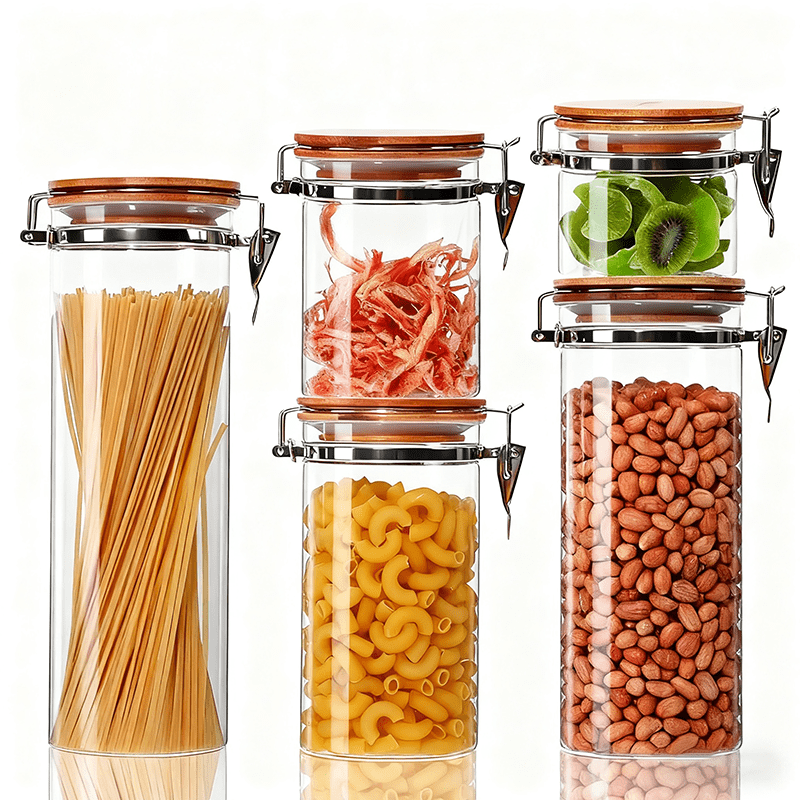
Matching Chinese Glass Factory Certifications to Your Exact Product
The most common failure point I see in document review is a mismatch between the certificate and the item in the purchase order. The certificate may say “borosilicate glass jar” and the order may be for a jar with a bamboo lid, a stainless steel lid, or a printed logo. The glass body may be identical, but the final product is different. The certificate did not test the closure or the decoration.
Whenever I receive a supplier document, I check four fields against my order: product name, model or SKU, material composition, and capacity or dimensions. If any one of those does not match, I ask the supplier to explain the difference in writing. Sometimes the difference is harmless, such as a revised SKU after a packaging change. Sometimes it means the supplier sent a generic report from a different product that they claim is similar. Similar is not the same.
For a product line with multiple sizes, do not accept one report for the 300ml jar and assume it covers the 500ml and 750ml versions. The glass formula may be the same, but the surface area to volume ratio changes, and the closure or seal may change by size. I ask for a report matrix that lists each SKU and its testing status. If the supplier cannot produce that, I reduce my order to only the verified SKUs and hold the rest until documentation is complete.
Borosilicate glass itself is a material specification, not a safety certification. A report that says “borosilicate glass” tells you the glass type, but it does not tell you the lead and cadmium migration result. You need both the material identity and the food-contact test. The same logic applies to our product library. For example, our borosilicate glass cups with wood lids are tested for the glass body, the lid, and the seal as an assembled unit where the market requires it. Buyers should ask whether the report covers the assembled product or only the glass component.
A Pre-Order Certification Checklist for Importers
Before sending a deposit, I reduce the verification work to a single checklist. This is the discipline that separates a supplier review from a supplier hope.
- Request the full test report, not only the certificate cover page.
- Verify the product name, model number, and material in the report against the purchase order.
- Check the issuing laboratory and report number.
- Confirm the test standard matches the destination market.
- Confirm the report includes the lid, seal, decoration, or any other component that touches food.
- Check the report date and ask for a recent document or batch-level inspection.
- Ask for a written explanation of any mismatch before payment.
That last step matters because a supplier who fixes documentation before the order is easier to work with than one who fixes it after you find the problem at the port.
Certification review is not a one-time event. I treat it as part of production readiness. At our facility, the compliance file and the production order travel together, and the QC team checks the product against the certificate before release. That is why I recommend buyers ask not only for certificates but also for the factory’s process for keeping the certificate matched to current production. A factory with a clear internal check will usually send clearer external paperwork.
Common Questions About Verifying Glass Factory Certifications
What is the difference between FDA, LFGB, and CE for glassware?
FDA relates to food contact material compliance for the U.S. market. LFGB is the German food and feed code often used as a stricter EU benchmark. CE marking is not a food-contact certificate; it is a manufacturer’s declaration of conformity to relevant EU directives. For glass drinkware, the most direct food-contact assurance comes from lead and cadmium migration testing under FDA or LFGB methods. CE may still appear, but you need the supporting directive and test basis.
Is a certificate enough if the supplier has been in business for years?
A long operating history does not make an old certificate current. I have seen established factories produce strong compliance files and still ship a new lid or decoration that fell outside the original report. The certificate matters, but it must match the current product. Ask for a recent report tied to your SKU, not a company profile that lists every certification the factory has ever received. A supplier can be legitimate and still have a document gap.
How do I verify a report number without offending the supplier?
You can ask the supplier to send the report through a verifiable channel or provide the issuing laboratory’s name and the report reference so you can check it with the lab. A factory that is confident in its documentation usually has no problem with this. If a supplier is defensive about report numbers, that is a risk signal. Use the request as a normal part of pre-production due diligence rather than an accusation.
Should I pay for my own third-party test?
If your order volume is large or your market has strict enforcement, a pre-shipment third-party test is one of the best ways to reduce uncertainty. You can test the actual production sample against the same standard your market requires. The factory’s existing report gives you a starting point. Your own test confirms the batch. For smaller first orders, a verified supplier report combined with a clear specification may be enough.
What if the certificate includes a product we are not ordering?
Do not accept it as evidence for your product. Different components and different sizes can have different compliance status. Ask for the report that matches your exact SKU. If the supplier cannot provide it, request a test for your item or remove the unmatched part from the order. Share your product list and destination market requirements with us at [email protected] if you want a direct review of the documents you are comparing.
If you’re interested, check out these related articles:
borosilicate glass vsordinary glasssoda lime glass
changing glass bottle strategies for global brands
taste sustainability why choose glass
how to distinguish sodalime glass from borosilicate glass
five key points for year round promotions