
 English
  Arabic
  Spanish
  German
 When spices lose their flavor prematurely, the storage container is usually the cause. Borosilicate glass spice jars outperform plastic because high-borosilicate 3.3 glass is non-porous, chemically inert, and resists odor absorption. In our production line, I’ve observed how precision annealing eliminates internal stress, enabling jars to move from a hot dishwasher to a cold counter without cracking. Retailers who stock these jars offer their customers a durable, food-safe alternative that preserves spice integrity far longer than plastic.
Material Differences Between Borosilicate Glass and Plastic for Spice Jars
Plastic containers, even food-grade polypropylene, are slightly porous at the molecular level. Over time, they can absorb oils and aromas from spices like cumin or turmeric, creating a permanent smell that transfers to the next batch. Borosilicate glass has a closed, non-porous structure that prevents any absorption. It also contains no BPA, phthalates, or plasticizers that could leach into food, a known risk with some plastics under heat or acidity.
The table below compares key material properties that affect spice storage.
| Property | Borosilicate Glass | Plastic (Polypropylene) |
|---|---|---|
| Porosity | Non-porous | Slightly porous, can absorb odors |
| Chemical leaching | None | Possible BPA/phthalate migration |
| Odor retention | None | Retains strong spice smells |
| Heat resistance | Withstands dishwasher heat cycles up to 300°C | May warp or degrade with repeated hot cycles |
| Recyclability and safety | Fully recyclable, food-grade | Limited recyclability, recycling degrades quality |
This material advantage translates directly into a better user experience. A borosilicate jar from turmeric one week and cinnamon the next will not transfer any residual taste. Plastic simply cannot offer that guarantee.
Freshness Preservation with Borosilicate Glass Spice Jars
The airtight seal matters as much as the glass. Most plastic jar threads and lids can deform with repeated use, breaking the seal and letting moisture and oxygen degrade the spices. Borosilicate jars maintain rigid threads and, when paired with a food-grade silicone gasket, create a consistent oxygen barrier. The result: volatile oils in oregano, thyme, and paprika stay potent months longer.
Thermal stability is another practical benefit. Consumers frequently run spice jars through the dishwasher. Plastic jars can warp or crack in high-heat dry cycles, but borosilicate glass handles the rapid temperature changes easily. Our factory anneals every jar to relieve internal stress, so even a hot-to-cold transition doesn’t cause breakage. For retailers, this means fewer returns and a reputation for supplying premium kitchen storage.
If your spice blend requires a specific jar shape or color to protect light-sensitive oils, share your requirements at [email protected]. We can discuss custom mold options, UV-filtering amber tints, and seal designs.
Manufacturing Quality and Its Impact on Jar Performance
Not all glass jars labeled “borosilicate” perform equally. In my ten years overseeing high-borosilicate glass production, I’ve seen how even a small deviation in annealing temperature creates micro-stresses that fail after a few dishwasher cycles. That’s why we monitor every step: automated molding to ensure uniform wall thickness, controlled annealing to lock in thermal shock resistance, and batch testing for stress fractures.
Our facility runs 100 advanced machines and produces up to 200,000 pieces daily, including jars with stainless steel lids and leak-proof silicone seals. Each product meets FDA, LFGB, and CE standards, backed by 120 testing certifications. When you see that consistency in one jar, you can rely on it across an entire container load.
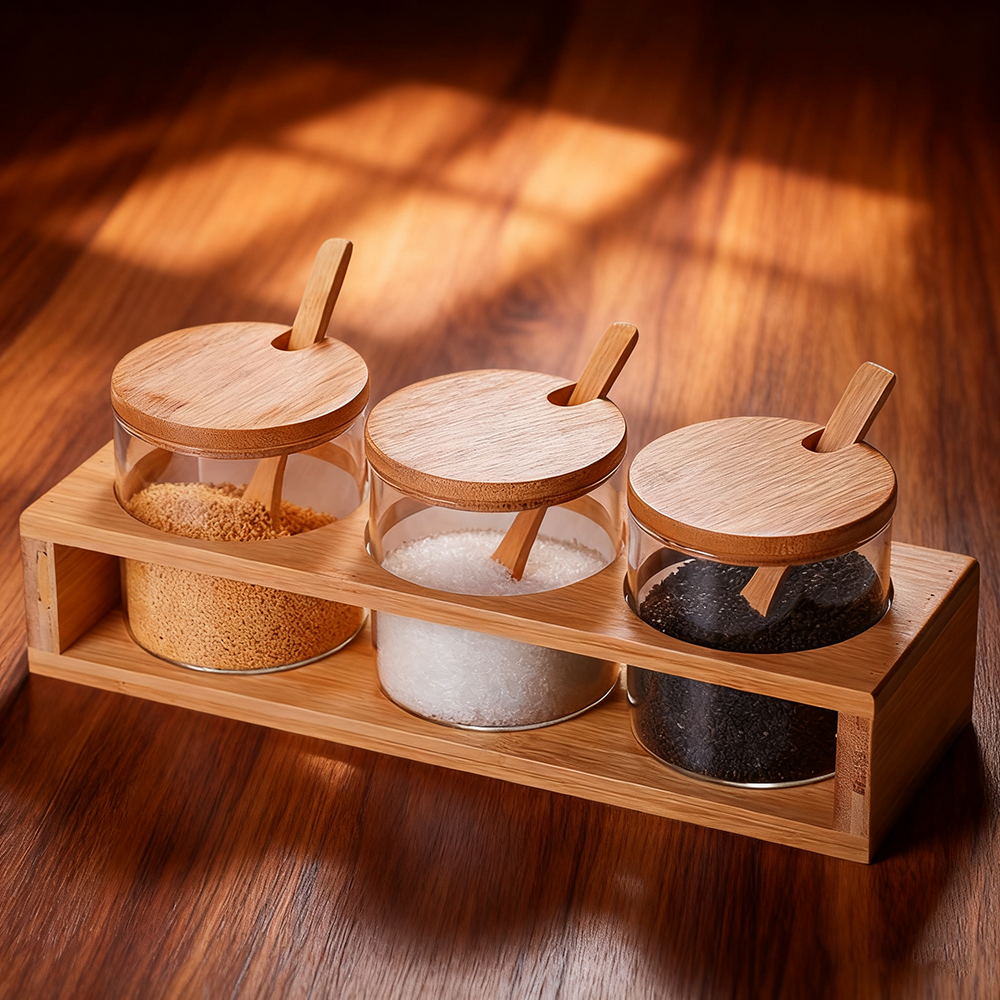
This production scale also means lead times stay predictable. A reliable factory integrates everything from glass melting to final packaging, so quality never hinges on outsourced steps.
Sourcing Considerations for Borosilicate Glass Spice Jars
A buyer evaluating spice jars should verify certifications (FDA, LFGB, or BSCI), factory capacity, and the ability to handle custom molds. Many suppliers buy pre-made jars and only print logos, but that limits your shape and size options. A true OEM partner controls the mold-making, forming, and annealing, so you can specify exact diameters, heights, and lid systems.
Check the minimum order quantity. Some factories require thousands of pieces for a new mold, but our MOQ can start at one piece for a sample, which lets you test the product before committing to volume. Look for in-house logo printing options: silk screen, laser engraving, and decal are available without outsourcing.
When the factory can show consistent daily output and direct mold expertise, the risk of delayed orders drops. Our 40,000 square meter plant and integrated supply chain allow us to deliver on tight schedules for global markets across North America, Europe, and Oceania.
Your Next Step: Custom Borosilicate Spice Jars from a Reliable Manufacturer
Sourcing a spice jar that underperforms means higher return rates and disappointed customers. Partnering with a manufacturer that controls the entire production process, from raw borosilicate melting to finished packaging, removes that uncertainty. We share your interest in long-term brand consistency.
Email [email protected] with your desired jar capacity, lid type, and planned order quantity, and our team will return a quote and sample timeline within 48 hours.
Common Questions About Borosilicate Glass Spice Jars
Are borosilicate glass spice jars dishwasher safe?
Yes. Borosilicate glass handles high dishwasher temperatures without warping or cracking. The lids, if made of stainless steel and silicone, are also dishwasher safe, but always confirm with the supplier which lid components are rated for dishwasher use. In our production, we test every jar design through repeated hot-to-cold cycles to ensure the seal stays intact.
Can glass jars break when dropped?
Borosilicate glass is stronger than regular soda-lime glass, but it is not unbreakable. A jar dropped onto a hard tile floor may chip or shatter. However, the thermal shock resistance means that rapid temperature changes, the most common cause of breakage in kitchen glassware, are not a problem. Adding a silicone sleeve or protective ring can further reduce drop risk.
What sizes and shapes are available for custom orders?
We can customize the jar body, capacity, diameter, and height. Common spice jar capacities range from 100ml to 500ml, but molds for larger sizes are also possible. Shapes include round, square, octagonal, and curved profiles. Custom mold development typically adds planning time, so share your design early.
How do I ensure the jars are airtight?
An airtight seal depends on the lid design and gasket. We use food-grade silicone gaskets inside stainless steel or wood lids to create a reliable seal that prevents moisture and oxygen entry. Before bulk production, we always send pre-production samples so you can test the seal under real storage conditions.
What is the lead time for bulk orders?
Lead time depends on order complexity and quantity. Standard jars with existing molds can ship within weeks, while custom mold development may add initial time. For larger orders requiring new shapes, send your specifications to [email protected], and we’ll verify mold feasibility and provide a timeline.
If you’re interested, check out these related articles:
changing glass bottle strategies for global brands
jm glass insights stainless steel water bottle market