 English
  Arabic
  Spanish
  German
 When I first started sourcing drinkware for children’s programs, the sheer number of material options felt overwhelming. Plastic seemed convenient until I learned more about what could leach into water over time. Stainless steel worked but felt heavy for smaller hands. Then I spent time with borosilicate glass bottles, and the difference became clear almost immediately. The weight felt right, the water tasted clean, and the durability surprised me. That experience shaped how I now approach sourcing decisions for schools and retail buyers looking for safe, long-lasting options.
Borosilicate Glass Outperforms Standard Glass for Children’s Use
Borosilicate glass earns its reputation through measurable material advantages. The composition includes boron trioxide, which creates a tighter molecular structure than conventional soda-lime glass. This structure delivers two practical benefits that matter for children’s drinkware: thermal shock resistance and mechanical strength.
Temperature swings happen constantly with kids. A bottle might hold ice water at breakfast and sit in a warm backpack by lunch. Soda-lime glass can crack under these conditions because its expansion coefficient is relatively high. Borosilicate glass handles temperature differentials up to 150°C without stress fractures. That resilience translates directly to fewer replacements and lower long-term costs for institutions buying in volume.
Chemical inertness is the other critical factor. Borosilicate glass does not interact with its contents. No BPA migration, no phthalate concerns, no lead leaching. The material remains stable whether holding acidic fruit juice or plain water. This stability means the liquid inside tastes exactly as it should, without any chemical undertones that plastics sometimes impart.
Manufacturing processes at Jianmei Glass focus specifically on food-grade borosilicate glass. Every batch undergoes testing to verify BPA-free and lead-free status. The resulting non-toxic kids drinkware meets the safety thresholds that schools and parents increasingly demand. Impact resistance also improves with borosilicate composition, which matters when bottles inevitably get dropped on gymnasium floors or cafeteria tiles.
Borosilicate vs. Soda-Lime Glass Performance Comparison
| Feature | Borosilicate Glass | Soda-Lime Glass |
|---|---|---|
| Chemical Inertness | High (No leaching) | Moderate (Potential for leaching) |
| Thermal Resistance | Excellent (Resists extreme temperatures) | Poor (Prone to thermal shock) |
| Durability | High (More resistant to breakage) | Moderate (More fragile) |
| Lead-Free | Yes | Varies (Can contain lead) |
| BPA-Free | Yes | Not applicable (Glass, not plastic) |
| Taste Neutrality | Superior | Good |
For those interested in understanding the fundamental differences between glass types, explore our article on 《how to distinguish sodalime glass from borosilicate glass》.
Certifications That Actually Protect Children
Safety standards exist for good reason, and not all certifications carry equal weight. When sourcing children’s glassware, certain credentials signal genuine compliance rather than marketing claims.
FDA approval confirms that materials meet food contact safety requirements established by the U.S. Food and Drug Administration. This certification involves testing for chemical migration and material stability under typical use conditions. CE certification indicates compliance with European health and safety directives, which often exceed baseline requirements in other regions. ISO 9001 compliance addresses manufacturing quality management systems, ensuring consistent production standards across batches.
Our facility holds over 120 testing certifications covering material composition, structural integrity, and chemical safety. This testing verifies phthalate-free status and confirms that all components meet child safety glassware benchmarks. Quality control integrates throughout production rather than appearing only at final inspection. Raw materials get tested upon arrival. In-process checks monitor dimensional accuracy and surface quality. Final verification confirms that finished products match specifications.
This layered approach catches problems early. A defect identified during forming costs far less to address than one discovered after packaging. The system also creates documentation trails that institutional buyers increasingly require for procurement compliance.
Glass Water Bottles Work Well for Young Children When Designed Properly
The question comes up frequently: can young children safely use glass bottles? The answer depends entirely on design execution. Modern glass water bottles for children incorporate protective features that address the obvious concern about breakage.
Silicone sleeves provide grip and absorb impact energy when bottles get dropped. The sleeve material is food-grade and adds minimal weight while significantly improving durability in real-world use. Leak-proof lid designs prevent spills during transport, which matters for backpacks and lunch boxes. Some designs include flip-top straws that let children drink without tilting the bottle, reducing the chance of drops.
The inherent strength of borosilicate glass combines with these protective elements to create products that handle daily use by active children. Schools that have switched from plastic to glass often report lower replacement rates than expected, partly because the perceived fragility encourages more careful handling.
Finding Reliable Glass Bottle Suppliers for Institutional and Retail Needs
Sourcing decisions for schools and retail channels involve more complexity than individual consumer purchases. Volume requirements, customization needs, and supply chain reliability all factor into manufacturer selection.
Sustainable manufacturing and ethical sourcing have moved from nice-to-have features to baseline expectations for many institutional buyers. Transparency about production processes helps build the trust that long-term supplier relationships require. Our factory offers customizable glass bottles and OEM glass products that let clients specify dimensions, capacities, lid types, and branding elements.
Production scale matters for bulk orders. Our facility covers 40,000 square meters and operates 100 advanced machines capable of producing 200,000 pieces daily. This capacity supports large-volume requirements while maintaining the quality control protocols that smaller operations sometimes struggle to sustain at scale. OEM and ODM services allow customization of glass body shape, size, opening diameter, logo placement, and packaging design. Our borosilicate drink glass water bottle options span multiple capacity ranges and lid configurations to match different use cases.
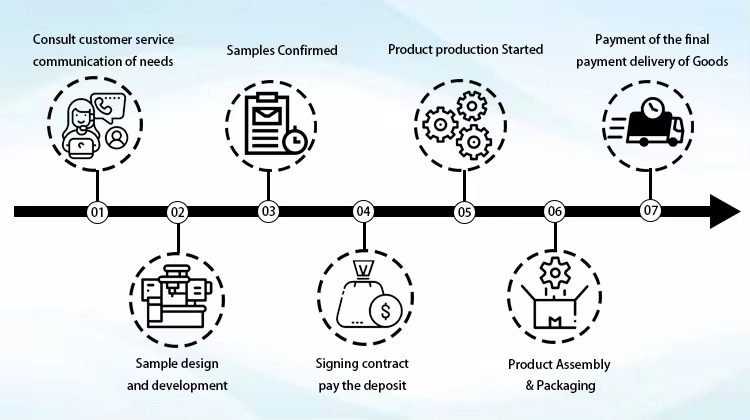
Sourcing Process for Glass Drinkware Manufacturers
- Define Requirements: Clearly outline product specifications, safety standards, and customization needs.
- Manufacturer Vetting: Assess certifications, production capacity, and quality control protocols.
- Sample Evaluation: Request and thoroughly test product samples for quality and compliance.
- Contract Negotiation: Finalize terms, including pricing, lead times, and quality assurance.
- Production & Quality Control: Monitor manufacturing, ensuring ongoing adherence to standards.
- Logistics & Delivery: Coordinate shipping and delivery to meet market demands.
Further insights into procuring popular water bottles can be found in our article 《how to procure the most popular water bottles on the market》.
Practical Design Features That Survive Active Use
Children test products in ways that adults rarely anticipate. Effective design for kids’ glass water bottles accounts for this reality through specific feature choices.
Dishwasher safe glass simplifies cleaning for parents and institutional staff who manage dozens or hundreds of bottles daily. Hand washing works but adds labor costs that accumulate quickly at scale. Our products tolerate repeated dishwasher cycles without degradation, which extends useful life and reduces replacement frequency.
Ergonomic shapes accommodate smaller hands. A bottle that adults grip easily may feel awkward for a six-year-old. Diameter, weight distribution, and surface texture all influence whether children can comfortably hold and drink from a bottle without assistance. Protective sleeves made from food-grade silicone add grip while absorbing impact energy from drops.
Our Borosilicate Glass Cup with Wood Lid comes in capacities from 300ml to 1000ml, covering use cases from preschool snack time to high school gym sessions. Heat-resistant properties allow these bottles to hold warm beverages without structural concerns. Leak-proof designs prevent backpack disasters that frustrate parents and create laundry.
We also offer Wholesale Glass Bottles at 500ml capacity with full customization options for body shape, size, and branding. All products undergo BPA-free and lead-free testing as standard. These reusable water bottles represent the eco-friendly alternatives that schools increasingly seek as they phase out single-use plastics.
Glass Drinkware Supports Environmental Goals
The environmental case for glass over plastic strengthens with each use cycle. Glass recycling rates exceed plastic recycling rates in most markets, and the material can be recycled indefinitely without quality degradation. Plastic recycling often produces lower-grade materials unsuitable for food contact applications.
Choosing glass water bottles for children’s programs aligns with institutional sustainability commitments that many school districts have adopted. The visible choice also teaches children about material impacts through daily use rather than abstract classroom discussions.
Our sustainable sourcing practices extend throughout the supply chain. Manufacturing processes prioritize energy efficiency and waste reduction. Recycling glass bottles initiatives ensure responsible end-of-life management for products that eventually reach the end of their useful life. This approach supports the circular economy principles that environmental policy increasingly emphasizes.
For a deeper understanding of the environmental benefits, consider reading 《taste sustainability why choose glass》.
Partner with Jianmei Glass for Quality Drinkware
Xuzhou Jianmei Glass Products Co., Ltd. offers FDA and CE certified borosilicate glass, custom OEM solutions, and the production capacity to support institutional and retail volume requirements. Contact us to discuss your specific needs for safe, durable glass water bottles for children. Email: [email protected]
FAQ
What certifications matter most when purchasing glass bottles for schools?
Look for FDA approval, CE certification, and ISO 9001 compliance as baseline credentials. FDA approval confirms food contact safety under U.S. standards. CE certification indicates European health and safety compliance. ISO 9001 addresses manufacturing quality management. Xuzhou Jianmei Glass Products holds over 120 testing certifications that verify our borosilicate glass products meet global child safety benchmarks. Request documentation during the vetting process to confirm claims.
How does borosilicate glass perform against other children’s drinkware materials?
Borosilicate glass handles temperature swings better than soda-lime glass due to its lower thermal expansion coefficient. It resists breakage from the hot-to-cold transitions that happen when children’s bottles move between refrigerators and warm environments. Unlike plastics, borosilicate glass remains chemically inert, eliminating concerns about BPA, phthalates, or other compounds migrating into drinks. The material also maintains taste neutrality that some users notice when switching from plastic bottles.
Can Jianmei Glass customize water bottles for specific school requirements?
Yes. We specialize in custom orders and OEM services that accommodate specific institutional needs. Customization options include bottle capacity, shape, opening diameter, lid type, silicone sleeve color, logo placement, and packaging design. Our minimum order quantity starts at just one piece for sample evaluation, scaling up to production volumes that match school district or retail chain requirements. Contact our team to discuss your specifications and timeline.