 English
  Arabic
  Spanish
  German
 Ordering a pre-production sample is the single most important step between design approval and mass manufacturing. A sample that looks flawless in your office but was handcrafted by a factory’s best artisan will not predict what comes off the production line. I have seen importers approve a beautiful sample only to receive thousands of units with inconsistent glass clarity and dimensional drift, because the sample never represented the actual manufacturing process. This article outlines practical steps to request, evaluate, and approve a pre-production sample that truly reflects your future production quality, drawing on a decade of experience in borosilicate glass manufacturing.
What Is a Pre-Production Sample and Why Does It Matter
A pre-production sample is a product unit manufactured using the intended materials, mold, and production process that the factory will deploy for mass manufacturing. It is not a hand-built prototype or a salesman’s shelf sample pulled from a previous order. This distinction matters because the sample’s purpose is to verify that the factory can reproduce your product at scale, not just craft one impressive piece.
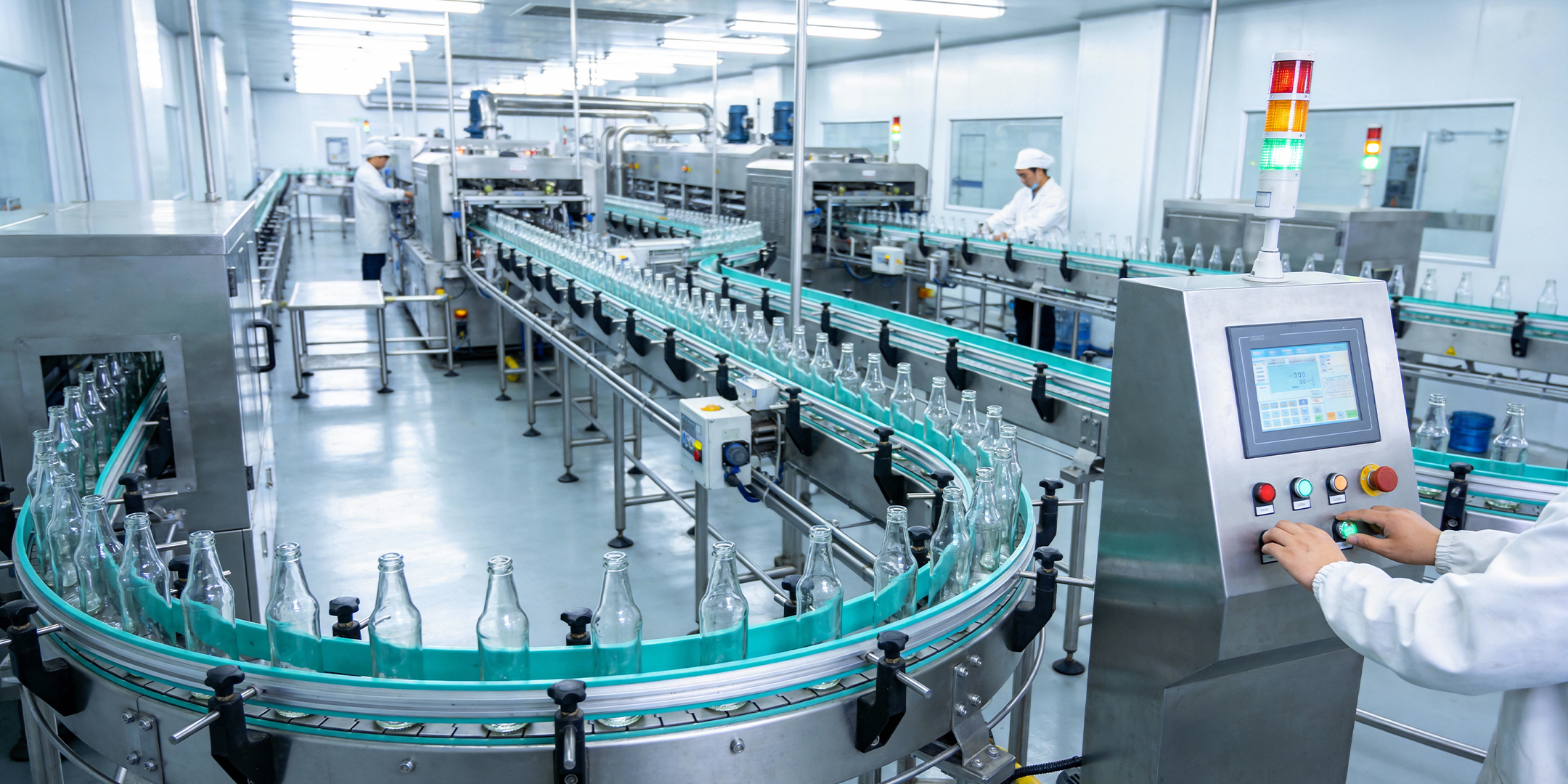
In borosilicate glass manufacturing, a sample pressed by a skilled worker on a manual machine may present a perfect surface finish with zero bubbles. An automated production line running 60 temperature-controlled presses per hour may introduce slight flow marks or wall-thickness variation. When I evaluate a factory’s capability, I always require that the pre-production sample be produced under conditions that mirror the actual production workflow. Otherwise, the approval carries no relevance to what will land in your warehouse.
How to Request a Pre-Production Sample with a Clear Specification Sheet
The sample request sets the tone for the entire project. A vague note saying “make me a sample of my water bottle design” will nearly always result in a product that misses key requirements, and the factory is not to blame. A proper specification sheet removes guesswork and holds the manufacturer accountable from day one.
What Information Should You Include in a Sample Specification Sheet
Include exact dimensions (height, diameter, opening), glass material grade — 3.3 borosilicate — lid type and material, any logo printing method and placement, packaging requirements, and target certifications. For custom shapes, send 2D or 3D drawings. In my experience, the most time-consuming corrections arise from missing details like the tolerance for glass wall thickness or the acceptable bubble count per unit. The clearer the spec, the faster the sample will match your expectations.
How Do You Confirm That the Factory Can Produce Your Design
Before the factory starts making the sample, ask for a technical feasibility review. This review covers mold design drawings, material compatibility checks, and any production process constraints. For example, a narrow neck may limit blowing options. For complex designs, request that the factory runs a simulation or produces a simple shape sample first to verify the mold concept. At Jianmei Glass, our engineering team reviews every design against the capabilities of our 100-machine production line before committing to a timeline.
A typical glassware specification template includes these details:
| Element | Example Entry |
|---|---|
| Material | 3.3 borosilicate glass, BPA-free |
| Dimensions | Height 240 mm, diameter 70 mm, opening 40 mm |
| Capacity | 500 ml |
| Logo | Silk screen, one color, 30 mm from base |
| Lid | 304 stainless steel with silicone seal |
| Packaging | Individual gift box, 48 pcs per master carton |
| Certifications | FDA, LFGB, SGS |
Key Criteria for Evaluating a Pre-Production Sample
A beautiful sample can still hide future production problems. I break the evaluation into three lanes: visual, dimensional, and functional.
Visual inspection covers glass clarity, surface finish uniformity, and the absence of bubbles exceeding 0.5 mm. Dimensional checks confirm the sample matches the spec drawing within agreed tolerances. We typically maintain ±0.5 mm for standard glassware; tighter tolerances require a different process configuration.
Functional testing includes thermal shock resistance — borosilicate glass should absorb a 100°C temperature differential without cracking — leak-proof performance for containers, and lid-thread engagement.
What Are the Most Common Sample Defects in Glassware
Over ten years of production management, the defects I see most often in samples are uneven wall thickness presenting as a wavy inner surface, micro-bubbles trapped at the base, and logo printing misalignment. Wall-thickness variation is the most dangerous because it does not just affect appearance. It creates stress concentration points that raise the breakage rate during shipping and daily use. During sample evaluation, measure wall thickness at four points around the circumference. A variance exceeding 0.3 mm should be flagged immediately.
How Do You Verify Material Certifications Like FDA and LFGB
Request PDF copies of the factory’s existing certification scope and, if possible, ask for a third-party test report on the specific material batch used for your sample. A legitimate borosilicate glass factory can supply SGS or equivalent lab results showing compliance with lead and cadmium limits. At our facility, all borosilicate glass raw material batches are traceable to mill certificates. We can include a material declaration with the sample shipment.
How to Make Sure Your Approved Sample Translates to Identical Mass Production Quality
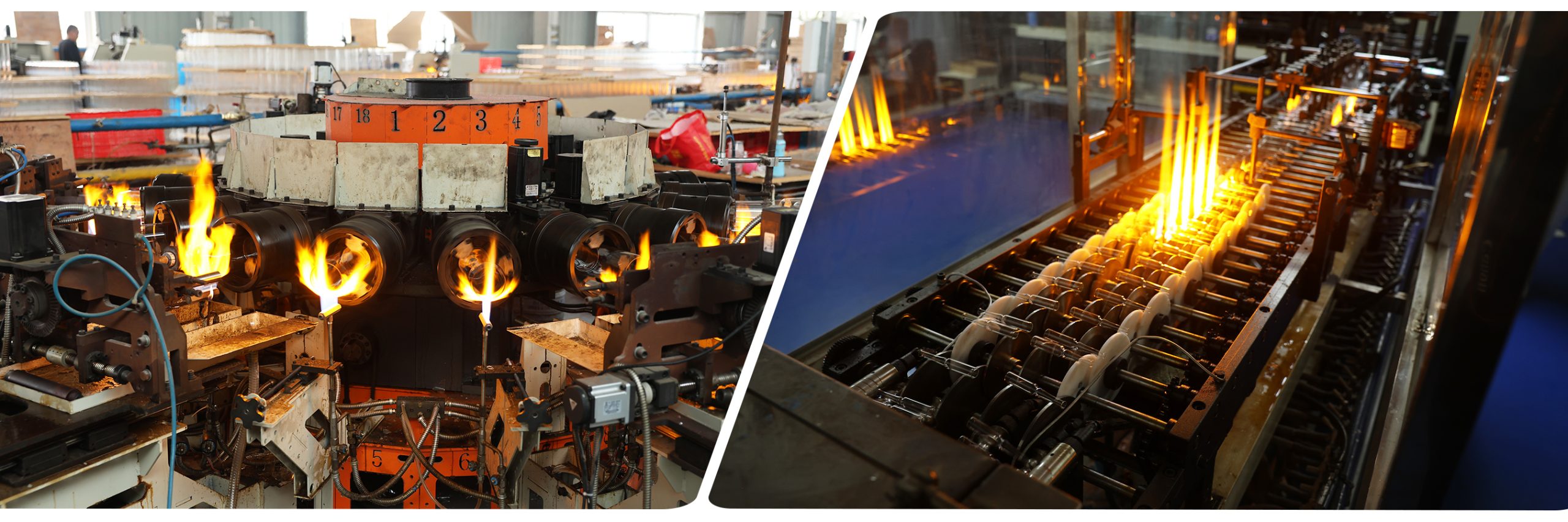
This is where most sampling processes break. The single most important instruction you can give a factory is this: produce the sample on the actual production line, not on a separate sample bench. In many glass factories, the sample department uses the most experienced workers and slightly different equipment settings to produce a flawless one‑off. The piece looks perfect. When the order moves to the main production line with its automated blowing or pressing stations, the output differs.
Why Can an Approved Sample Fail During Mass Production
Three reasons dominate. First, hand pressure and timing adjustments that a craftsman applies cannot be replicated by a machine running at 60 units per hour. Second, annealing furnace loading density differs between a single unit and a continuous belt filled with product, altering the cooling curve and therefore the glass’s residual stress. Third, molds wear. The tenth unit out of a polished mold looks different from the thousandth. The solution is to specify a production‑representative sample, meaning the factory must use the same mold, the same machine station, and the same annealing throughput that will run in bulk.
What Is a Pilot Run and When Should You Request One
A pilot run is a small-batch production test, typically 5–10% of the total mold cavity count, that verifies process stability before the full production order begins. For custom glassware with a new mold, I always recommend buyers request a pilot run after sample approval but before mass production commit. At Jianmei Glass, we produce 200,000 pieces daily across 100 machines. We run a pilot batch for every new mold to establish baseline parameters and identify any tool adjustments needed. This step adds a few days but prevents weeks of corrective work later.
If your product involves a custom mold with complex geometry or tight tolerance requirements, it is worth confirming with the factory that the sample was run on the actual production line and that a pilot batch process is part of their standard sampling‑to‑production workflow. Reach out at [email protected] to discuss what this means for your specific design.
Next Steps After Sample Approval: Moving to Mass Manufacturing
Approving a sample is a milestone, not the finish line. Once the final version is signed off, lock the sample as a control reference. Both you and the factory should retain a sealed master sample marked with the approval date and batch number. This becomes the quality benchmark for all future shipments.
What Contract Terms Should You Review Before Mass Production
Confirm the payment milestones, lead time from purchase order to shipping, defect allowance rate — the industry standard for glassware is 2–3% — packaging specifications, and the quality agreement that defines inspection criteria and AQL levels. Mold ownership must be clearly stated. If you paid for custom tooling, the contract should specify that the mold remains your property and cannot be used for other customers without your consent.
How Long Does Mass Production Take After Sample Approval
Lead times depend on mold complexity, order volume, and factory scheduling. A typical borosilicate glassware order of 10,000 units with an existing mold can ship within 25–35 days after sample approval. New molds add 15–20 days for fabrication and testing. Always confirm these timelines in writing before releasing a production deposit.
A pre-production sample that truly represents your production standard is the most reliable predictor of downstream quality and supply chain stability. When the sample is made under real production conditions, the mass manufacturing phase runs with far fewer surprises. If you are preparing to source borosilicate glass products — whether water bottles, jars, mugs, or custom drinkware — send your specifications and required volumes to [email protected]. Our engineering team will review your design for production feasibility and produce a representative sample that reflects what will come off our automated lines, not a one-off artisan piece.
Common Questions About Pre-Production Sample Ordering
How long does it take to get a pre-production sample from a Chinese glass factory
For an existing design without mold changes, a sample can ship within 7–10 business days. If a new mold is required, mold fabrication adds 15–20 working days, plus sample production and air courier transit of 3–7 days depending on destination. For a new-custom-mold sample, plan on 4–6 weeks total from concept to your desk.
How much does a pre-production sample cost
Sample costs split into two parts: mold development and unit production. For a simple glass cup mold, tooling may range from $300 to $800. The sample unit itself might be $5–$15 depending on complexity and any special finishing. Many factories, including ours, will refund the sample fee if a production order follows. Always confirm sample fee policies before committing.
Do I always need a custom mold for a glass product sample
Not necessarily. If you are ordering a product from the factory’s existing catalog, the sample can be pulled from stock or a decorated version can be produced using existing molds. Custom shapes, unique capacities, or non-standard openings require a custom mold, which adds cost and lead time but gives you exclusive product differentiation.
What happens if I am not satisfied with the sample
A structured revision process should be agreed upon beforehand. Typically, the factory will adjust the mold or production parameters and produce a revised sample. At Jianmei Glass, we include up to two rounds of sample revision in our standard development workflow. We require specific, documented feedback so we can target the exact changes needed. This prevents costly trial‑and‑error cycles.
Can I order a sample before visiting the factory
Absolutely. Most buyers evaluate samples remotely first, and a well-produced sample does more to establish factory capability than a thousand-word capability statement. Receiving a production‑intent sample is often the deciding factor for whether a buyer invests the time to visit. If you are not ready to travel, start with a sample order. It tests both the product and the supplier’s communication and reliability. To get started, share your product requirements with us at [email protected] and we will prepare a sample proposal within 48 hours.
If you’re interested, check out these related articles:
borosilicate glass vsordinary glasssoda lime glass
global glass shortage hits holiday season
whats the difference between glass jars and glass bottles
explosive food grade borosilicate glass cups
unlock your brand potential with uv printing