
 English
  Arabic
  Spanish
  German
 Importing glass storage containers without confirming the right food-safety certifications for your destination market is a fast track to customs holds and retailer returns. Most supplier catalogs list FDA or LFGB, but those labels mean little without knowing which specific test reports sit behind them. In our production facility we maintain over 120 testing certifications, and I have seen shipments held at the port because a buyer accepted a generic certificate that did not cover the product’s actual use conditions. This article explains what the key certifications actually test, how an importer can verify a supplier’s claims, and what documentation you should request before authorizing a bulk order.
What Certifications Do Food-Safe Glass Containers Require?
The baseline requirement for glass food containers depends on the market. In the United States, the Food and Drug Administration (FDA) regulates food contact substances under 21 CFR. For glassware, this generally means the finished product must not leach lead or cadmium above the levels set out in the FDA’s guidance for ceramic and glass foodware. The European Union applies a broader framework: Regulation (EC) No 1935/2004 requires that materials intended for food contact do not transfer their constituents into food in quantities that could endanger human health. For glass, specific migration limits for lead and cadmium are enforced through national legislation, with Germany’s LFGB standard serving as the most commonly referenced benchmark across the EU.
Beyond these two, importers serving California must account for Proposition 65, which enforces far stricter limits on lead and cadmium than federal FDA standards. Products labeled as BPA-free also need independent verification that no bisphenol A or similar endocrine disruptors are present, though borosilicate glass itself is inherently BPA-free because it contains no plastic.

The practical reality is that a printed certificate without a linked laboratory test report is close to worthless. A legitimate certification package for a glass storage container line should include:
| Document | What It Confirms |
|---|---|
| Material test report | Raw glass composition, absence of restricted heavy metals |
| Migration test | Leaching of lead, cadmium, and other elements under simulated food contact |
| Thermal shock test | Container integrity from –20°C to 300°C for borosilicate |
| Overall migration | Total non-volatile residue that migrates into food simulants |
A supplier who cannot provide the underlying laboratory reports for each of these items is probably relying on a one-time certification that may not apply to the current production batch.
Understanding FDA, LFGB, and CE Requirements
FDA compliance for glass containers is not a single certificate. The agency does not pre-approve glass foodware. Instead, the manufacturer or importer is responsible for ensuring the product meets the applicable food additive regulations and does not adulterate food. In practice, this means sending product samples to an ISO 17025 accredited laboratory for lead and cadmium testing per methods like ASTM C738 or C927, and keeping those records on file. A supplier who hands you a one-page “FDA certificate” has likely done nothing more than confirm the purchasing company’s registration with the FDA, which is irrelevant to product safety.
LFGB, the German Food and Feed Code, is often listed by Chinese glass factories as a single certification. What it actually requires is a full set of migration tests performed by an accredited European laboratory or a recognized Chinese lab like SGS or TÜV Rheinland. The test protocol exposes the glass container to a food simulant — typically 4% acetic acid for acidic food contact — for a specified duration and temperature, then measures the concentration of lead, cadmium, and other heavy metals that migrate into the simulant. Passing limits are typically 0.5 mg/L for lead and 0.05 mg/L for cadmium, though these can be tighter for articles intended for children.
CE marking for glass food containers is less a safety certification and more a declaration of conformity with EU regulations. It signals that the product meets the requirements of Regulation 1935/2004 and, where applicable, specific directives on packaging and labeling. For a food container, CE marking does not replace an LFGB or migration test; it sits above them as a general market access requirement.
If your product line spans multiple markets, ask the supplier to map each test report to the specific regulation it satisfies. A single SGS test report can cover both LFGB and Proposition 65 limits if the lab runs the more stringent protocol, but that requires the buyer to specify the parameters up front.
How to Verify a Manufacturer’s Certifications for Glass Containers
I have seen too many importers accept a supplier’s claim of “all certifications available” without ever opening the attached PDFs. Our factory testing records show that the certificate a supplier sends you may be for a different product, an expired report, or a raw-material certificate that says nothing about the finished container.
The most effective verification step is to request the third-party laboratory report, not just the summary certificate. Look for the following: the testing standard cited (e.g., EN 1388-1 for lead and cadmium release from ceramic and glass), the laboratory’s ISO 17025 accreditation number, the test sample description that matches your product’s SKU and capacity, and the date of testing. A report older than two years does not guarantee current production.
Next, check whether the certificate covers batch testing or only type testing. A type test proves that a sample of the product passed once. It does not confirm that every production run uses the same glass batch with the same heavy-metal profile. For high-volume importers, batch-level migration testing every quarter or per major production run is the standard you want. Our facility maintains batch traceability from raw borosilicate glass rods through to finished containers, and testing documentation is tied to each batch number. Without that link, you are betting on consistency that may not exist.
s)
Finally, ask for the test to cover your product’s intended use. A glass jar intended for acidic sauces should be tested with a food simulant matching that condition. A test performed only with distilled water as the simulant will not catch migration risks that acidic or fatty foods trigger. If the supplier cannot produce a test report that matches your product’s actual use case, that gap deserves attention before you commit to a purchase order.
Regional Compliance: Glass Container Certifications in the US and EU
Selling the same glass storage container in the United States and the European Union usually requires two separate compliance packages because the reference standards differ. The table below summarizes the primary differences importers need to manage.
| Region | Key Regulation | Test Standard | Critical Limits |
|---|---|---|---|
| United States | FDA 21 CFR, Proposition 65 (CA) | ASTM C738, C927 | Lead <3.0 µg/mL (CA: <0.1 µg leachable) |
| European Union | EC 1935/2004, LFGB (Germany) | EN 1388-1, EN 1388-2 | Lead <0.5 mg/L, Cadmium <0.05 mg/L |
| Australia/New Zealand | AS 2070, FSANZ | AS 2070 | Lead <0.7 mg/L (lip/rim) |
Canada, Japan, and the Gulf states each have their own conformance pathways that often start from the EU framework. If your distribution covers multiple countries, working with a laboratory that can issue a consolidated report covering several standards saves money and time. Request the specific standards you need in writing before the testing begins.
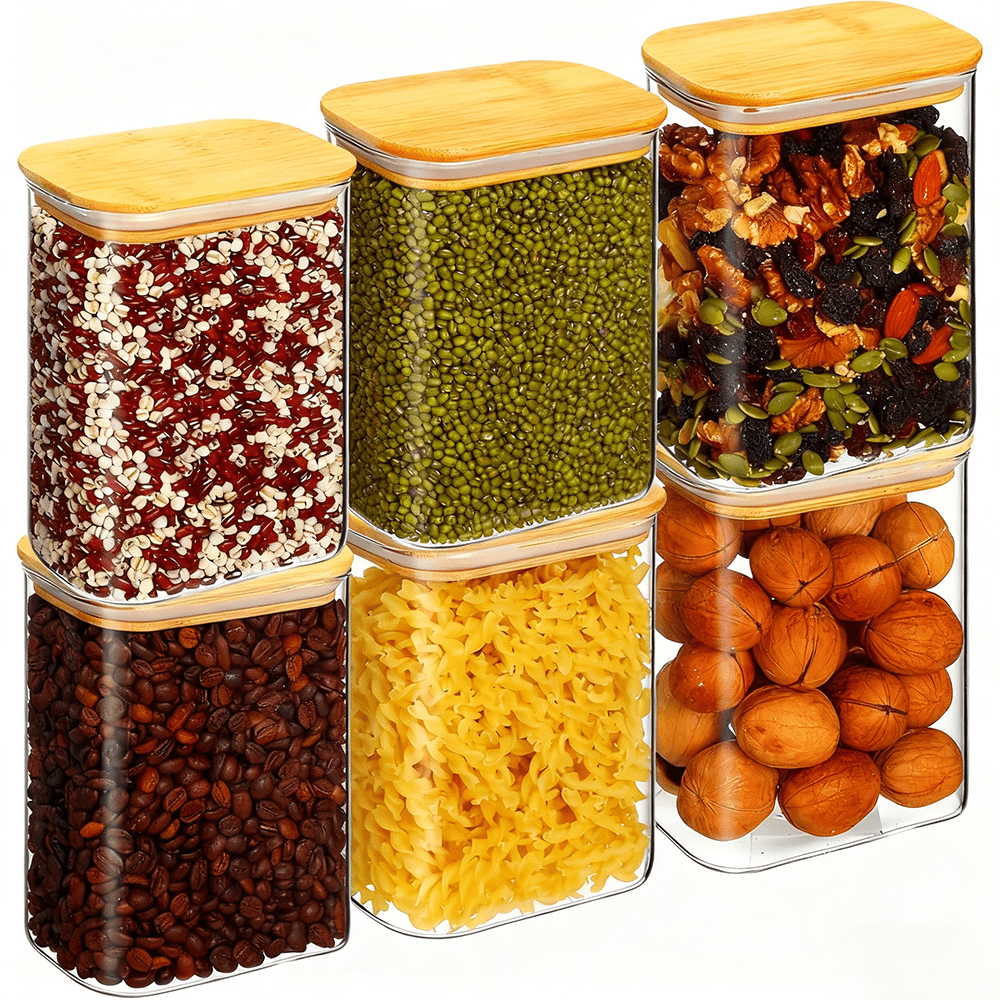
The lead and cadmium limits I listed above are not academic. In 2023, a shipment of decorated glass canisters was refused entry at a European port because the rim decoration exceeded the cadmium limit by a factor of three. The importer had a valid raw-glass test but had not tested the printed decoration, which contained cadmium-based pigments. That case highlights why the certificate must cover the complete finished article, including any applied colors, logos, or decals.
What Testing Documents Should Importers Request Before Shipment?
A complete compliance file for glass food containers should include, at minimum, a material safety data sheet for the glass composition, a third-party migration test report covering the specific container model and capacity, a thermal shock test report if the product is marketed for hot-fill or oven use, and a certificate of analysis for any applied decorations or color coatings. If the product includes a lid or seal, that component needs its own food-contact test because silicone and plastic seals have separate migration requirements.
Many importers discover too late that the “FDA certificate” offered by the factory is only a registration of the factory with the FDA, not a product test. Others find that the LFGB certificate covers only the glass body but not the wooden or bamboo lid that touches the food. I always recommend you send your supplier a detailed document request list before the proforma invoice stage. Matching the right test to the right market and the right component is the difference between a shipment that clears customs and one that gets held.
This is where manufacturer experience matters. A supplier that routinely exports to multiple markets already knows which test protocols map to which regulation. Our facility handles glass containers from 300 ml to 1,000 ml, and the migration test protocol for a 300 ml coffee cup differs from that of a 500 ml storage jar because the food contact surface area to volume ratio changes. If your supplier cannot explain why the test required for your product differs from a generic test they already have on file, you may be speaking to a trading company that has never ordered an actual lab analysis.
If your upcoming order includes containers intended for hot beverages, acidic foods, or decoration-heavy designs, it is worth reviewing your compliance requirements with someone who handles this daily. Send your product specifications and target markets to [email protected], and I will confirm which testing documentation we maintain or can arrange for your shipment.
Common Questions About Glass Container Certifications
Misconception first: many importers assume that an “FDA certificate” is something the FDA issues. In fact, the FDA does not issue certificates for glass foodware. The agency expects the manufacturer or importer to ensure compliance, and a third-party test report is the only documentation that demonstrates that compliance. If your supplier does not have a current test report from an accredited lab, you have no proof the product is FDA-compliant.
In most of our export programs, the LFGB test is the most useful because it covers both the German market and serves as evidence for other EU member states. The test report from an accredited lab like SGS carries weight with customs authorities across the European Union. When you request an LFGB test, confirm whether it tests both lead and cadmium, and whether it uses the 4% acetic acid simulant that represents acidic food contact.
A CE marking on its own is not enough for food-safety compliance. CE indicates conformity with EU regulations, but for glass food containers, you will still need the specific migration test reports to satisfy the health and safety requirements of Regulation 1935/2004. I have seen importers clear CE marking checks only to have their product flagged later for missing chemical test documents. The two are separate requirements.
If you are importing glass containers with painted decorations, split the test request into two parts: one for the clear glass body and one for the decorated rim or exterior. Decorative paints and decals often contain cadmium or lead compounds that can migrate into food if they contact the rim or interior. A complete LFGB or Proposition 65 compliance file must cover the decorated article, not just plain glass, and the lab report should state explicitly that the decoration was tested.
Verifying certifications is not complicated once you know what to look for. Identify your target market’s specific standard, get the full laboratory report, check that the report matches your product’s exact specifications and components, and confirm the test date is recent. If you need help matching the right documentation to your planned order, send your product requirements to [email protected] and we can walk through what testing already exists for the SKU you want and what additional analysis may be required.
If you’re interested, check out these related articles:
advantages selection of food storage glassware
custom glassware the new global wave in festival consumption
five key points for year round promotions