
 English
  Arabic
  Spanish
  German
 Bulk glass pasta containers look like a simple line on a supermarket planogram, but the sourcing decision determines whether those shelves stay full, resist breakage, and pass compliance audits. I see this from the production side at Xuzhou Jianmei Glass Products Co., Ltd., where we mold, anneal, and pack food storage containers in large volumes. Most buying guides stop at capacity and price. This one covers the manufacturing details that decide if a glass pasta container program holds up across hundreds of stores, from mold tolerance to lid seal testing.
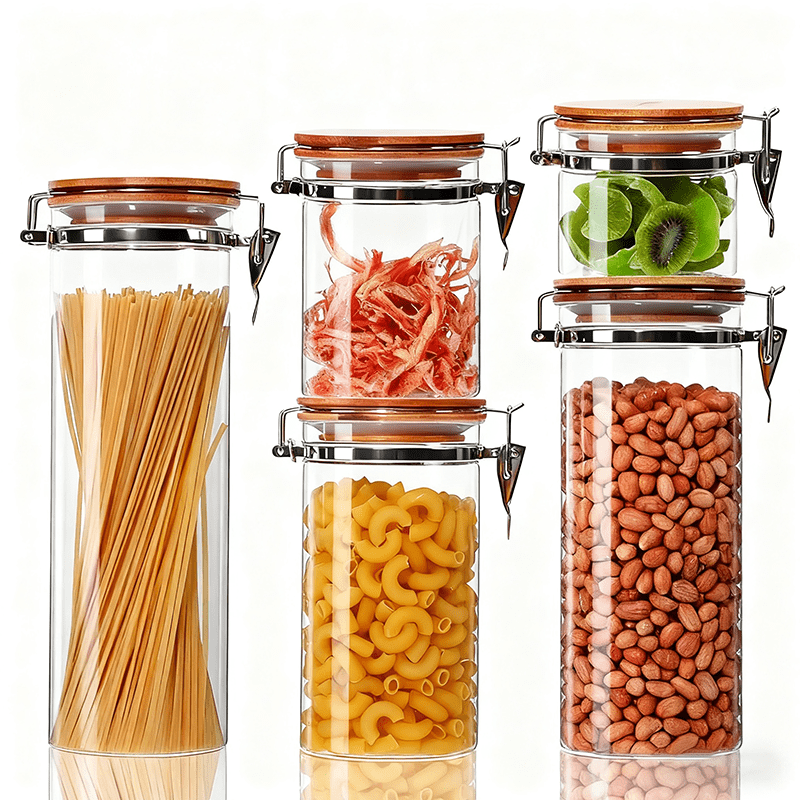
Bulk Glass Pasta Container Specifications for Supermarket Chains
Supermarket chains do not buy a single jar; they buy a shelf set that must survive regional distribution, repeated handling, and customer inspection. Start the specification with capacity, then mouth diameter, then lid type. For dry pasta, capacities between 500 ml and 2,000 ml cover most planograms. The container must be lead-free and BPA-free, and it needs a stable base so jars do not tilt on wire shelving. I prefer wide-mouth openings for long pasta and scooped pour spouts for short cuts. The opening diameter drives the lid mold, which is the largest cost variable outside the body mold.
What lid types survive supermarket handling?
Plastic snap-on lids are low cost, but they deform when stacked under pallet pressure. Stainless steel and bamboo lids are stiffer and keep their shape through cross-docking. Wood lids need a food-safe coating and a tolerance for humidity. If the chain ships through unheated warehouses, avoid unfinished wood that can absorb moisture and swell. I would specify a lid that can hold its compression after at least twenty open-close cycles.
Does the seal need a gasket or a clamp?
Buyers sometimes focus on the clamp because it is visible. The gasket carries the airtight claim; the clamp only supplies the force. If the clamp is strong but the gasket is thin, the jar will pass a quick visual check and fail in the consumer’s pantry. We check the glass rim flatness and the gasket groove depth together. For retail, specify odor-neutral food grade silicone and ask for a seal test report from the factory.
Borosilicate Molding and Annealing Decisions That Reduce Breakage
Borosilicate glass does not make a container unbreakable. It reduces the two failure modes that matter most in retail: thermal shock and edge chipping from repeated shelf contact. A high-borosilicate jar moves from a cold stockroom to a warm store display without the stress cracks a soda-lime jar may develop. The molding step matters as much as the material. If wall thickness varies more than a few tenths of a millimeter, stress concentrates in the thin section. Our annealing furnace uses a controlled soak and slow cooling cycle to relieve that stress before the jars go to packing.
I have watched a small lid insert depth mismatch turn into repeated shelf returns. The glass was not the root cause. The silicone gasket compressed unevenly because the groove depth changed as the mold temperature drifted during a long run. We corrected the annealing curve and tightened the groove depth tolerance. Returns on that SKU stopped.
If your program includes online grocery fulfillment or high-turnover pantry sets, confirm the lid seal torque and drop orientation before finalizing your BOM (bill of materials). Email [email protected] with the SKU count and target market, and we can check current mold compatibility.
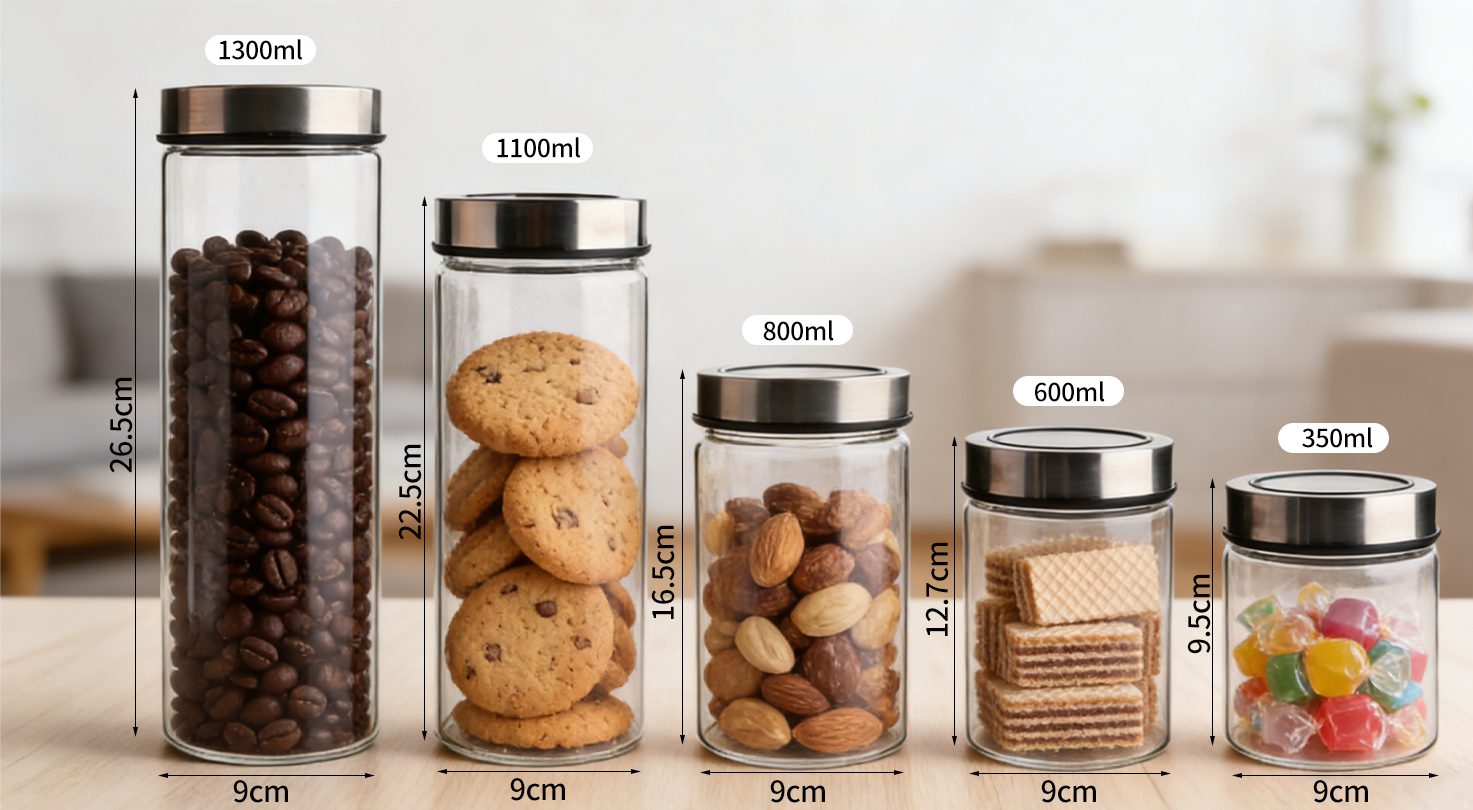
One Mold Multiple SKU Planning for Pasta Containers
Supermarket buyers often think each SKU needs a new mold. That is the expensive way to build a line. We design capacity increments around one body diameter and adjust the height. The same mold can produce 500 ml, 750 ml, and 1,000 ml jars if the opening and base are shared, while the height changes in the forming step. This keeps tooling cost down and makes the shelf set visually consistent. Custom labels or lid colors can create the merchandising variety without touching the glass mold.
| Capacity | Common dry pasta use | Lid option | Shelf note |
|---|---|---|---|
| 500 ml | Short cut pasta, single serve | Bamboo or plastic snap lid | Secondary placement |
| 750 ml | Fusilli, penne | Stainless steel lid with silicone gasket | Mid aisle |
| 1000 ml | Spaghetti family pack | Airtight clamp lid | Eye level |
| 1500 ml | Long pasta bulk pack | Airtight clamp lid | Bottom shelf |
| 2000 ml | Club pack or food service | Large clamp lid | Promotional wing |
s)
Bulk Glass Container Supplier Checks for Supermarket Programs
Start with evidence, not claims. When I talk to supermarket buyers, I ask them to check five things before committing to a container program.
- Material verification: request a borosilicate glass composition statement and lead-free, cadmium-free, BPA-free test reports.
- Production capacity: ask the factory to confirm daily output per SKU and whether the line can absorb a seasonal spike without shifting molds away from your order.
- Mold ownership and maintenance: clarify who owns the mold, how often it is inspected, and whether dimensions are documented for repeat orders.
- Sampling and pre-shipment inspection: require a production sample from the same mold, not a handmade prototype, and confirm drop testing and seal testing are part of the inspection protocol.
- Compliance documents: for supermarket programs, FDA and LFGB are common; SGS test reports add weight when the chain’s audit team asks for heavy metal migration data.
At our Jiangsu plant, we run 100 forming and finishing machines across 40,000 sq m and hold 120 testing certifications. Those numbers matter because supermarket programs are not judged by one good sample; they are judged by whether shipment three looks like shipment one.
Which certifications matter most for supermarket compliance?
FDA and LFGB cover the main import markets. CE applies to certain European product categories, though food storage is often handled under food contact material regulations rather than CE alone. SGS test reports are useful for heavy metal migration and thermal shock. Ask for the actual certificate number and verify it with the issuing body if the chain requires audit-level documentation.
Sourcing Inquiry Details That Get Useful Answers
Supermarket buyers waste the most time when an inquiry only says “need pasta containers.” A message that becomes a quote quickly names the capacity, lid style, annual quantity, target market, and packaging requirement. If you are still narrowing specifications, that is fine; we can work through the options item by item. The fastest route is to send the part number or a photo of the container you are replacing, plus the shipping region and the number of stores in the program, to [email protected]. We will confirm mold availability, sample lead time, and whether the glass body and lid match your shelf and DC (distribution center) handling plan.
Common Supermarket Buyer Questions About Bulk Glass Pasta Containers
Is borosilicate glass necessary if pasta is dry?
For dry pasta, borosilicate is not required for thermal resistance, but it is still the safer retail choice because the containers keep clarity and resist edge chipping better than soda-lime glass under repeated handling. If the program includes freezer use or hot-water washing in store prep, borosilicate matters more. I would still specify high borosilicate for supermarket sets because replacement cost from breakage exceeds the small material premium.
Does a bamboo lid or a metal lid last longer?
Buyers often assume bamboo is decorative and metal is functional. The real difference is the seal carrier and coating. A bamboo lid with a well-fitted silicone ring can last as long as a stainless steel lid if the wood is sealed and the ring is replaceable. For high humidity or dishwasher-heavy environments, metal lids with silicone gaskets are the lower-maintenance choice.
What is a safe first order quantity for a regional chain test?
It depends on whether the test is one store cluster or a full region. For a cluster test, I would start with 300 to 500 pieces per SKU; that fills shelf and backstock without overcommitting. For a regional rollout, order enough to cover at least six to eight weeks of shelf supply plus two weeks of DC buffer. The factory minimum order may be one piece, but freight efficiency usually drives the practical minimum higher.
How do I know the factory can match my current SKU dimensions?
In retail programs I have worked on, the most common mismatch is not the capacity on the label; it is the mouth diameter and lid thread. A jar can hold 1,000 ml but still not fit the customer’s existing scoop or shelf hook. I ask buyers to send a current container or a measured drawing rather than a capacity number alone. Then we check against the mold drawing before quoting.
Do supermarket programs require special packaging?
The more precise question is whether the carton can survive two drops during cross-docking and restocking. Individual glass containers can use the factory’s standard white carton, but supermarket chains often need five-ply outer cartons, paperboard dividers, and a label position that remains scannable through shrink film. Share whether the chain uses automated DC sorting or manual shelf prep with [email protected], and we will confirm the right carton, partition, and pallet configuration before sampling.
If you’re interested, check out these related articles:
unlock your brand potential with uv printing
professional supplier of high quality borosilicate glass cups
best jam glass jars how to keep bulk jam fresh
borosilicate glass vsordinary glasssoda lime glass
whats the difference between glass jars and glass bottles