
 English
  Arabic
  Spanish
  German
 Sourcing stackable glass cups for restaurants is about more than price. It’s about finding cups that won’t break each time they’re stacked and unstacked in a busy service. Breakage isn’t random; it often starts with small manufacturing inconsistencies that cheap bulk sourcing ignores. With ten years running borosilicate glass production lines, I know the difference between a stackable cup that lasts and one that fails is in the mold precision and annealing cycle. This guide looks beyond the spec sheet: material choice, stacking design integrity, and the factory-floor quality checks reliable suppliers perform. Skip these, and per-unit savings vanish in replacement costs.
Why Stackable Glass Cups Are Essential for Restaurant Efficiency
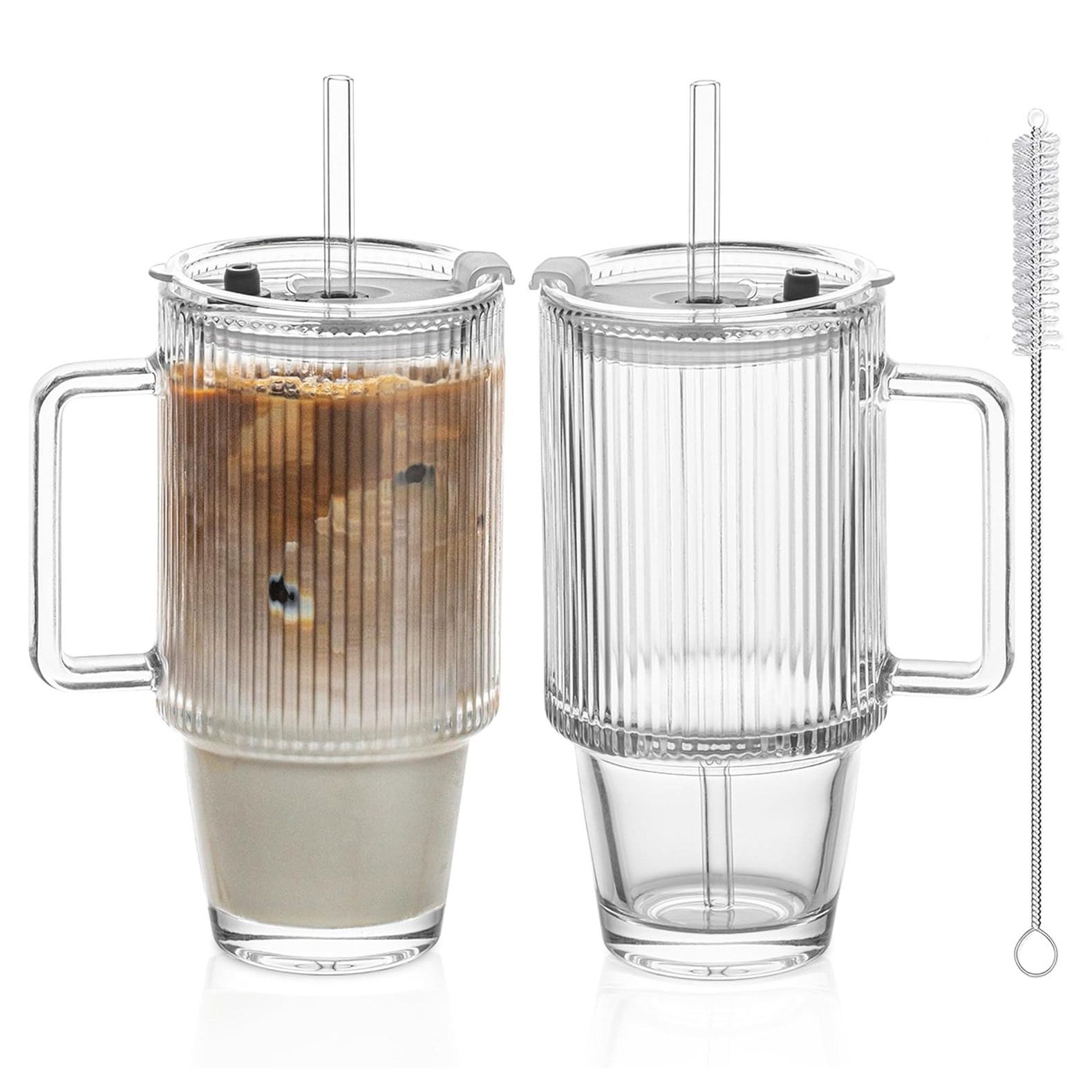
Stackable glass cups solve a practical problem: storage. In tight restaurant kitchens and service stations, shelving is limited, and cups that don’t nest consume far more space. Stackable designs let you store three to four times more cups in the same footprint, reducing clutter and the time staff spend grabbing drinkware. Beyond space, well-made stackable cups reduce breakage because each cup aligns precisely with the one below it, distributing weight evenly. Poorly manufactured stackable cups create pressure points at the rim or base that cause cracks when a full stack is moved. A restaurant that restocks stackable cups annually can cut breakage-related replacement costs by 30 percent or more if the cups are designed and manufactured to handle stacking loads, something I’ve confirmed from production data at our facility.
Comparing Borosilicate and Soda-Lime Glass for Stackable Cups
Not all glass is equal for stackable cups. The two main options are borosilicate glass and soda-lime glass. Borosilicate, the type we produce at Jianmei, withstands temperatures from -20°C to 300°C without cracking, so it handles hot coffee and cold iced drinks equally well while surviving commercial dishwasher cycles without thermal shock damage. Soda-lime glass is cheaper but far less tolerant of sudden temperature changes, and it’s more brittle under repeated stacking stress.
| Property | Borosilicate Glass | Soda-Lime Glass |
|---|---|---|
| Temperature range | -20°C to 300°C | 0°C to 80°C typical |
| Thermal shock resistance | High | Low |
| Breakage risk from stacking | Low when annealed properly | Moderate to high |
| Relative cost per unit | Higher | Lower |
For a restaurant, the higher upfront cost of borosilicate glass tends to pay back within the first year through fewer breakage replacements and better staff handling confidence. I’ve observed that venues switching from soda-lime to borosilicate stackable cups see glassware reorder periods extend by six to eight months.
The Design and Manufacturing Details That Make Cups Stack Safely
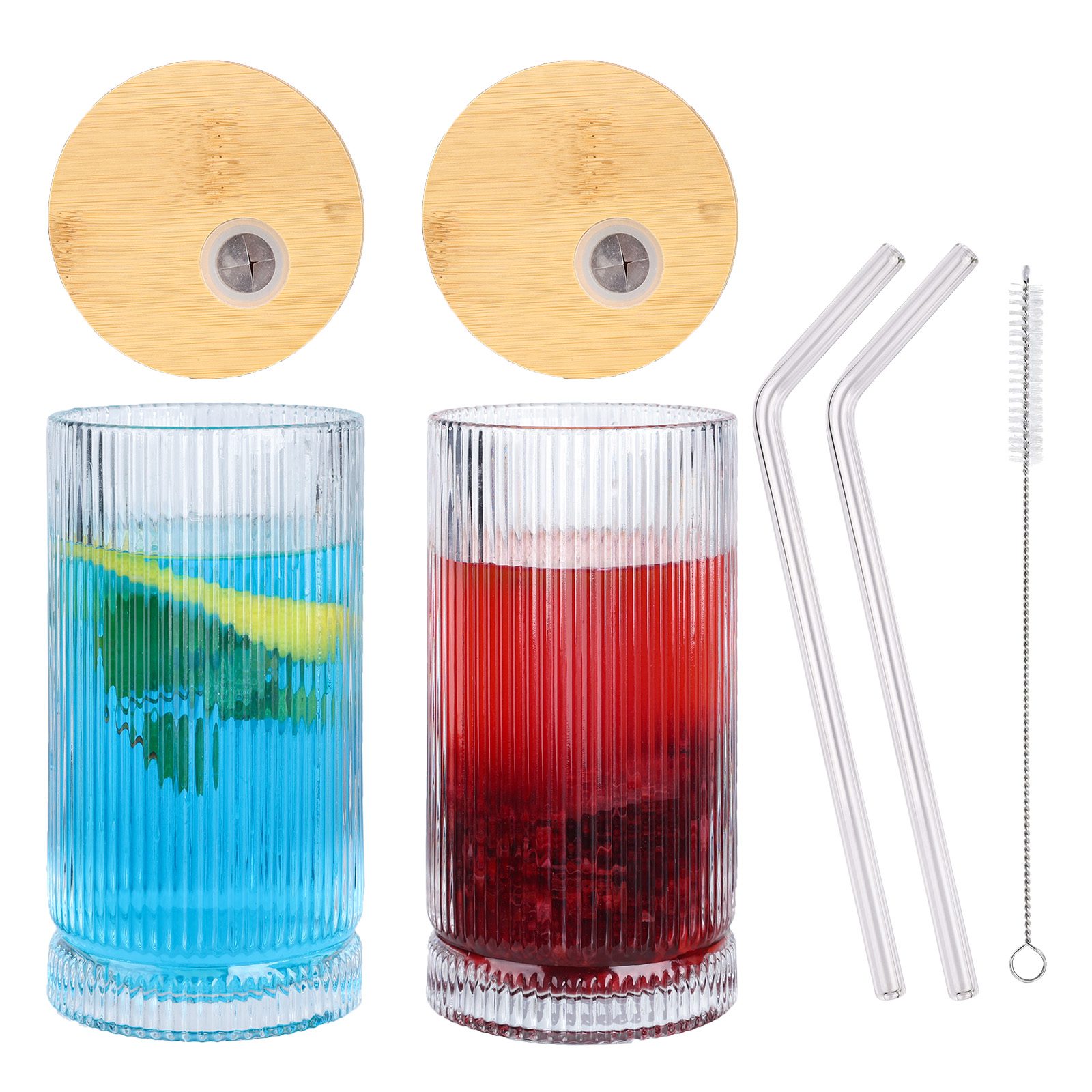
Stackability isn’t just a shape. It’s an engineering result. A cup stacks securely only if three production factors are controlled: mold taper, dimensional centering, and annealing. The cup body must have a gentle inward taper so the bottom of one cup nests into the rim of the one below without binding. Our molds are precision-ground to maintain that taper within a tolerance of 0.2 millimeters. Dimensional centering ensures the cup’s base and rim are perfectly coaxial; otherwise, a stack leans and applies uneven pressure.
Annealing is the step most overlooked by buyers but most critical to durability. After forming, borosilicate glass cools through a controlled annealing furnace that relieves internal stresses. If annealing is rushed, as is common in high-speed low-cost production, residual stress remains. Under stacking weight, those stresses release as microfractures that eventually become full cracks. In our production audits, we load-stack six cups and leave them overnight: any breakage by morning indicates a process issue. That’s a test I’d want any supplier to be able to demonstrate.
How to Verify a Manufacturer’s Quality Control for Stackable Cups
When you evaluate a supplier, don’t rely on spec sheets alone. Request their quality control documentation for stackable glass cups. The minimum you should expect includes dimensional inspection reports per batch, thermal shock test results, and a stacking load test protocol. A manufacturer that holds 120 testing certifications, including FDA, LFGB, CE, and SGS, has systems in place to catch defects before shipment.
Also look for visible factory floor indicators: the annealing furnace temperature logs, whether they use automated inspection for rim defects, and how they handle in-line rejects. A factory running 100 machines with a daily output of 200,000 pieces, like ours, can maintain stackability consistency because every forming station feeds into standardized annealing and QC gates. If something feels vague, ask: “Can you share the annealing cycle chart for my order?” A competent manufacturer will provide it.
If your restaurant group is sourcing stackable cups for multiple locations, confirming that the manufacturer has performed load testing and provided dimensional tolerance reports is critical. Send your capacity requirements and expected stacking height to [email protected], and we can share our production QC data and sample options.
What to Know About Bulk Ordering, Customization, and Logistics
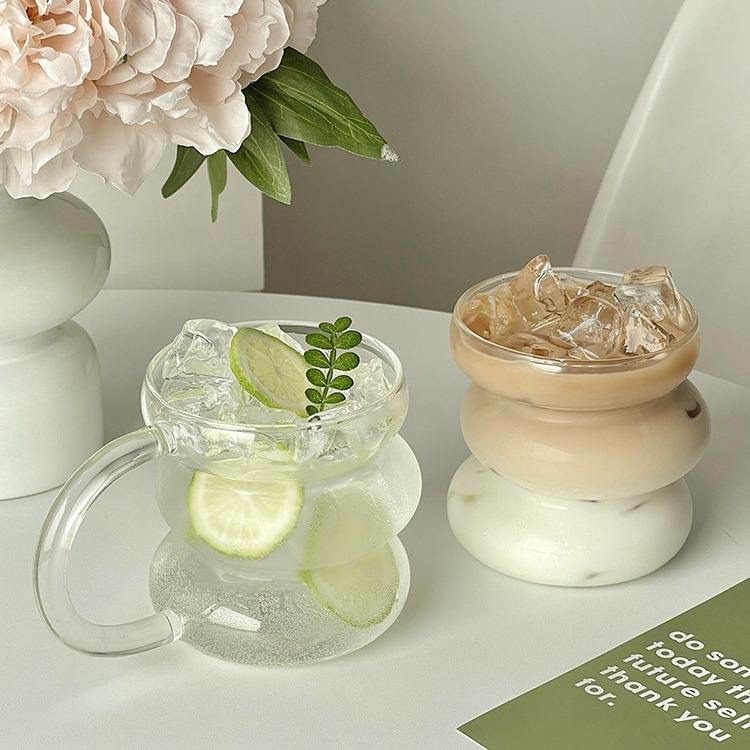
Ordering stackable glass cups in bulk involves several practical decisions beyond the cup itself. Minimum order quantities vary, but for standard designs, many factories accept orders as low as a few hundred pieces; Jianmei’s sample service even allows a single piece for evaluation before committing to volume. For custom-colored glass or private-label logos, expect higher MOQs and longer lead times.
Customization options include screen-printed logos, laser engraving, and color tinting on the glass body. Packaging can be tailored for retail display or bulk shipping. Most suppliers ship by sea freight for large orders, with transit times of 25–40 days to major ports. Air freight is faster but cost-prohibitive for heavy glass. Always confirm packaging is designed to prevent movement inside the carton; otherwise, the cans will arrive with scuff marks or, worse, cracked rims.
Sourcing stackable cups that perform reliably in a restaurant comes down to verifying the manufacturing quality behind the stack. When cups are made with precise molds, properly annealed borosilicate, and tested under stacking loads, the payoff is lower long-term cost and fewer operational headaches. If you’re ready to review samples or discuss a bulk order, email your capacity, stack height, and quantity to [email protected]. We’ll confirm feasibility and provide a sample timeline.
Common Questions About Sourcing Stackable Glass Cups
What makes a glass cup stackable versus non-stackable?
A cup becomes stackable when its body has a slight taper from top to bottom, allowing the next cup to nest inside without sticking. Manufacturing precision, with uniform mold dimensions and tight tolerances, ensures the stack remains vertical. The taper angle is critical: too steep and cups become difficult to separate, too shallow and they don’t nest securely. In our production, we hold a consistent taper across all pieces within 0.2mm tolerance, achieved through CNC-machined molds and controlled cooling cycles. Without this control, even a tapered cup can sit crooked and break under the weight of a stack.
Is borosilicate glass necessary for stackable cups in restaurants?
It’s not absolutely necessary, but it’s strongly recommended. Borosilicate resists thermal shock, so cups can move from a hot dishwasher to a cold drink station without cracking. Its lower thermal expansion coefficient means it handles the intense heat of a commercial washer followed by immediate ice water fill without developing hairline cracks. In our production runs, borosilicate stackable cups consistently survive over 1,000 commercial dishwasher cycles, which translates to roughly one year in a busy restaurant. Soda-lime glass, by contrast, will eventually develop cracks from repeated thermal cycling, and those cracks become failure points under stacking weight, making replacement need sooner.
How can I test if a stackable glass cup is durable enough for high-volume use?
Request the supplier’s load-stacking test: at least six cups stacked and left overnight or through a vibration test. Also ask for dishwasher cycle endurance data and thermal shock test reports. Ask if they perform in-line inspection of rim concentricity; a cup with an oval rim won’t stack squarely. I’d also request documentation of their annealing furnace temperature profiles. Without correct annealing, glass retains internal stress and becomes fragile under load. A supplier willing to share these documents has a controlled process, and that transparency distinguishes reliable manufacturers from those who cut corners on annealing time.
What is the typical MOQ for custom logo stackable glass cups?
For screen-printed logos, many Chinese manufacturers set MOQs around 1,000–2,000 pieces, but it varies by product. At Jianmei, we can start with a single sample for evaluation. For production orders with custom decoration, the MOQ is lower than industry average because we keep stock blanks ready, letting you test market response before investing in a large run. Contact us with your design to get a tailored quote. This flexibility is worth confirming with any supplier because a high MOQ on a new design can tie up capital unnecessarily.
How long does production take for a custom bulk order?
Once the sample is approved, production lead time is typically 25–35 days for standard stackable cups. Adding custom logos or packaging may extend that by 5–10 days. Sea freight adds four to six weeks, so a full sourcing cycle from first inquiry to delivery takes about 10–12 weeks. If your project has a specific deadline, confirm timelines early. Share your requirements at [email protected] so we can check current production capacity and give you a realistic delivery window.
If you’re interested, check out these related articles:
changing glass bottle strategies for global brands
unlock your brand potential with uv printing
global glass shortage hits holiday season
taste sustainability why choose glass