
 English
  Arabic
  Spanish
  German
 Retailers adding drinkware to their product lines often treat borosilicate glass cups as interchangeable commodities, choosing the lowest per-unit price. That approach leads to high return rates from thermal cracking, irregular wall thickness, and lid seal failures—problems rooted in manufacturing shortcuts that are invisible on a spec sheet. This article identifies the production quality factors that predict long-term glass cup reliability, helping retail buyers reduce customer complaints and build a brand known for durable, heat-resistant drinkware.
Why Borosilicate Glass Cups Are a Profitable Retail Category
Borosilicate glass cups sit at the intersection of three consumer trends that show no sign of slowing: health-conscious consumption, sustainable kitchenware, and aesthetic-driven social media merchandising. The glass is inherently BPA‑free, does not leach chemicals into hot liquids, and resists thermal shock at temperature differentials exceeding 120°C. Customers who buy one borosilicate cup frequently return for larger sizes, a matching lid, or a gift set, making the category a repeat-purchase engine. The material’s crystal‑clear transparency showcases beverages beautifully—a feature that drives organic social sharing and lifts conversion for online retailers. Retail margins are stronger than those on soda‑lime glass or plastic equivalents because the product carries a premium perception without requiring education about a new product category; most shoppers already associate glass with purity and quality. Offering a range from 300 ml espresso cups to 1000 ml tumblers with coordinated lids creates an upsell path that increases average basket size without confusing the customer.
What Manufacturing Quality Means for Your Borosilicate Cups
A cup labeled “borosilicate” is not a guarantee of performance. The structural behavior of the glass is determined by three manufacturing parameters that most retail buyers never ask about.
Material composition is the first. True 3.3 borosilicate glass contains at least 12.7% boron trioxide, which lowers the thermal expansion coefficient to approximately 3.3×10⁻⁶/K. That small number is what allows a cup to go from a freezer to boiling water without cracking. Low‑cost alternatives reduce the boron content to save on raw material, elevating the expansion coefficient to 4.5–5.0×10⁻⁶/K and cutting the safe thermal shock range roughly in half. The cup will still be called borosilicate on the spec sheet, but it will fail in conditions that a proper borosilicate cup handles easily.
Annealing is the second parameter, and it is the one that separates a cup that looks fine from one that stays fine. After forming, the glass is passed through a precisely controlled annealing lehr that cools it gradually enough to relieve the internal stresses created during molding. In our plant, we hold the cooling curve within ±2°C of the target profile and inspect every batch on a polariscope. A cup that has been rushed through a fast, uneven anneal carries invisible micro‑stresses that concentrate at the rim or base. Days or weeks later, a minor tap or a hot‑to‑cold transition causes a spontaneous fracture that the retailer, not the factory, must handle.
Wall thickness uniformity is the third parameter, and it is easier to check than most buyers assume. A tolerance of ±0.2 mm across the cup body is achievable with automated production lines. When thickness varies more than that, the thin spot becomes the failure point. I have measured samples where the sidewall was 1.8 mm on one side and 1.2 mm on the other, a discrepancy that guarantees breakage. Request sectional thickness measurements from at least three random samples before approving production.
What is the difference between high and low borosilicate glass?
High borosilicate glass, classified as ASTM Type I, Class A, has a B₂O₃ content above 12% and a thermal expansion coefficient ≤4.0×10⁻⁶/K. It is suitable for direct flame use and rapid temperature cycles. Low borosilicate glass has reduced boron content and a higher expansion coefficient, limiting its thermal shock resistance. Both can be called “borosilicate,” so always ask for the thermal expansion test report rather than relying on the label.
How does annealing prevent glass cup breakage?
Annealing is a controlled cooling process that eliminates residual stresses created during the molding phase. When glass solidifies unevenly, internal tension accumulates. The annealing lehr holds the glass at a specific temperature range long enough for those stresses to dissipate, then cools it slowly. An inadequately annealed cup may pass visual inspection but carries internal stress above 4 nm/cm, which makes it fracture unexpectedly. A properly annealed cup has stress levels under 2 nm/cm and weathers thermal cycling and impact far better.
How to Evaluate a Borosilicate Cup Supplier
Certifications are the starting point, not the finish line. An FDA or LFGB certificate for food contact safety is a minimum requirement, as is an SGS report for heavy metal migration. Verify the certificate number on the issuing laboratory’s website and confirm that the date is current. If a supplier hesitates to share these documents, end the conversation.
Beyond paper, examine the production infrastructure. Automated molding and annealing lines produce far more consistent output than manual processes. Ask how many machines run on the shop floor and what the daily output is. A factory producing 200,000 pieces a day with 100 automated lines—as ours does—has the throughput to handle seasonal spikes without sacrificing quality. In‑house testing capability is equally critical. The factory should own a thermal shock tester, a polariscope for stress inspection, and a thickness gauge, not outsource inspection to a third party.
Sample policy reveals much about a factory’s confidence. A supplier unwilling to provide pre‑production samples, or one that asks for full payment before samples ship, is a risk. Request at least three pieces of each SKU and test them yourself: pour boiling water into a chilled cup, run a finger around the rim for sharp edges, and check lid seal integrity. Document everything. The supplier’s response to your feedback on the sample round tells you how the relationship will function during mass production.
Communication during the evaluation phase is a strong leading indicator. A factory that assigns a single bilingual project manager who answers technical questions within 24 hours will be far easier to work with than one that routes every query through a sales intermediary who cannot read a spec sheet.
What certifications should a glass cup supplier have?
At minimum, an FDA certificate for US markets or an LFGB certificate for EU sales. Both confirm food‑contact safety. An SGS or equivalent test report for lead and cadmium migration should accompany the certification, not replace it. If your product will be marketed as BPA‑free, request a specific BPA declaration covering the cup and all lid components.
What is a typical minimum order quantity for custom glass cups?
For OEM production with a new custom mold, the minimum order quantity usually sits between 1,000 and 3,000 pieces per design, driven by the setup and changeover costs on automated lines. For private‑label production using an existing mold but with custom logos, the minimum can drop to 500 pieces. Always negotiate based on your first‑year volume forecast rather than accepting a blanket MOQ; a factory that values a long‑term relationship will adjust terms.
Customization Options That Give Your Brand a Unique Edge
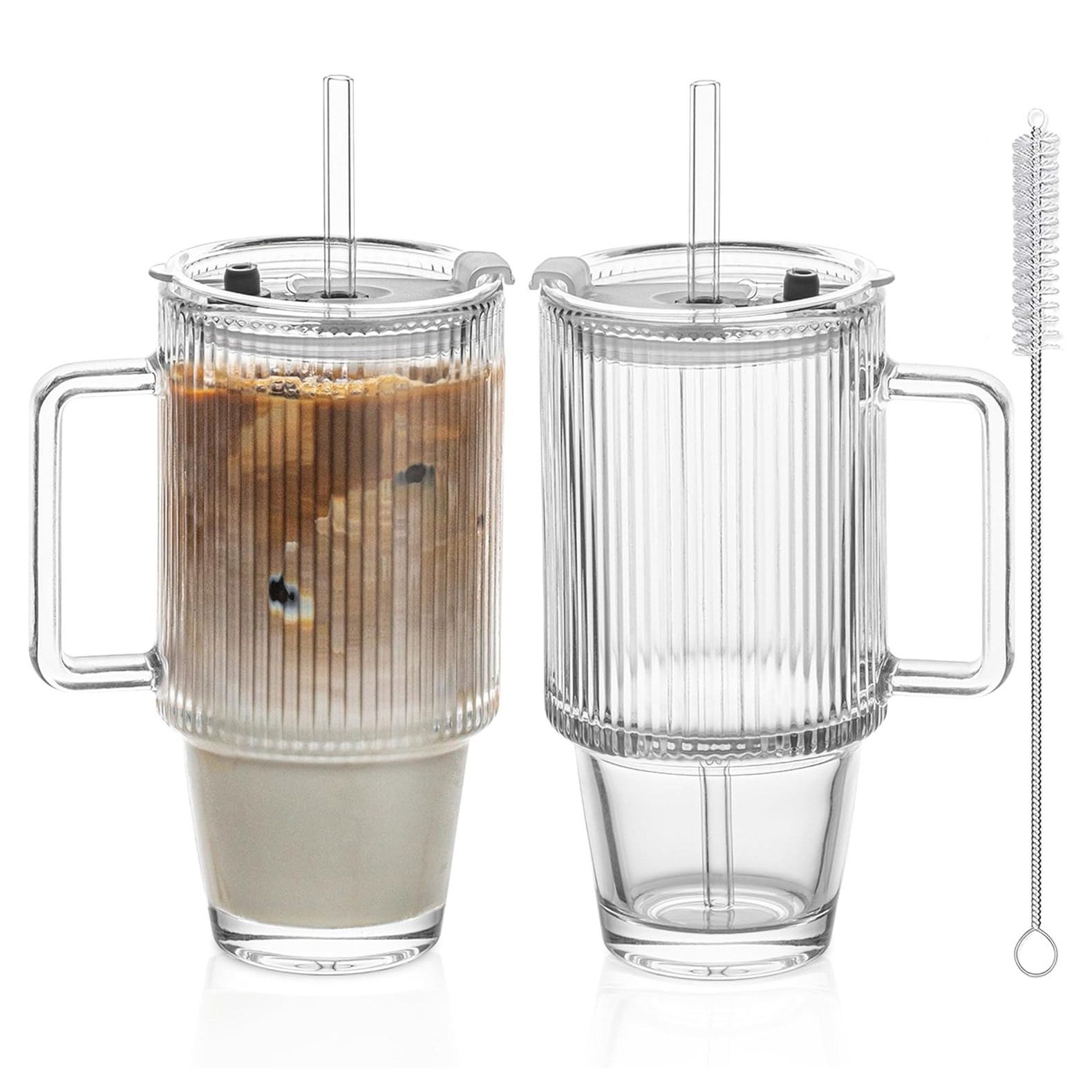
The surface of a glass cup can be varied in ways that change how customers experience the product far more than a logo alone. Mold customization produces exclusive shapes that prevent price comparison across sites. We have engineered a gourd‑shaped beer mug and a vertically ribbed drinking cup for clients, and both designs generated strong repeat orders precisely because no competitor sold the same item. A custom mold adds $800 to $2,000 to the project cost and 15 to 25 days to the timeline, but that investment protects your margin indefinitely.
For a faster path to market, start with a stock shape and layer branding and lid choices. Silk‑screen printing fuses ceramic ink into the glass surface at high temperature and survives hundreds of dishwasher cycles. Laser engraving etches a tactile, permanent mark that reads as premium on a shelf. Decal transfers support full‑color artwork for seasonal or limited‑edition runs. We advise clients to order a small production sample of each print method before committing to a bulk run, because ink feel, opacity, and alignment can drift slightly between techniques.
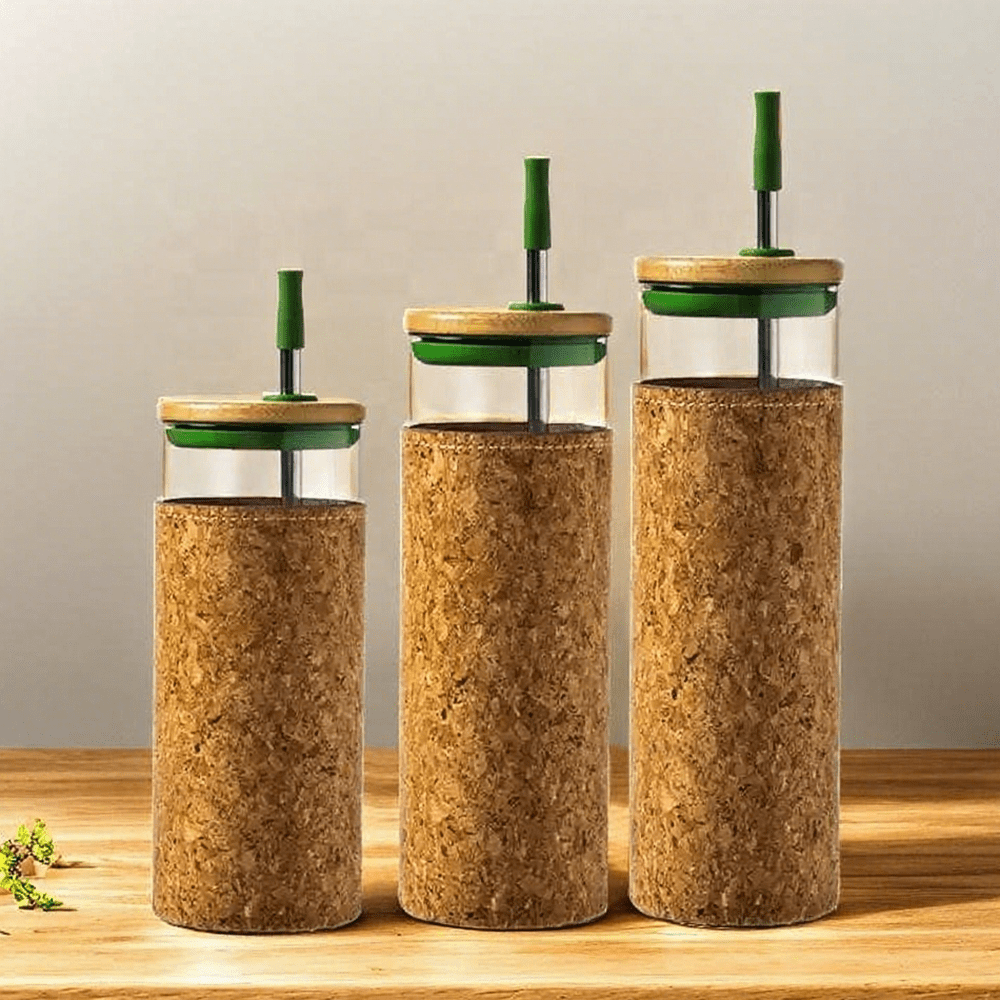
Lid selection is underrated as a branding lever. A natural wood lid with a silicone gasket signals eco‑conscious positioning. A brushed stainless‑steel lid reads as minimalist and modern. Colored silicone lids allow you to create a color‑coordinated line that encourages collectors to buy multiple pieces.
Can I get a custom mold for a unique glass cup shape?
Yes. The mold is precision‑machined from steel and designed to your 2D or 3D drawings. After mold fabrication, a trial run produces 50 to 100 sample cups for your approval before committing to mass production. Mold cost and lead time vary with complexity; a simple profile change costs around $800 and adds two weeks, while a complex multi‑part mold can reach $2,000 and four weeks. Once the mold is completed, it remains yours for future production runs.
What printing methods are available for logo branding?
Silk‑screen printing is the most common for single‑color logos and delivers excellent dishwasher durability when properly annealed. Laser engraving removes a microscopic layer of glass to create a frosted mark that is permanent and does not require ink. Decal application allows multicolor designs but requires a separate firing cycle and carries a higher per‑unit cost. All three methods can be combined on the same cup, and sample runs let you compare the final look before scaling.
Packaging and Logistics That Keep Glass Cups Intact
Breakage during transit is a cost that lands entirely on you, not the factory, once the goods leave the port. Effective packaging starts with material selection: 5‑layer corrugated export cartons with individual dividers and each cup wrapped in a polybag or foam sleeve. Before a shipment leaves our facility, we pull random cartons and submit them to an ISTA 1A drop test—six drops from one meter onto concrete, hitting every corner and face. This protocol keeps our breakage rate below 0.3% on trans‑Pacific shipments. A cup that has been properly annealed resists impact far better than one carrying internal stress, so packaging and product quality function as a single system, not separate variables.
When choosing a freight mode, consider vibration and moisture. Air freight is faster but subjects cargo to constant high‑frequency vibration that loosens lids and abrades surfaces unless cushioning is generous. Sea freight imposes longer transit but requires moisture barriers because container condensation can corrode metal lids and soften cardboard. Silica gel packets inside each carton and a full‑wrap polyethylene film resolve most condensation problems. The correct package for your market depends on the route and the season, and a factory that ships regularly to your destination region will have pre‑qualified packaging solutions.
Building a Reliable Sourcing Partnership for Long-Term Success
Retailers who treat glass cup sourcing as a one‑off transaction often encounter stockouts during peak seasons, inconsistency between batches, and an inability to react to design trends quickly. A production partnership works differently. Share a 12‑month demand forecast that outlines your planned SKU count, seasonal peaks, and estimated growth. The factory can then reserve furnace capacity and procure raw materials in advance, trimming lead times when your order hits. Many of our retail clients place replenishment orders every eight to ten weeks, timed to ocean freight schedules, which keeps shelves full without high warehouse carrying costs.
Consistency across reorders is built into the process, not hoped for. We maintain production records that capture the exact machine settings, raw material batch numbers, and annealing parameters for every client order. When a reorder comes in, we replicate those conditions. That is the difference between a cup that matches the original sample six months later and one that does not.
Communicate design changes early. A new lid color, a packaging refresh, or an additional capacity should be prototyped and tested during a quiet period, not rushed into a production order. A dedicated account manager who understands your brand direction can anticipate these needs and alert you when a mold refurbishment is required or when material costs are forecast to change.
Send your desired cup capacities, lid preferences, logo artwork, and an estimate of your first‑year volume to [email protected]. We will return a detailed quotation, a production timeline, and a sample plan within two business days.
Common Questions About Sourcing Borosilicate Cups
How do I verify that a borosilicate cup is truly food‑safe?
You verify by requiring the actual test reports, not a supplier’s verbal assurance. A food‑safe borosilicate cup must carry an FDA certificate for the US market or an LFGB certificate for the European Union. Both documents should be accompanied by an SGS migration test report showing lead and cadmium levels below the regulatory threshold. Check that the certificate lists your supplier’s legal company name and that the test date falls within the last 12 months. For BPA‑free claims, request a separate declaration that covers the lid and seal, because while the glass itself contains no BPA, gaskets and plastic components can. A factory that has nothing to hide will email all reports within hours of your request.
Is borosilicate glass more expensive than regular glass, and is the markup worth it?
Many buyers assume the premium is a branding illusion, but the cost difference reflects real material and processing advantages. Standard soda‑lime glass cups retail for $3 to $5, while borosilicate cups can sell for $8 to $15. The additional cost buys a lower thermal expansion coefficient, reduced breakage rates, and the ability to market the product for hot and cold beverages without liability. Retailers who compete on price alone may find soda‑lime acceptable, but those building a quality‑focused brand will recoup the higher unit cost through fewer returns, higher customer lifetime value, and the capacity to advertise safety features that discount competitors lack.
What happens if my custom sample does not meet expectations?
In our experience with first‑time retail clients, sample revisions are a normal and expected stage. If the sample arrives with dimensions, lid fit, or print quality that does not align with the approved specification, document the exact deviation with photographs and measurements. A responsible factory will produce a revised sample round at no additional charge if the fault is on their side—whether the lid thread tolerance was off or the logo placement missed the agreed position. The key is to define acceptance criteria in writing before the sample order begins: specify capacity tolerance as ±5%, logo location relative to the rim, and lid seal performance under inversion with water. A factory that resists written specifications is signaling a communication gap that will widen during mass production.
How long does it take to receive a bulk order after placing it?
Lead time splits between two scenarios. Stock designs with custom screen‑printed logos typically ship within 30 to 40 days after payment confirmation and artwork approval. If a custom mold is required, add 20 to 30 days for mold fabrication and sample sign‑off, pushing total lead time to 50 to 60 days. During the Lunar New Year period, January through February, all lead times extend by two to three weeks as production lines pause. Plan backward from your desired in‑stock date and add a buffer of at least two weeks for customs clearance and last‑mile delivery in your country.
Can I order different cup sizes in one shipment?
Rather than constraining yourself to a single SKU per container, consider a mixed‑load order. Most manufacturers, including us, allow multiple cup capacities, lid types, and sometimes entirely different product categories such as jars or bottles in the same 20‑ or 40‑foot container. The approach lowers your per‑SKU inventory risk and lets you test a range before committing deep quantities to any single design. Each size is individually boxed and labeled. The only binding constraint is that each design must meet its own minimum order quantity, but once that is reached the container can hold as many SKUs as fit. Share your assortment plan and order quantities, and we will structure the most cost‑efficient consolidated shipment for your launch.
If you’re interested, check out these related articles:
why 60 of buyers transferred orders to this chinese factory
why risk bpa embrace glass 100 safe sustainable and stylish
the best materials for drinkware glass ceramic or stainless steel
sustainable sips 2025 curatedeco drinkware collection