 Arabic
  English
  Spanish
  German
 Minimum order quantity for custom borosilicate glass products typically starts at 500 to 1,000 pieces for standard modifications, though this number shifts dramatically based on the complexity of your customization request. I have seen buyers assume MOQ is a fixed factory policy when it actually reflects tooling economics, production line efficiency, and the specific combination of glass body, lid type, and decoration method you require. The real question is not “what is the MOQ” but “what drives the MOQ for my specific product configuration.” Understanding these mechanics lets you negotiate smarter and plan inventory cycles that match your sales velocity rather than your supplier’s convenience.
Why MOQ Exists for Custom Borosilicate Glass
MOQ is not an arbitrary barrier. It reflects the cost structure of borosilicate glass manufacturing, where setup time, material waste, and quality control overhead must be distributed across enough units to make production economically viable.
Borosilicate glass requires precise temperature control during forming, typically between 1,200°C and 1,500°C depending on the specific 3.3 borosilicate formulation. Each production run involves preheating molds, calibrating automated forming machines, and stabilizing the annealing furnace to the correct cooling gradient. These setup procedures consume 2 to 4 hours regardless of whether you order 100 pieces or 10,000 pieces. When I calculate production costs, that fixed setup time gets divided across your order quantity, which is why smaller orders carry disproportionately higher per-unit costs.
Material waste compounds this issue. The first 50 to 100 pieces from any production run often show minor inconsistencies as equipment reaches optimal operating parameters. Factories absorb this waste into their cost calculations, and spreading it across larger orders keeps your unit price reasonable.
(س)
Quality inspection adds another fixed cost layer. Every custom order requires dimensional verification, thermal shock testing on sample units, and visual inspection under standardized lighting. These procedures take the same amount of time whether you order 500 pieces or 5,000 pieces.
How Product Complexity Changes Your MOQ
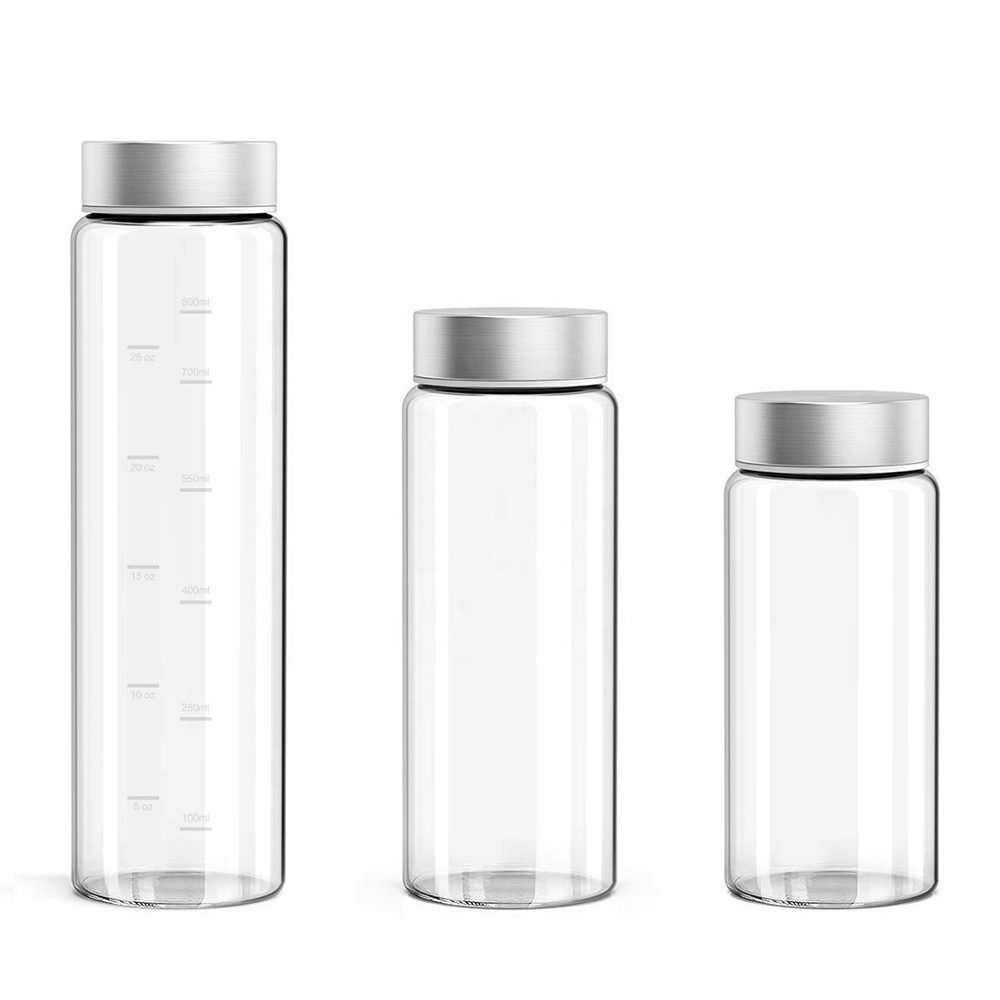
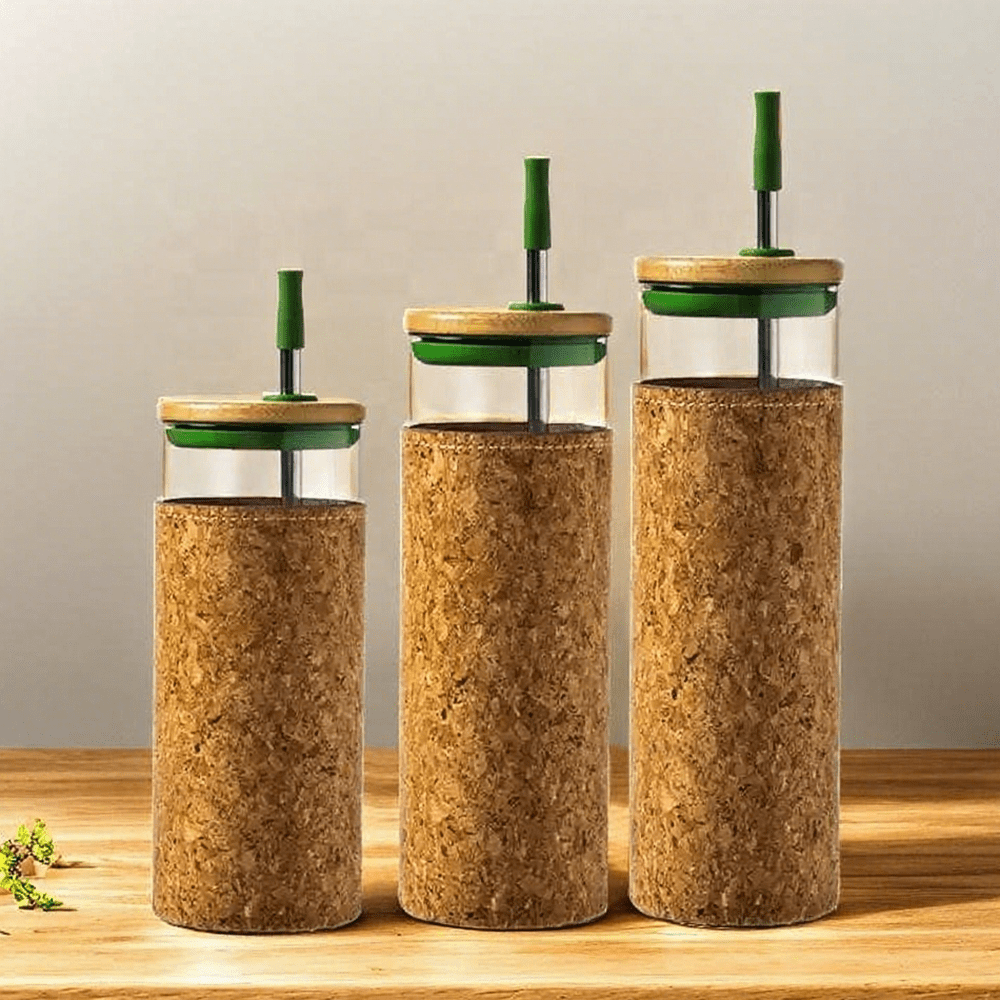
The MOQ you receive in a quote depends heavily on what you are actually asking the factory to produce. A standard 500ml زجاجة ماء زجاجية من البورسليكات with a stock stainless steel lid and single-color silk screen logo might start at 500 pieces. The same bottle with a custom mold shape, bamboo lid, and full-wrap decal printing could require 3,000 pieces minimum.
| مستوى التخصيص | Typical MOQ Range | Lead Time Impact |
|---|---|---|
| Stock shape, stock lid, logo only | 500–1,000 pcs | 15–25 days |
| Stock shape, custom lid material | 1,000–2,000 pcs | 25–35 days |
| Custom mold, standard accessories | 3,000–5,000 pcs | 45–60 days |
| Fully custom design with new tooling | 5,000–10,000 pcs | 60–90 days |
Mold customization represents the largest MOQ driver. A new glass mold costs between $2,000 and $8,000 depending on complexity, and factories need enough order volume to justify that tooling investment. Some factories amortize mold costs across your first several orders, which can lower initial MOQ but increases your per-unit price until the mold is paid off.
Lid and accessory combinations also affect MOQ because different components come from different production lines or even different suppliers. A كوب زجاجي من البورسليكات with a wood lid and silicone seal ring requires coordination across three material streams, and each stream has its own minimum batch size.
Strategies to Reduce Your First Order Quantity
Buyers often have legitimate reasons to start with smaller quantities: testing market response, validating product-market fit, or managing cash flow during a brand launch. Several approaches can help you achieve lower initial volumes without sacrificing supplier relationships.
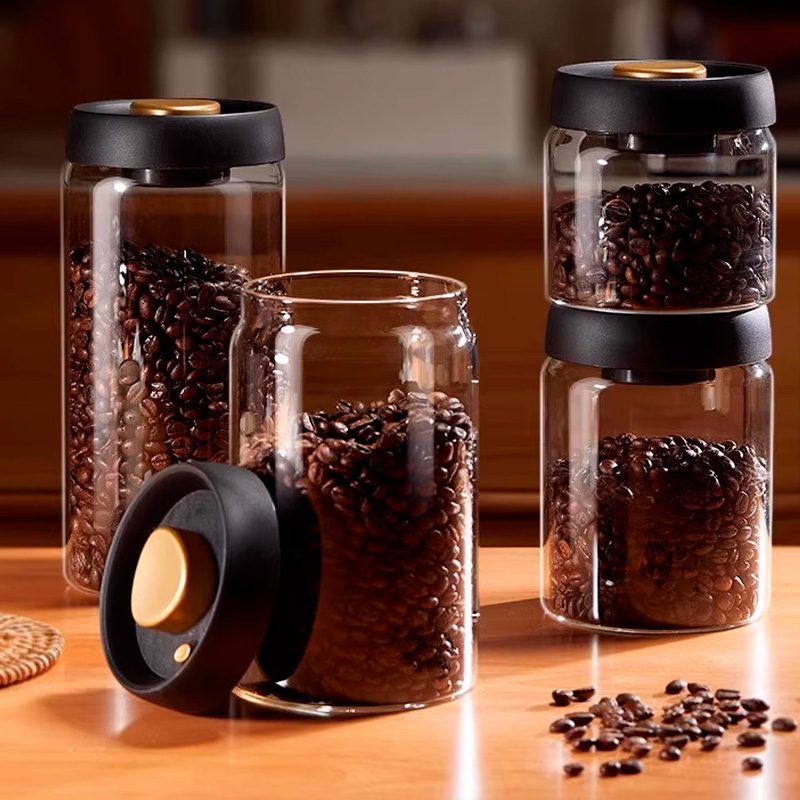
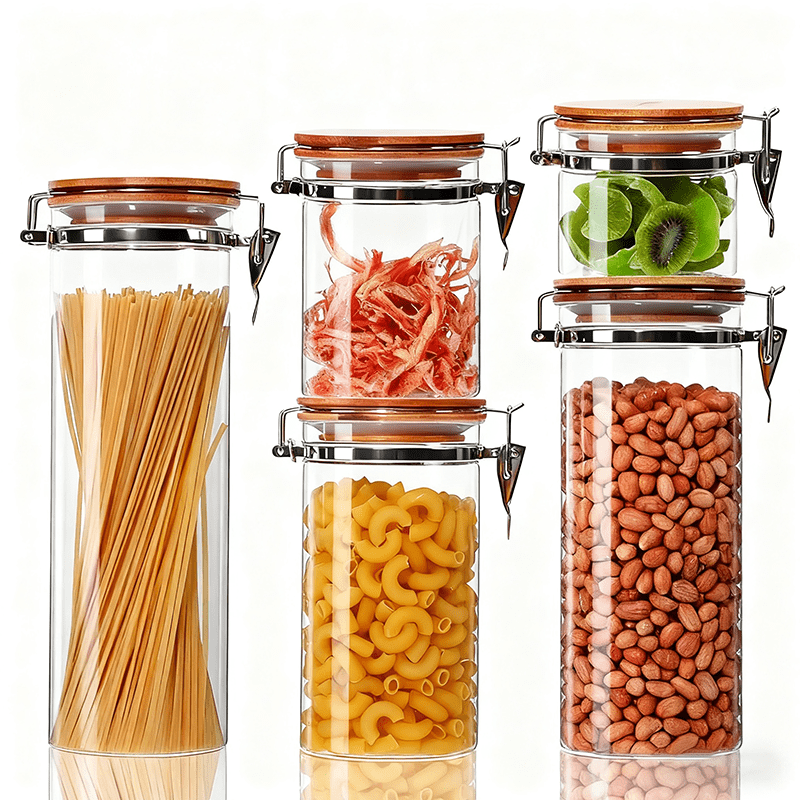
Selecting from existing mold libraries is the most effective MOQ reduction strategy. Established manufacturers maintain catalogs of proven designs that can be customized through decoration rather than structural changes. Our facility, for example, offers over 45 appearance patents covering water bottles, cups, mugs, and storage jars, any of which can carry your logo, color scheme, and packaging without new tooling.
Consolidating multiple SKUs into a single order often unlocks better terms. If you need 300 pieces each of three different capacities, presenting this as a 900-piece combined order demonstrates commitment and improves your negotiating position. The factory benefits from scheduling efficiency, and you benefit from lower per-unit costs.
Accepting stock lid options instead of custom accessories can cut MOQ significantly. The difference between a proprietary bamboo lid design and a standard bamboo lid from existing inventory might reduce your minimum from 2,000 pieces to 800 pieces.
What Happens When You Order Below Standard MOQ
Some factories accept below-MOQ orders with price adjustments. This practice is more common than buyers realize, but it requires understanding the cost implications.
A typical below-MOQ surcharge ranges from 15% to 40% depending on how far below the minimum you fall. Ordering 300 pieces when the standard MOQ is 500 might add 20% to your unit cost, while ordering 200 pieces could add 35% or more. At some point, the surcharge makes the order economically irrational compared to simply ordering the minimum and holding inventory.
I recommend calculating your true landed cost including the surcharge, then comparing it against the cost of ordering MOQ and storing excess inventory. Factor in your expected sell-through rate, storage costs, and the risk of design changes that could make excess inventory obsolete. For products with stable designs and predictable demand, ordering MOQ almost always makes more financial sense than paying below-MOQ premiums.
Some factories offer sample order programs specifically designed for market testing. These programs provide 50 to 200 pieces at elevated prices, with the understanding that a production order will follow if testing succeeds. The sample pricing typically runs 3 to 5 times higher than production pricing, but it lets you validate your product concept before committing to thousands of units.
Negotiating MOQ with Your Manufacturer
MOQ negotiation works best when you understand what the factory actually needs from the relationship. Factories prefer buyers who demonstrate long-term potential, clear communication, and realistic expectations.
Presenting a 12-month forecast, even if approximate, signals that you are building a business rather than placing a one-time order. A buyer who shows projected quarterly orders of 2,000 pieces will receive more flexibility on their initial 800-piece test order than a buyer who cannot articulate future plans.
Payment terms can substitute for higher MOQ in some negotiations. Offering 50% deposit instead of the standard 30% reduces the factory’s financial risk and may unlock lower minimums. Similarly, accepting longer lead times gives the factory flexibility to batch your order with other production runs, improving their efficiency and your pricing.
Timing matters more than most buyers realize. Factories have seasonal capacity fluctuations, with Q1 often being slower due to Chinese New Year and Q4 being packed with holiday orders. Placing orders during slower periods can yield better MOQ terms and faster delivery.
Planning Your Order Cycle Around MOQ Realities
Smart buyers treat MOQ as a planning constraint rather than an obstacle. Once you understand your supplier’s minimums, you can structure your inventory strategy to work within those parameters while maintaining healthy cash flow.
Calculate your monthly sell-through rate and compare it against MOQ. If you sell 400 units monthly and MOQ is 2,000 pieces, you are looking at 5 months of inventory per order. This might be acceptable for a stable product but problematic for items where you are still iterating on design or testing market response.
For new product launches, consider a staged approach: start with a sample order of 100 to 200 pieces for market validation, then place a production order at MOQ once you have confirmed demand. Yes, the sample order costs more per unit, but it reduces the risk of sitting on thousands of units that do not sell.
| Order Strategy | الأفضل لـ | Risk Level |
|---|---|---|
| Sample order → MOQ production | New products, unproven markets | منخفضة |
| Direct MOQ order | Proven products, established demand | متوسط |
| Above-MOQ order for price break | High-velocity products, stable designs | منخفضة |
| Below-MOQ with surcharge | Urgent needs, limited budget | عالية |
Build reorder triggers into your inventory management. When stock drops to 6 to 8 weeks of supply, initiate your next order to account for production and shipping lead time. This prevents stockouts while avoiding the temptation to place panic orders at unfavorable terms.
When MOQ Becomes a Dealbreaker
Sometimes the math simply does not work. If a factory’s MOQ exceeds your realistic 18-month demand, you face a choice between tying up excessive capital in inventory or finding a different supplier.
Before walking away, explore whether the factory offers mixed-SKU orders that could help you reach their minimum across multiple products. A 3,000-piece MOQ becomes more manageable if you can split it across 1,000 water bottles, 1,000 storage jars, and 1,000 coffee mugs, assuming all three products fit your business.
Trading companies sometimes aggregate orders from multiple small buyers to meet factory minimums, though this adds a margin layer and reduces your control over production specifications. This approach works better for standard products than highly customized items.
If your volume genuinely cannot support direct factory MOQs, consider whether you are ready for custom manufacturing at all. Wholesale purchasing from existing inventory might serve your current stage better, with custom production becoming viable as your business scales.
Getting Accurate MOQ Quotes for Your Project
The MOQ you receive depends entirely on the information you provide. Vague inquiries generate vague responses, while detailed specifications yield precise quotes that you can actually plan around.
When requesting quotes, include: exact product dimensions and capacity, glass wall thickness requirements, lid material and closure mechanism, decoration method and artwork complexity, packaging specifications, target order quantity range, and projected annual volume. The more complete your brief, the more accurate your quote.
If your product involves custom molds, ask specifically about mold ownership, amortization options, and whether the mold cost is included in or separate from piece pricing. These details significantly affect your total investment and long-term unit economics.
Request quotes from multiple suppliers, but compare them on equivalent specifications. A lower MOQ from one factory might reflect lower quality standards, different glass formulation, or excluded costs that will surface later. The cheapest quote is rarely the best value.
If you are planning a custom borosilicate glass product and need clarity on MOQ for your specific configuration, send your product specifications and target quantities to [email protected]. We can confirm exact minimums, lead times, and pricing based on your actual requirements rather than generic ranges.
Common Questions About Custom Borosilicate Glass MOQ
Can I order just one piece as a sample before committing to MOQ?
Most manufacturers separate sample orders from production orders entirely. Sample pricing runs significantly higher because the factory absorbs setup costs across minimal units. Expect to pay $15 to $50 per piece for samples that would cost $2 to $5 each at production volume. The sample serves to verify design, dimensions, and quality before you commit to thousands of units. If you need samples with your custom logo or specific modifications, confirm whether sample tooling costs apply and whether those costs credit toward your production order.
Does MOQ change if I order the same product repeatedly?
Repeat orders from established buyers often qualify for reduced MOQ on subsequent rounds. The factory has already absorbed setup learning curve costs, your specifications are documented, and the commercial relationship is proven. I have seen MOQ drop by 20% to 30% for buyers placing their third or fourth order of the same product. This flexibility is rarely advertised but frequently available if you ask. Share your reorder plans upfront to negotiate better terms from the start.
Why do different factories quote such different MOQs for similar products?
Factory MOQ reflects their production scale, equipment configuration, and target customer profile. A large factory running high-speed automated lines needs bigger batches to justify changeovers, while a smaller facility with flexible equipment can accommodate lower volumes at slightly higher per-unit cost. Neither is inherently better; the right fit depends on your volume needs and growth trajectory. A factory quoting 5,000-piece MOQ is not trying to exclude small buyers; their cost structure simply requires that volume to be competitive.
What certifications should I verify before placing a large MOQ order?
For borosilicate glass food and beverage contact products, verify FDA compliance for US markets, LFGB for European markets, and SGS testing reports for heavy metal leaching. Request copies of current certificates rather than accepting verbal assurances. Certification validity periods matter because expired certificates may not reflect current production standards. If your target market has specific requirements, confirm those before committing to MOQ rather than discovering compliance gaps after production. Share your target market details and we can confirm which documentation applies to your order.
إذا كنت مهتماً، اطلع على هذه المقالات ذات الصلة:
ما الفرق بين البرطمانات الزجاجية والزجاجات الزجاجية؟
قصة نشأة أكواب الزجاج
اختيار مصنع تصنيع الزجاج الصيني