
 Arabic
  English
  Spanish
  German
 When you’re building a kitchen storage line from scratch, the details that seem small at first—lid style, glass thickness, the way light catches the surface—end up defining whether customers see your products as a collection or just a random assortment. I’ve watched brands struggle with this exact tension: wanting variety but needing unity. The ones that figure it out tend to start with material choice and work outward from there, letting borosilicate glass set the baseline for everything else.
Why Unified Design Language Matters More Than Individual Products
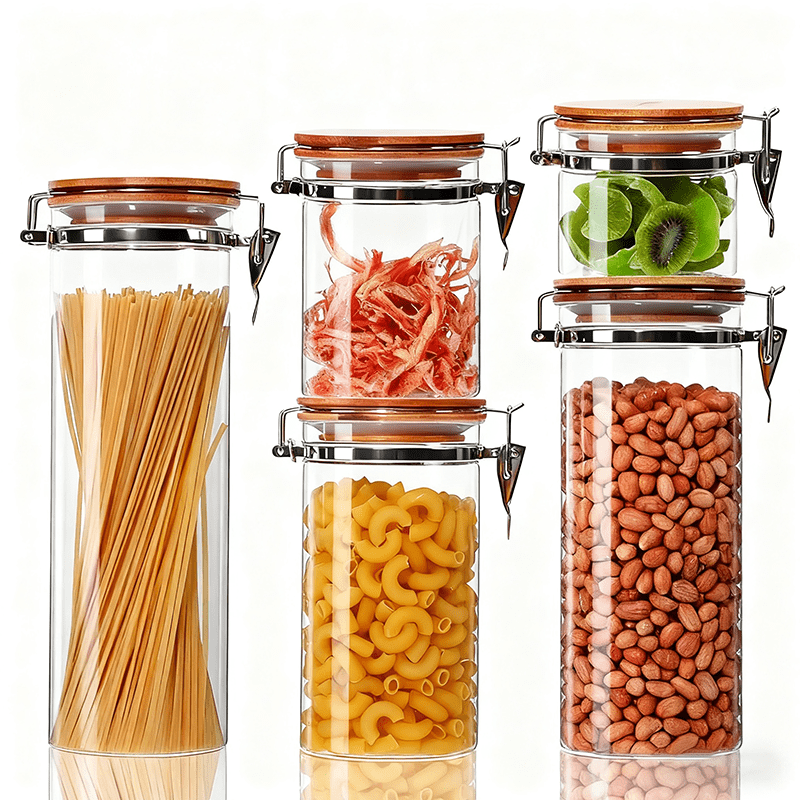
Home brands often make the mistake of designing each storage container in isolation. A spice jar gets one treatment, a large canister gets another, and suddenly the product line looks like it was assembled from different catalogs. The fix starts with establishing shared visual elements across every piece—consistent lid mechanisms, matching finishes, proportional relationships between sizes.
Functional consistency runs parallel to aesthetics. Every container in a glass kitchen storage sets lineup should deliver the same airtight seal performance. Customers notice when the small jar seals perfectly but the large one doesn’t quite close right. That inconsistency erodes trust faster than any design flaw.
Material selection anchors the whole strategy. Premium borosilicate glass provides a uniform foundation that carries through from the smallest herb container to the largest flour canister. The clarity stays consistent, the weight feels proportional, and the thermal performance remains predictable across the range.
The development sequence typically moves through concept generation, where form and function ideas get explored together. Design refinement follows, with detailed CAD work addressing both aesthetics and manufacturability. Material confirmation locks in the borosilicate glass specification along with complementary lid materials. Prototyping produces physical samples for hands-on evaluation. Production scaling then brings the validated designs to market volume.
What’s Actually Driving Glass Storage Demand Right Now
The glass storage market has shifted substantially over the past few years. Sustainability concerns have moved from nice-to-have to purchase drivers. Consumers actively seek out reusable options that reduce plastic waste, and they’re willing to pay more for products that align with those values.
Health consciousness plays an equally strong role. The awareness that certain plastics can leach chemicals into food has pushed buyers toward non-toxic alternatives. Borosilicate glass hits this need directly—it’s chemically inert, doesn’t absorb odors, and won’t stain from tomato sauce or turmeric.
E-commerce growth has added another dimension to product requirements. Glass storage needs to photograph well for online listings and survive shipping without damage. This combination of visual appeal and structural durability favors well-designed borosilicate glass Food Storage Jars over cheaper alternatives that might look acceptable in person but disappoint in transit.
The competitive landscape rewards brands that understand these overlapping demands. Products that deliver on sustainability, health safety, aesthetic appeal, and durability simultaneously capture market share from competitors still treating these as separate selling points.
Scaling Production Without Sacrificing Quality
Manufacturing consistency becomes the critical bottleneck as order volumes grow. A beautiful design means nothing if the hundredth piece doesn’t match the first. Xuzhou Jianmei Glass Products operates a 40,000 square meter facility with 200 employees and 100 advanced machines, producing 200,000 pieces daily. That scale matters because it means production processes have been refined through repetition.
Quality control integrates at every checkpoint rather than just final inspection. Raw material verification confirms borosilicate glass composition before production begins. Mold precision checks ensure dimensional accuracy. Production line monitoring catches defects during forming and annealing. Post-annealing inspection includes thermal shock testing. Final product testing verifies leak-proof performance and certification compliance.
| Quality Control Checkpoint | الوصف | Outcome |
|---|---|---|
| Raw Material Inspection | Verification of borosilicate glass composition | Ensures material purity and consistency |
| Mold Precision Check | Calibration and inspection of custom molds | Guarantees accurate product dimensions and form |
| Production Line Monitoring | Continuous oversight of forming and annealing | Detects defects, maintains structural integrity |
| Post-Annealing Inspection | Thermal shock testing and visual defect checks | Confirms durability and aesthetic quality |
| Final Product Testing | Leak-proof, capacity, and certification adherence | Verifies functional performance and compliance |
The facility holds 45 appearance patents and 32 intellectual property rights, which protects partner investments in unique designs. The 120 testing certifications, including FDA and CE approvals, confirm that products meet global safety standards without requiring partners to manage separate compliance processes.
Certifications Open Doors to International Markets
FDA and CE certifications aren’t optional checkboxes—they’re market access requirements. Without them, products simply can’t enter certain retail channels or geographic markets. These certifications signal to retailers and consumers that products meet established safety benchmarks for food contact materials.
The certification process also forces manufacturing discipline. Meeting FDA requirements means documenting material sources, production processes, and quality controls in ways that benefit overall operations. The rigor required for certification tends to improve everything else about how a facility runs.
Creating Brand Recognition Through Product Design
Brand identity in the glass storage category comes down to recognizable design elements that customers associate with quality. A glass jar with lid that features distinctive proportions, a signature lid mechanism, or a particular finish becomes identifiable even without visible branding.
Design patents and intellectual property protection ensure that distinctive elements remain proprietary. Without this protection, successful designs get copied within months, eroding the competitive advantage that justified the original development investment.
Custom branding options extend beyond the products themselves. Logo etching, bespoke packaging, and coordinated presentation materials create a complete brand experience. A Borosilicate Glass Jar With Lid set with uniform design elements and consistent branding becomes instantly recognizable on retail shelves or in e-commerce listings.
OEM and ODM capabilities allow brands to develop exclusive designs rather than selecting from existing catalogs. This exclusivity reinforces market positioning and prevents direct product comparisons with competitors selling identical items under different labels.
Finding the Right Manufacturing Partner
The difference between a good product strategy and a successful product launch often comes down to manufacturing partnership. The right partner handles supply chain complexity, maintains quality standards at scale, and provides the flexibility to adapt as market conditions change.
Xuzhou Jianmei Glass Products serves markets across North America, South America, Europe, and Oceania, which means logistics and compliance processes are already established for major export destinations. This existing infrastructure eliminates the learning curve that comes with working with manufacturers new to international shipping.
Minimum order flexibility matters for brands at different growth stages. Sample orders starting from a single piece allow for design validation before committing to production volumes. This reduces risk during product development and enables iterative refinement based on physical samples rather than renderings alone.
Custom Development Without Starting From Zero
OEM services provide manufacturing capacity for existing designs, while ODM solutions support ground-up product development. Both approaches benefit from established production expertise and quality systems.
Custom mold development enables truly proprietary products that competitors can’t source from the same factory. The investment in tooling pays off through product differentiation and protected market position. Collaboration throughout the development process ensures that designs translate effectively from concept to manufacturable product.
The Technical Case for Borosilicate Glass
Borosilicate glass earns its premium positioning through measurable performance advantages. Heat resistance allows the material to handle temperature swings that would crack ordinary glass—moving from freezer to microwave without thermal shock damage. This practical durability matters for real kitchen use where containers get subjected to temperature extremes regularly.
The chemical stability of borosilicate glass means it won’t react with acidic foods like tomatoes or citrus. It doesn’t absorb odors from garlic or onions. It won’t stain from curry or beets. These properties preserve both the glass appearance and the food flavor over years of use.
Crystal-clear transparency serves both functional and aesthetic purposes. Users can identify contents at a glance without opening containers. The visual clarity also photographs well for e-commerce, where product appearance drives purchase decisions.
The durability and recyclability of borosilicate glass align with sustainability values that increasingly influence buying behavior. Products that last for years and can be recycled at end of life appeal to environmentally conscious consumers willing to pay premium prices for reduced environmental impact. These combined properties make borosilicate glass water bottle and storage container lines compelling value propositions.
Moving From Strategy to Market Reality
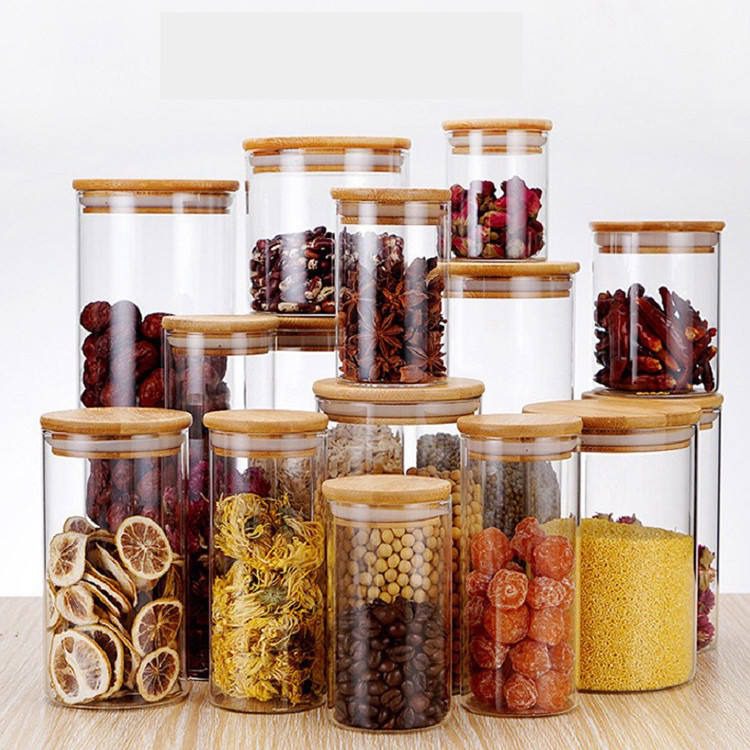
Building cohesive product lines requires alignment between design vision, manufacturing capability, and market positioning. The brands that succeed treat these elements as interconnected rather than sequential—design decisions account for manufacturing constraints, and manufacturing partnerships support brand differentiation goals.
Xuzhou Jianmei Glass Products provides the production expertise, quality systems, and customization capabilities that translate product strategies into market-ready collections. The combination of scale, certification compliance, and design protection creates a foundation for sustainable brand growth in the competitive glass storage category.
الأسئلة الشائعة
What makes a glass kitchen storage set cohesive for a home brand?
Cohesion comes from consistent design language across all items—uniform material quality, complementary lid mechanisms, proportional relationships between sizes, and matching finishes. Premium borosilicate glass provides the material foundation, while thoughtful design ensures each piece feels like part of a collection rather than a standalone product. The visual and functional consistency reinforces brand identity every time a customer interacts with any item in the line.
How does Xuzhou Jianmei Glass Products ensure quality and safety for custom glass storage?
Quality assurance operates at every production stage rather than just final inspection. Raw material verification confirms borosilicate glass composition meets specifications. Mold calibration ensures dimensional accuracy. Production monitoring catches defects during forming and annealing. Post-production testing includes thermal shock evaluation and leak-proof verification. The 120 testing certifications, including FDA and CE approvals, confirm that products meet international safety standards for food contact materials. All borosilicate glass products are BPA-free, lead-free, and food-grade.
What advantages does borosilicate glass offer for kitchen storage products?
Borosilicate glass handles extreme temperature changes without cracking—safe for freezer, microwave, and oven use. The material is chemically stable, so it won’t react with acidic foods, absorb odors, or stain from strongly colored ingredients. The non-toxic composition ensures food safety with no chemical leaching. Crystal-clear transparency allows easy content identification and photographs well for e-commerce. The exceptional durability means products last for years, and full recyclability supports sustainability goals.
إذا كنت مهتماً، اطلع على هذه المقالات ذات الصلة:
تنبيه: أكثر المنتجات مبيعًا في موسم الأعياد
أكثر المنتجات مبيعاً في عيد الحب وطوال العام
لماذا قام 60 من المشترين بتحويل الطلبيات إلى هذا المصنع الصيني
كيفية التمييز بين زجاج الصوداليم وزجاج البورسليكات