 Arabic
  English
  Spanish
  German
 When a company puts custom زجاجة ماء زجاجيةs into a wellness program, it is picking a material that says something about health standards and durability before an employee takes the first sip. Most sourcing guides stop at general promotional product advice, but a corporate order lives or dies on glass type, lid engineering, and how well the factory handles pre-production samples. I have managed high borosilicate glass production lines for over a decade, and the orders that arrive on time with consistent quality share a pattern: the buyer asked the right questions before committing. What follows is a manufacturing-side view of what those questions are.
What Makes Borosilicate Glass the Right Material for Wellness Programs
Corporate wellness programs distribute bottles to people who use them daily, often filling them with hot tea in the morning and cold water after a workout. The glass type determines whether the bottle survives that range without thermal shock failure. Standard soda-lime glass, which dominates low-cost drinkware, handles a temperature swing of roughly 40°C before cracking risk rises sharply. High borosilicate glass, in contrast, tolerates a working range from approximately minus 20°C to 300°C. That is not marketing copy; it is a material property that directly affects return rates and user confidence in branded merchandise.
One factor that procurement teams outside the glass industry rarely check is the linear thermal expansion coefficient. Borosilicate glass sits around 3.3 × 10⁻⁶ per Kelvin, about one-third the expansion rate of soda-lime glass. In practice, this means a bottle pulled from a hot dishwasher can be filled with ice water without the base shearing off. For a program where employees are encouraged to carry the bottle throughout the day, that thermal margin matters. I have reviewed returned samples where the failure originated from thermal shock, and in every case the glass was not borosilicate.
Borosilicate glass also does not require a chemical liner to achieve food-grade safety. The material itself is inert, which means no BPA, no phthalates, and no leaching into the contents even after years of use. For a wellness program that consciously avoids plastic, glass eliminates the liner question entirely. Buyers should still request third-party test reports for the finished product, but the starting point is a material that does not need a chemical barrier between itself and the water.
Key Product Specifications That Determine Program Fit
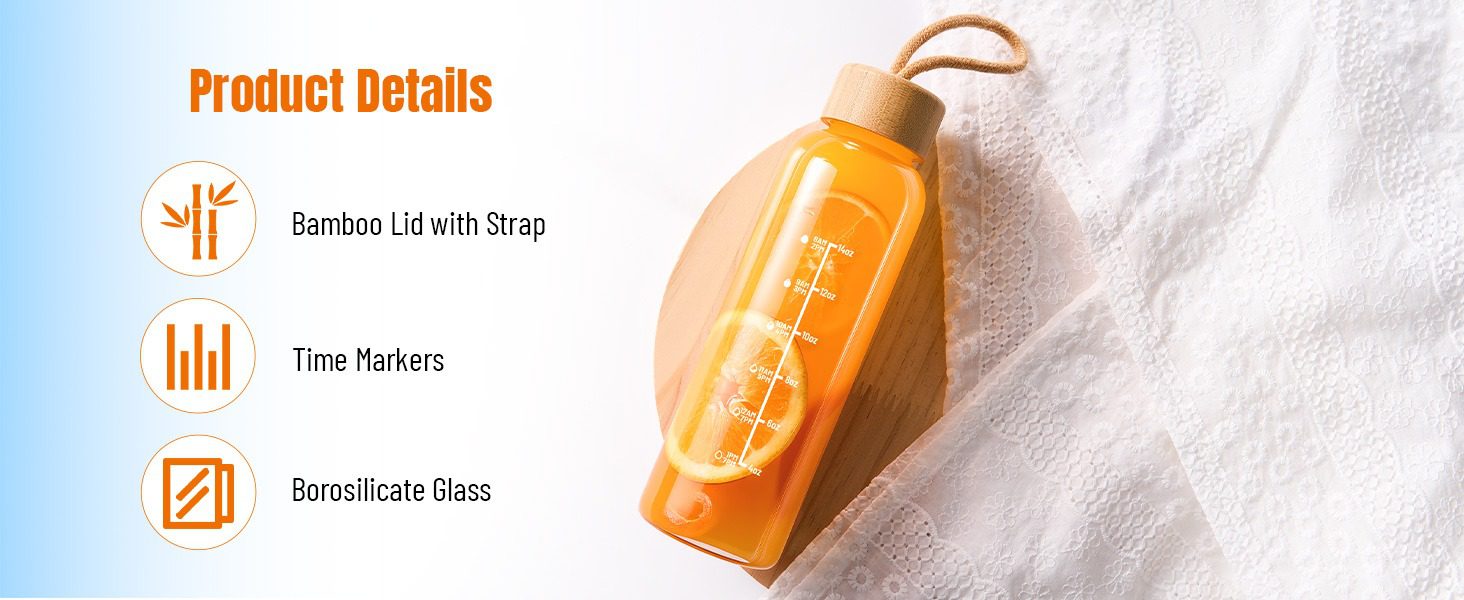
Bottle capacity, lid design, and seal configuration are not interchangeable details; they decide whether employees actually reach for the bottle or leave it in a drawer. From orders we have produced for corporate clients, the 500ml capacity range has the widest adoption because it fits most car cup holders and office desk setups without being too heavy when full. Larger formats, such as 750ml and 1000ml, work better for gym-focused wellness programs or outdoor field teams where refill access is limited. The table below shows common borosilicate bottle capacities and where each performs best.
| القدرة الاستيعابية | Typical Body Diameter | أفضل تطبيق |
|---|---|---|
| 300 مل | ~58mm | Desk use, light hydration reminders |
| 420 مل | ~66mm | Commuter bottle, moderate daily intake |
| 500 مل | ~66mm | General office wellness, most popular corporate format |
| 750 مل | ~70mm | Gym and fitness program distribution |
| 1000 مل | ~75mm or ~85mm | Outdoor teams, high-activity workplaces |
Lid sealing is the other specification that separates a functional bottle from one that leaks into a laptop bag. For bottles intended to be carried horizontally in a work backpack, a screw-top lid with an internal silicone seal ring provides the most reliable closure. Flip-top lids and straw lids are more convenient for desk-side sipping but introduce additional seal points that need tighter production tolerances to stay leak-proof. If the corporate program plans to offer only one bottle style, a screw-top with a silicone seal balances simplicity and reliability. If the program offers tiered options, matching the lid type to the user’s daily routine reduces the chance someone receives a bottle they will not use.
Wide-mouth openings deserve separate attention because they affect both the drinking experience and the ability to add ice cubes or fruit slices, a common wellness-program habit. A mouth diameter under 45mm makes cleaning difficult and ice insertion impractical. Most corporate orders we have handled specify a mouth opening between 48mm and 55mm, which clears standard ice cube trays while keeping the bottle stable enough to drink from while walking.
What Customization Methods Work Best for Glass Water Bottles
Customization is where a corporate wellness bottle becomes a brand asset rather than a generic giveaway. The three most common decoration methods for borosilicate glass are screen printing, laser engraving, and ceramic decal application, and each creates a different look and durability profile.
Screen printing applies a pigmented ink to the glass surface, which is then fired at high temperature to bond the ink into the outer layer of the glass. The result is a full-color logo that resists fading from washing and handling. The trade-off is that screen printing requires a minimum setup per color, so multi-color designs increase the unit cost incrementally. For logos with one or two Pantone colors, screen printing is usually the most cost-effective route at volumes of 500 pieces and above.
Laser engraving etches the glass surface to a shallow depth, creating a permanent frosted mark. No ink is involved, so the mark cannot peel or wear off. The limitation is that laser engraving produces a single-tone result, white or translucent depending on glass thickness and laser settings, and it does not reproduce color gradients. For minimalist branding or company names where monochrome is acceptable, engraving delivers a premium, understated finish.
Ceramic decal transfers allow for photographic-quality, full-color reproduction by transferring a printed decal onto the glass and firing it. The decal bonds at the same temperature range as screen printing ink, so durability is comparable. Decal is the go-to method when the logo includes gradients, complex illustrations, or photographic elements that cannot be reduced to solid spot colors. The per-unit cost runs higher than screen printing, but for small runs below 300 pieces where setup charges dominate, the difference narrows.
Packaging customization completes the brand experience. Standard bulk packaging protects bottles during shipping but eliminates any unboxing moment. Adding a custom-printed sleeve, a branded box, or a hang tag with the company wellness message turns the bottle into a program communication tool before the employee ever fills it with water. If the program is tied to a specific wellness campaign or new-hire onboarding kit, packaging should carry the same visual identity as the bottle itself.
What Certifications and Quality Standards Should Buyers Check
The reorder rate on a corporate wellness bottle depends more on quality consistency than most buyers expect. When 500 identical bottles ship, the worst performer sets the reputation of the entire program. That makes pre-production quality documentation and third-party certification non-negotiable, not just for compliance but for downstream confidence in the supplier.
For glass water bottles entering the US market, FDA food-contact compliance for the finished product is the baseline. The certification confirms that the glass body, lid materials, and any internal seal components have been tested and found free of substances that migrate into food or water under intended use conditions. For the European market, the equivalent standard is the LFGB (Lebensmittel- und Futtermittelgesetzbuch) framework, administered in Germany, which often imposes stricter limits than FDA on certain heavy metals and organic migrants. A supplier that holds both FDA and LFGB test reports has undergone parallel compliance reviews under two regulatory regimes, which gives the buyer wider market flexibility.
Beyond basic food-contact certification, SGS or equivalent third-party heavy metal leaching reports add a supplementary data layer. Borosilicate glass itself does not contain lead or cadmium in the formulation, but heavy metal traces can be introduced through recycled cullet or color additives during melting. If the bottle body includes any colored glass sections or applied color decoration, a heavy metal migration test on the decorated area is worth the incremental cost.
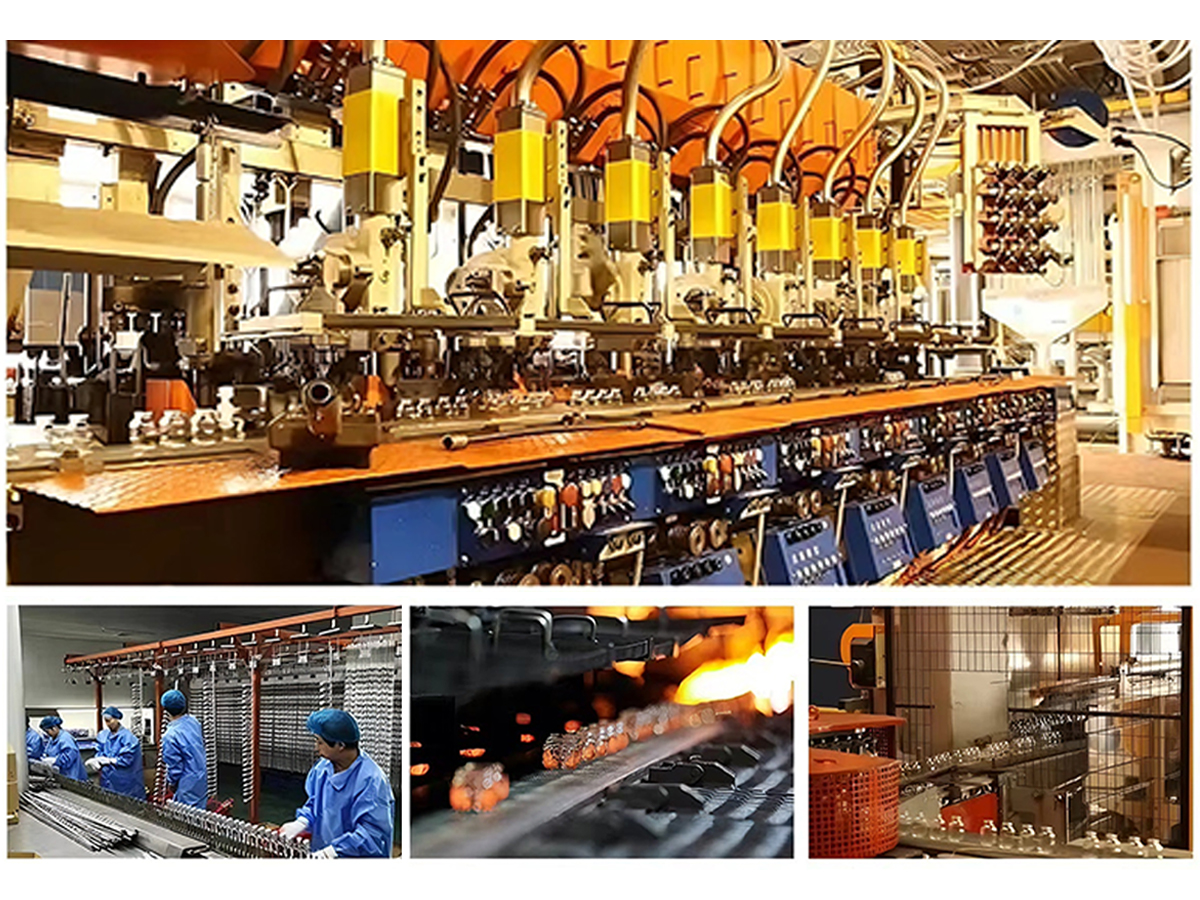
On the manufacturing side, ask whether the factory holds ISO 9001 for quality management or BSCI for social compliance. ISO 9001 audits production documentation, process control, and corrective action procedures. BSCI audits labor conditions and workplace safety. Neither certification predicts the quality of an individual shipment, but both signal that a factory submits to external inspection rather than relying on its own declarations. Our facility maintains both, and we share current audit reports with new buyers during the qualification stage.
Planning a Corporate Order That Arrives on Schedule
Most corporate wellness programs operate on a fixed launch date, whether it is the start of a fiscal year, a benefits enrollment window, or a new-hire onboarding cycle. The production timeline runs backward from that date. For a 500-piece order of custom screen-printed borosilicate bottles, the production sequence typically runs as follows: mold preparation if a custom shape is required (15 to 25 working days for a new mold), sample production and courier delivery (7 to 10 working days for a pre-production sample with decoration), sample approval and any necessary adjustments (5 to 10 working days depending on modification scope), mass production (10 to 15 working days once the sample is signed off), and sea or air freight depending on urgency and budget.
If the program requires a custom mold for an exclusive bottle shape, the mold cost is a one-time investment that amortizes across the program’s lifetime. For an existing mold design without modification, the mold preparation phase drops out of the timeline entirely, and the total lead time from deposit to shipment can be as short as 25 to 30 working days for a standard silk-screen logo on a proven bottle body. Communicating the firm launch date to the factory at the quoting stage, not after the order is placed, allows the production team to reserve capacity and schedule around Chinese national holidays that can add weeks to standard timelines.
Minimum order quantities for custom-decorated borosilicate bottles vary by decoration method and capacity. Screen printing typically becomes economical at 300 to 500 pieces for single-color logos. Laser engraving has a lower setup dependency, making runs of 100 to 200 pieces more feasible. The critical factor is not the absolute minimum a factory claims it can produce; it is the minimum at which unit pricing and setup amortization make the per-unit cost align with the program budget. Get quotes at multiple quantity brackets to see where the price curve flattens.
Getting the Right Glass Bottles into Your Program
A corporate wellness bottle represents months of planning compressed into an object an employee holds every day. Getting the material specification, decoration method, and production timeline right before committing to a purchase order eliminates the rework loops that cause delays. Whether your program needs 300 bottles with a single-color engraved logo or 3,000 bottles with full-color decal branding and custom packaging, the supplier conversation should begin with your launch date, your preferred capacity range, and your decoration method, because those three variables determine the production schedule more than the total quantity.
Send your program details, including desired capacity, logo artwork format (vector file preferred), and target ship date to [email protected]. A specific brief moves faster through the quoting process than a general inquiry, and it lets the production team confirm feasibility and timeline in one response rather than trading messages over several days.
Common Questions About Corporate Glass Water Bottle Sourcing
Will the logo fade after repeated washing?
If the decoration is fired at the correct temperature, around 580°C to 620°C for screen-printing inks and ceramic decals, the pigment fuses into the glass surface itself rather than sitting on top. Bottles decorated this way survive hundreds of dishwasher cycles without visible degradation. Laser engraving, because it removes a micron-scale layer of glass, is effectively permanent. The variable is whether the factory’s firing profile reaches and holds the target temperature; cross-checking a sample by running it through 20 dishwasher cycles before approving mass production catches under-fired decoration quickly.
What if the sample shows a color mismatch compared to the approved design?
Color reproduction on glass is influenced by the base glass tint, the ink composition, and the firing temperature. A slight shift is normal, but a noticeable mismatch usually traces back to one of three causes: the ink batch was not matched to the Pantone reference, the firing profile differed from the sample run, or the base glass has a higher iron content that imparts a faint green cast. The corrective path depends on the cause, which is why we ask for a physical sample with the final glass batch before proceeding to full production. Minor adjustments to ink formulation or firing dwell time resolve most cases.
How should the bottles be packaged to minimize transit breakage?
Individual bottle boxes with internal dividers provide the most protection, but they increase carton volume and shipping cost. For programs shipping to a single distribution center, bulk packing with honeycomb separators in master cartons reduces both breakage and freight. The key specification is that the bottle body must not contact the carton wall or another bottle body under typical freight vibration. If the order ships by sea, humidity-absorbing desiccant inside each carton prevents condensation that can weaken box structure during long-haul container transit.
Is borosilicate glass fragile enough that breakage becomes a program problem?
Borosilicate glass has higher impact resistance than standard soda-lime glass in controlled drop tests, but it is still glass and will fracture under sufficient force. The practical difference in a corporate wellness program is not that borosilicate bottles never break but that they survive the small daily knocks, against a desk edge, inside a bag, against a metal water fountain, that send soda-lime bottles to the recycling bin. When a program specifies borosilicate, the replacement rate over a two-year period is lower, and employees are less likely to associate the brand with a broken product.
Is glass appropriate for a company with an active outdoor culture?
Yes, with the right design. A silicone sleeve fitted around the body absorbs lateral impact and improves grip in wet conditions. For organizations that include outdoor activities as part of their wellness initiatives, a borosilicate bottle with a full silicone sleeve and a loop-cap lid combines the material benefits of glass with the handling confidence of a protected exterior. We have filled orders for field-going teams where the silicone sleeve was the deciding factor in moving from a plastic bottle to glass. If your program includes an outdoor or active component, mention it when requesting specifications; the sleeve selection changes the bottle’s overall diameter and the packaging configuration. Share your use case and we will confirm the configuration that fits your program’s needs at [email protected].
إذا كنت مهتماً، اطلع على هذه المقالات ذات الصلة:
الدليل النهائي للإجراءات اليومية لحماية الأرض
ما الفرق بين البرطمانات الزجاجية والزجاجات الزجاجية؟
لماذا قام 60 من المشترين بتحويل الطلبيات إلى هذا المصنع الصيني
قصة نشأة أكواب الزجاج
"رشفات مستدامة 2025" — مجموعة أكواب "كوريتد إيكو" المختارة بعناية