
 Arabic
  English
  Spanish
  German
 When importers evaluate leak-proof زجاجة ماء زجاجيةs, most of the conversation stops at lid type and silicone seal thickness. These consumer-facing features matter, but they tell you almost nothing about whether a bottle will stay leak-proof after six months of daily use, temperature cycling, and repeated washing. In our production facility, we have learned that leak-proof reliability is engineered at the mold design stage, validated through specific QC checkpoints, and only as strong as the weakest component in the assembly. This article walks through the manufacturing-side features that B2B buyers should scrutinize before committing to a supplier, because what you cannot verify at the factory level will eventually show up as a return on the retail shelf.
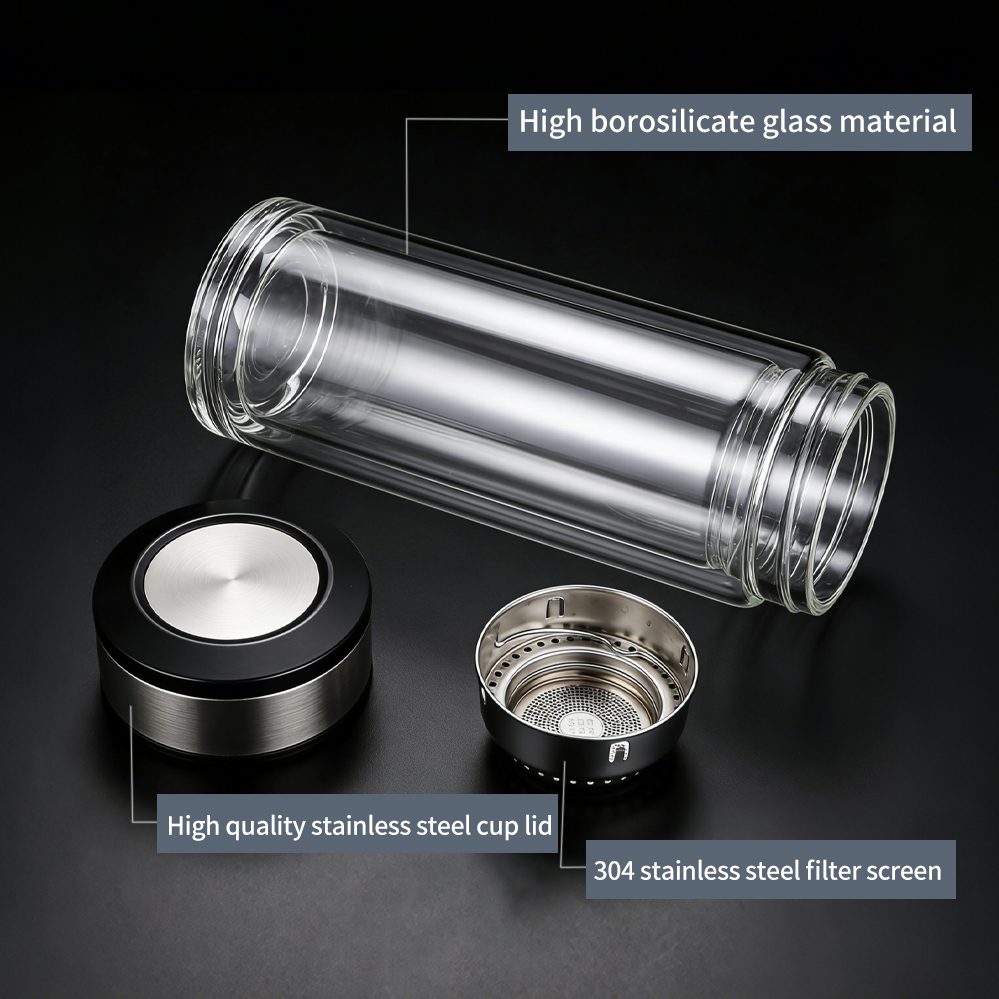
How Leak-Proof Design Is Engineered into Glass Water Bottles
Leak-proof performance is not added at the end of production. It begins with the thread geometry on the bottle neck and the flatness of the sealing surface. In borosilicate glass molding, the neck finish, meaning the top rim where the lid makes contact, must be formed to a tolerance of ±0.3 mm or better. Anything wider creates uneven compression on the seal, which leads to slow seepage that may not show up in a quick invert test but becomes obvious after a few weeks of use.
The thread pitch and depth on the glass body must match the lid threads with sufficient engagement. We require at least 1.5 full thread turns of contact between the glass neck and the lid before the seal compresses. Bottles with shallow or poorly formed threads may tighten firmly on first use, but repeated opening and closing wears down the contact points, and leaks develop gradually. Buyers who receive samples should measure thread engagement, not just feel for tightness.
Another factor is the internal shoulder transition, where the bottle body narrows into the neck. A sharp angle at this transition concentrates thermal stress during hot-filling or dishwasher exposure. Over hundreds of cycles, micro-cracks can form and travel to the sealing surface. A well-designed bottle uses a gradual radius at the shoulder, which distributes thermal stress and preserves the integrity of the neck finish over the product’s service life.
Lid and Seal Components: What Determines Long-Term Reliability
A leak-proof glass water bottle is only as reliable as its lid assembly. Most B2B buyers focus on whether the lid has a silicone ring, but the material grade of that ring, its cross-sectional shape, and how it is retained in the lid are what separate a durable seal from a short-term one.
Food-grade silicone seals should meet FDA or LFGB standards, and the durometer, or hardness, of the silicone directly affects compression recovery. A seal that is too soft deforms permanently after repeated compression and loses the ability to rebound. We specify silicone with a durometer of 50 to 60 Shore A for water bottle seals. Seals above 70 Shore A cannot conform to minor surface irregularities on the glass rim and require excessive tightening force to achieve a seal.
The lid body material introduces a second variable. Stainless steel lids with a 304 grade offer the best thread durability and corrosion resistance across temperature cycles. Plastic lids, particularly polypropylene, are lighter and lower cost but experience thread wear faster. For buyers sourcing bottles intended for hot beverages or frequent dishwasher use, the stainless steel lid combined with a properly retained silicone seal is the combination we recommend based on our production experience across multiple export markets.
| المكوّن | Common Material | Key Quality Indicator | Buyer Verification |
|---|---|---|---|
| Seal ring | Food-grade silicone | Durometer 50-60 Shore A, uniform cross-section | Request material cert; inspect for flash lines or uneven edges |
| Lid body | 304 stainless steel or PP | Thread depth ≥ 1.2 mm, no burrs | Engage lid on bottle 20 times; check for thread dust or loosening |
| Glass neck finish | 3.3 borosilicate glass | Flatness ≤ 0.3 mm variation, smooth rim | Roll bottle on flat surface with lid off; check rim for chips under light |
| Thread engagement | Glass-to-lid interface | ≥ 1.5 full turns before seal compression | Count turns to first resistance, then to full tight; difference indicates seal travel |
Quality Control Tests That Validate Leak-Proof Claims
A factory’s QC process for leak verification tells you more than the product spec sheet does. The simplest and most common test is the static invert test, where filled bottles are turned upside down for a set period. But this test alone does not simulate real-world conditions.
We conduct a thermal cycling leak test as part of our standard QC protocol for export orders. Bottles are filled with water at 85°C, sealed, and then submerged in cold water at 5°C for 30 minutes. The rapid temperature drop creates internal negative pressure that pulls on the seal. If the lid assembly or the glass neck geometry has any weakness, this test reveals it immediately. Buyers should ask whether their supplier performs a thermal differential leak test, and if not, what alternative dynamic testing they use.
The drop-and-seal test is another practical verification. A filled and sealed bottle is dropped from 80 cm onto a wooden surface on three different orientations: base-down, side-impact, and lid-first. After each drop, the bottle is inverted for 10 minutes. A bottle that passes static leak testing but fails after a drop has a design vulnerability that consumers will discover during normal use. We have seen lids that appear tight on the shelf loosen noticeably after a single waist-height drop because the thread engagement was borderline from the start.
If your program involves bottles intended for active lifestyle or outdoor brands, it is worth confirming the specific dynamic testing protocol your supplier uses before finalizing the spec. Reach out at [email protected] with your target use case, and we can share the relevant QC benchmarks.
Common Leak Points Buyers Overlook During Sourcing
The most obvious leak path, the lid-to-neck interface, receives the most attention. But in our production experience, three less visible leak points cause a disproportionate share of field failures.
The first is the seal retention groove inside the lid. If this groove is too shallow or has sharp internal corners, the silicone ring can roll out of position during tightening. The user tightens the lid, the seal shifts slightly, and a few hours later, the bottle weeps around the rim. A properly designed retention groove has a depth at least 60% of the seal cross-section and a radiused bottom profile that holds the ring in place during compression.
The second overlooked point is the lid-to-body alignment during thread engagement. On bottles where the lid thread start position is not controlled relative to the glass thread start, the lid can cross-thread by a fraction of a turn. The user feels resistance and assumes the bottle is sealed, but the seal compression is uneven. In production, we control the thread start position on both the glass molding and the lid machining so alignment stays consistent across units.
The third point is the venting mechanism, if the lid includes one. Lids designed for hot beverages may incorporate a pressure-release vent to prevent vacuum lock. A poorly designed vent that remains partially open during normal use creates a slow leak path that is difficult to detect in basic QC checks. Buyers should test lids with vent mechanisms by filling the bottle completely, sealing it, and laying it on its side for at least four hours.
Matching Leak-Proof Bottle Features to Your Market Requirements
Different retail channels and end-user segments place different demands on leak-proof performance, and the right feature set depends on where your brand competes.
For fitness and gym brands, the priority is drop resistance and one-handed operation. Bottles in this segment benefit from a lid design with a flip-top or straw mechanism that seals positively when closed, combined with a silicone sleeve that absorbs impact. The sleeve adds drop protection and also adds grip during exercise, reducing the likelihood of drops in the first place.
For office and daily-use brands, thermal endurance and taste neutrality drive satisfaction. A borosilicate glass body with a double-wall construction and a stainless steel lid gives both insulation and a clean drinking experience. Office users tend to fill bottles repeatedly throughout the day, so thread durability and seal resilience over thousands of open-close cycles matter more than extreme temperature performance.
For children’s and school products, safety and simplicity are the highest priorities. A wide-mouth design reduces cleaning difficulty, and a lid with fewer separate parts lowers the risk of lost or damaged components. The seal should be permanently retained rather than removable, as removable seals are frequently misplaced during washing. BPA-free certification is table stakes in this segment, and the bottle must pass a 1.2-meter drop test onto concrete in child-use orientation.
The frustration for many buyers is that generic supplier catalogs list features without context, leaving you to guess which ones matter for your specific product. We see this gap frequently in our OEM discussions. A manufacturer with experience across multiple export markets can recommend the feature set, material grades, and QC protocols that align with your customer expectations and your target price point. Send your product brief and quantity requirements to [email protected], and we will return a recommended specification with a sample lead time.
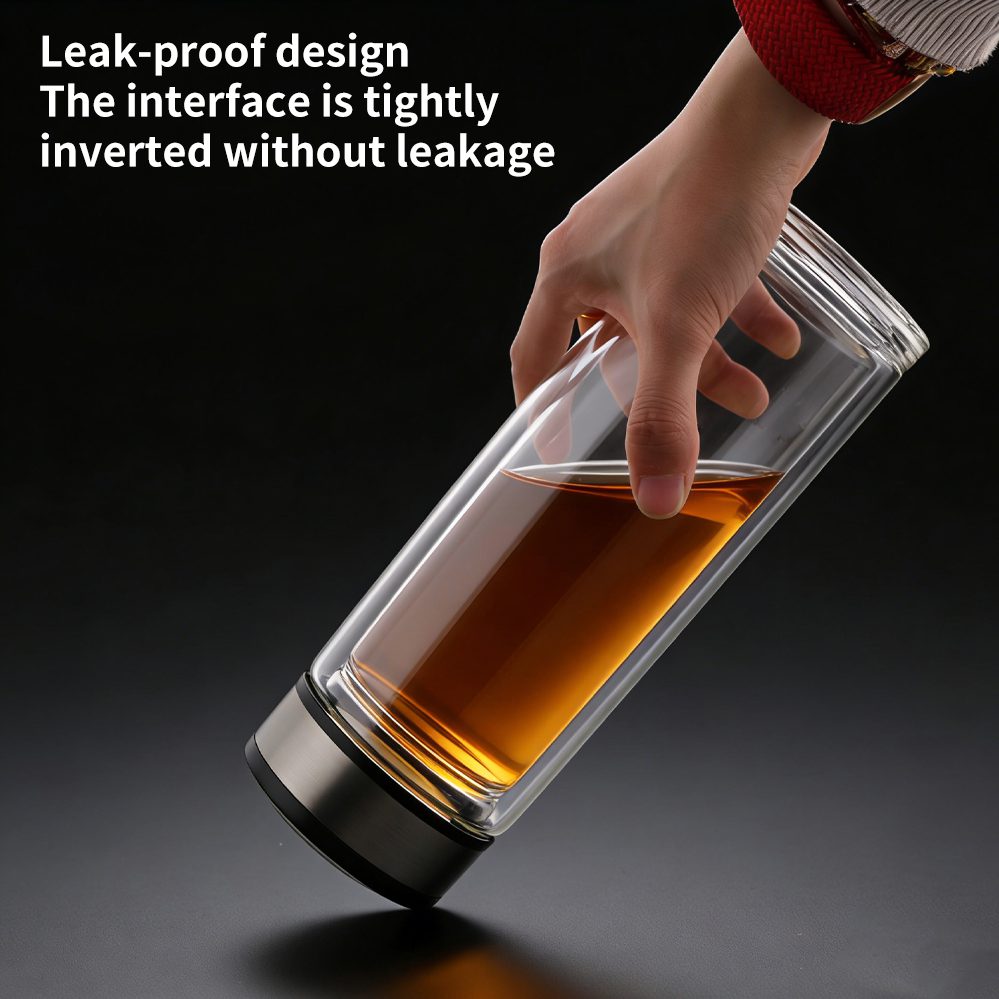
Common Questions About Leak-Proof Glass Water Bottle Sourcing
How can I verify a supplier’s leak-proof claims before placing a bulk order?
Request a structured test report, not just a statement that the bottle is leak-proof. The report should specify the test method, whether static invert, thermal cycling, or drop-and-seal, the sample size tested, the pass rate, and the failure modes observed. A supplier that cannot produce this documentation either does not test systematically or does not want you to see the results. In our factory, every export order includes a batch-specific QC report with leak test data for the production lot, because we know importers need this for their own compliance records.
Does borosilicate glass affect leak-proof performance compared to soda-lime glass?
The glass material itself does not directly determine leak-proof performance, but it strongly affects long-term reliability. Borosilicate glass has a lower coefficient of thermal expansion, roughly 3.3 × 10⁻⁶ /°C, compared to approximately 9 × 10⁻⁶ /°C for soda-lime glass. This means the borosilicate neck finish maintains its dimensional stability across temperature swings, preserving the sealing surface geometry. Soda-lime bottles may seal perfectly when new but develop rim irregularities after repeated hot-cold cycling, which gradually compromises the seal. For any product intended for hot or cold beverages, borosilicate glass is the safer foundation for leak-proof design.
What causes a glass water bottle to start leaking after months of normal use?
In programs we have supported, the most common root cause is seal compression set. Silicone seals that are compressed for extended periods, especially under heat exposure during dishwasher cycles, gradually lose their ability to rebound. A seal that started at 2.0 mm thickness may permanently compress to 1.6 mm over six months of daily use. The lid still tightens, but the reduced seal height means less compression force at the interface, and weeping begins. The next most common cause is thread wear on plastic lids, which reduces the available tightening torque. We recommend that buyers confirm the seal material specification and the expected compression set value before committing to a production run.
Is a flip-top lid or a screw-top lid more reliable for leak-proof performance?
A screw-top lid with a full-circumference seal ring is inherently more reliable than a flip-top mechanism because it distributes compression force evenly around the entire rim. Flip-top lids rely on a smaller contact area and a hinge mechanism, both of which introduce additional potential leak paths. However, for brands targeting convenience-oriented consumers, a flip-top design may be the right commercial choice even if it requires more rigorous QC. The practical compromise is to use a screw-top base with a flip-top drinking spout, where the main seal is still a full-circumference compression seal and only the spout cover needs secondary sealing. If your product line includes both designs, share your volume projections by SKU with your manufacturer, and we can recommend QC protocols specific to each lid type. Contact us at [email protected] with your product requirements and we will send testing recommendations tailored to your design.
إذا كنت مهتماً، اطلع على هذه المقالات ذات الصلة:
professional wholesale pickling glass jars preferred partner
سلسلة الأواني الزجاجية المصنوعة من زجاج البورسليكات من «جيانمي»