
 Arabic
  English
  Spanish
  German
 Meal prep and health food brands depend on برطمان زجاجيs that survive refrigerator-to-microwave cycling, repeated dishwashing, and tight lid seals. Sourcing glass jars for meal prep and health food brands that fail on thermal shock or leak at the gasket will create returns and damage a brand faster than a packaging shortage. Over ten years in borosilicate glass production, I have seen buyers focus too narrowly on unit price while ignoring annealing control and lid tolerance, the two factors that determine whether a jar holds up in daily use. The practical sourcing path starts with the glass material, moves through lid testing, and ends with packaging and inspection standards.
(س)
Mechanical Requirements for Meal Prep Glass Jars
Start with the glass formulation, not the shape. Soda-lime glass is cheaper, but it does not handle the thermal cycling that meal prep jars undergo when they move from a cold refrigerator into a microwave or a hot dishwasher. High borosilicate glass contains boron trioxide, which lowers the coefficient of thermal expansion and makes the jar far less likely to crack under sudden temperature change. In our Xuzhou plant, we produce meal prep jars in 3.3 borosilicate glass rated from -20°C to 300°C. That range matters more than wall thickness, because thermal failure usually starts at the stress points created during forming.
Annealing is the second requirement. Molten glass cools quickly at the surface and slowly in the center, which creates residual stress. A poorly annealed jar can look identical to a good one and still shatter during the first dishwasher cycle or hot fill. Our annealing furnace runs a controlled temperature curve and is integrated into a continuous line from molding to inspection. A buyer who skips this check will not see the problem on a sample table. It shows up later, in customer returns.
| Specification | Soda-lime glass jar | برطمان زجاج البورسليكات |
|---|---|---|
| مقاومة الصدمات الحرارية | فقير | Strong |
| Thermal range | Around 0°C to 100°C | من -20 درجة مئوية إلى 300 درجة مئوية |
| Dishwasher safety | محدودة | عالية |
| Best application | Dry goods with stable temperature | Meal prep, microwave, freezer |
| Relative cost | أقل | أعلى |
Lid and Gasket Selection for Health Food Brands
Health food buyers usually ask about the glass first, then forget the lid until the first leak complaint. The lid does more than close the jar. It determines whether the seal survives repeated opening, whether the gasket retains shape after dishwashing, and whether humidity reaches dry powders. For meal prep, I recommend a stainless steel lid with a food-grade silicone gasket for oily or acidic contents. A polypropylene lid works for dry goods, but it may distort if the jar runs through a high-temperature sanitizing cycle.
The dimension that matters most is the gasket groove, not the lid diameter. If the groove is too shallow, the silicone ring compresses unevenly and leaks after a few dozen uses. If it is too deep, the lid feels loose and consumers overtighten it, which cracks the rim. We test every lid design for compression set after repeated exposure to hot water and mild detergent. A buyer should request the same test before ordering, because a visual sample will not reveal how the seal behaves after three months of daily use.
Food Contact Certifications for Glass Jars
Food contact compliance is where a glass jar supplier either has the paperwork or does not. Borosilicate glass itself is inert, but the lid coating, printed logo, and sealing ring can introduce unwanted substances. For the US market, jars should meet FDA food contact standards. For Europe, LFGB is usually required. We hold 120 testing certificates across FDA, CE, and other schemes, and we keep the documentation available for each batch.
The test that matters most for glass jars is heavy metal leaching, not just BPA. Low-quality recycled glass can leach lead or cadmium into acidic foods such as tomato sauce, citrus, and dressings. High borosilicate glass made from controlled raw materials eliminates most of that risk, but the supplier should still submit third-party lab reports for every glass formula and every lid material. I ask buyers to verify the cert number against the production lot, because a certificate from a similar product is not the same as a certificate for the jar they are importing.
If your program includes multiple capacities with the same lid diameter, confirm the tolerance stack before finalizing your SKU list. Send your jar capacities and target lid type to [email protected] and we will confirm the matching documentation and dimensional limits.
Custom Glass Jar Molds and SKU Planning
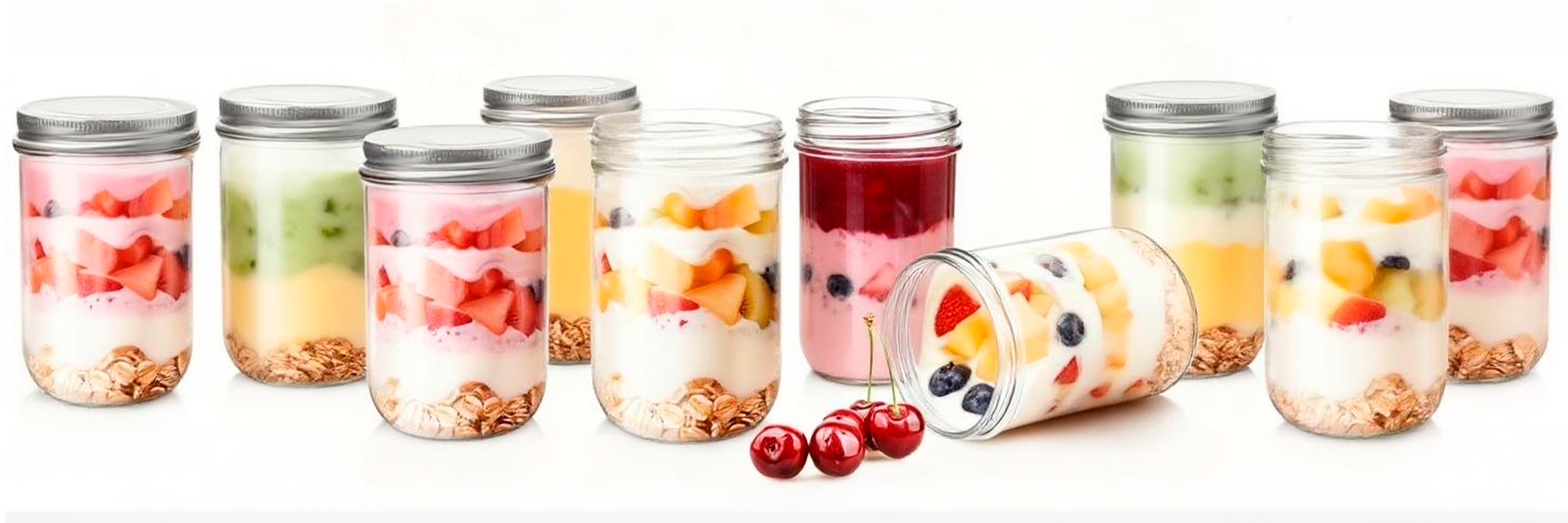
Customization is where a jar line stops being a commodity. The fastest path to SKU variety is to keep the lid opening and thread standard across multiple capacities. One mold set for the body shape can produce 300ml, 500ml, and 750ml jars with the same lid, which cuts tooling cost and simplifies replenishment. In our plant, we run body and finish molds separately, so a brand can change capacity without redesigning the closure.
For a new shape, the timeline moves from drawing to 3D model to mold fabrication to a pre-production sample. That process cannot be compressed without increasing mold rework risk. We recommend approving the glass sample first, then the decorated sample, then the final packaging. A common mistake is to approve a white sample and then reject production because the color or logo placement changed at scale. Those decisions should be locked before cutting production blanks.
Packaging, Inspection, and First Order Flow
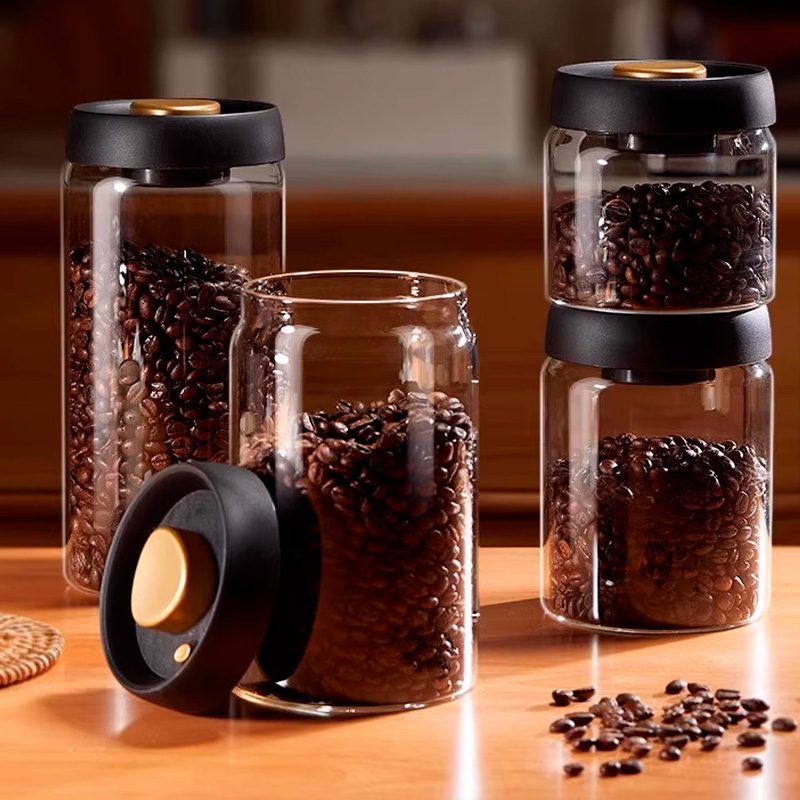
Glass jars survive production and then fail in transit when packaging is treated as an afterthought. For export, we use partitioned cartons and, for larger jars, individual corrugated dividers or pulp trays. The packaging specification should include drop height, carton weight, and palletization pattern. A jar that passes a three-foot drop test in a single unit may still break when the carton flexes under a full pallet load, so the test should be run on the packed carton, not the bare jar.
For inspection, I advise a pre-shipment inspection that covers glass clarity, rim finish, lid torque, gasket seating, and carton condition. We run in-line checks after annealing and again before packing. The buyer should still reserve the right to inspect before shipment, especially on the first order. Keep the first order smaller than the forecast, even if that raises unit cost slightly. The data from that first run will show whether the spec needs adjustment before a full container.
If ordering glass jars for a meal prep or health food line, start with the thermal requirement, then the gasket, then the certificate set, and finally the packaging. Send your part number, capacity, and target lid type to [email protected], and we will confirm stock or tooling lead time and batch-level testing documentation. The earlier the spec is fixed, the less rework appears during the first production run.
Common Questions About Glass Jar Sourcing
Is borosilicate glass always better than soda-lime glass for meal prep jars?
Soda-lime glass is not automatically a bad choice. For dry goods stored at stable room temperature, soda-lime glass can work and costs less. For anything that moves from refrigerator to microwave or a hot wash, high borosilicate glass is the safer choice because it handles thermal shock better. I would not use soda-lime for containers sold as oven-to-table or freezer-to-microwave meal prep products. The extra material cost is easier to absorb in a premium health food line than a return.
What is the most common cause of glass jar breakage after delivery?
Improper annealing causes many brittle failures. The jar may show no visible defect and then crack during thermal cycling because residual stress was locked into the base or rim. Other common causes are poor packaging and insufficient rim clearance for lid torque. If a jar breaks in a customer’s hands after normal use, annealing is the first thing I would audit. A supplier should release the annealing curve and batch inspection data, not just a final visual check.
How do I avoid leaking lids on meal prep jars?
It depends on the contents and the seal design. For liquids such as dressings or sauces, use a silicone gasket with the correct compression ratio and test the lid after hot fill and cold storage. For dry products, a simpler liner may be enough. The weak point is usually the gasket groove tolerance, not the gasket material. Before production, run a repeated closure test and ask the factory for the torque and compression set data. If the lid feels loose after a few cycles, the groove depth needs adjustment.
Can I start with a small order before committing to a full container?
In our production planning, yes, a small order is often the smarter first move. We list a minimum order of one piece for stock glass jars, which lets a brand validate the jar shape, lid fit, and label placement before committing to larger volumes. For custom molds, the tooling cost and sample lead time are separate from the production minimum. Starting small is sound when the product is new, because it exposes packaging and sealing problems before they scale. Send your capacity, lid preference, and target market to [email protected] and we will confirm the sample path and batch-level compliance documentation.
إذا كنت مهتماً، اطلع على هذه المقالات ذات الصلة:
أكثر المنتجات مبيعاً في عيد الحب وطوال العام
استدامة المذاق لماذا تختار الزجاج
لماذا يعتبر الزجاج منتجًا أساسيًا لنجوم الرفوف الخاصة بك