
 English
  Arabic
  Spanish
  German
 Most sourcing conversations about glass water bottles for Europe start with the same question: is the product BPA-free? It is a fair starting point, but stopping there leaves more risk on the table than most buyers realize. A factory can claim BPA-free status on a specification sheet. The question that matters more is whether the production process and the testing documentation support that claim in a way an EU border inspection will accept. I have spent over ten years managing borosilicate glass production lines, and I can tell you this: the gap between a verbal guarantee and a verifiable compliance file is where orders get stuck, rejected, or pulled from shelves. This article explains what you actually need to check before you place an order for glass water bottles bound for the European market.
What EU Regulations Actually Require for Glass Water Bottles
European market access for food-contact glass products rests on a framework rather than a single certificate. The foundation is Regulation (EC) No 1935/2004, which states that materials and articles intended to come into contact with food must not transfer their constituents to food in quantities that could endanger human health or cause unacceptable changes in composition. For glass drinkware, the practical enforcement route runs through two pathways: LFGB for Germany and the broader EU regime built around Commission Regulation (EU) No 10/2011 on plastic materials, which is referenced because many glass water bottles incorporate silicone seals, plastic lids, or protective sleeves.
The core test that matters for glass bottles is the migration test. Regulators simulate contact with food simulants under time and temperature conditions that reflect real use, then measure whether any substance transfers from the glass into the simulant. For borosilicate glass water bottles, the relevant simulants are acetic acid 3% (for acidic beverages) and ethanol 10-20% (for alcoholic drinks). If the bottle is positioned as a general-purpose water bottle, distilled water testing is also standard.
The distinction that often trips up first-time importers is between a material being inherently BPA-free and a material being tested and documented as compliant. Borosilicate glass is BPA-free by nature. Bisphenol A is a chemical used in polycarbonate plastics and epoxy resins; it is not an ingredient in glass production. The compliance path is therefore not about proving the absence of BPA in the glass itself but about demonstrating through migration testing that no harmful substances leach from the finished product, including any applied decorations, colored coatings, or lid components. I have seen importers confidently present a raw material statement to a German retailer, only to be asked for a finished-product LFGB test report. The raw material is not the product.
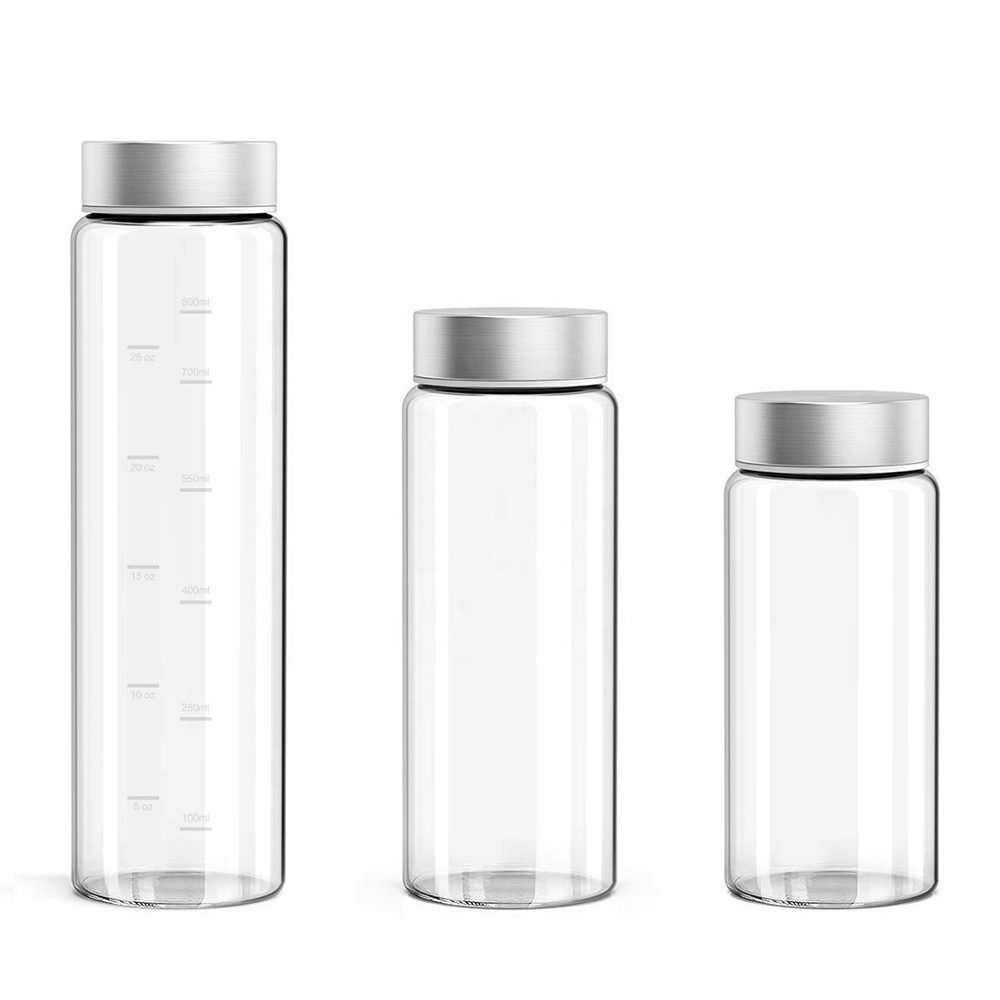
How a Factory Produces Genuinely BPA-Free Glass
The absence of BPA in glass is a matter of chemistry, not manufacturing choice. Borosilicate glass is composed primarily of silica (SiO₂), boron trioxide (B₂O₃), sodium oxide (Na₂O), and aluminum oxide (Al₂O₃). None of these raw materials contain bisphenol compounds, and the melting process at 1,600-1,650°C eliminates any organic trace that might have entered with the batch. What a buyer should focus on is not whether the glass itself is BPA-free but what happens to the bottle after forming.
The three risk points that can introduce non-compliant substances into a finished glass water bottle are:
- Mold release agents. Automated molding lines use lubricants and release agents that contact the glass while it is still hot. Factories serving the European market must use food-grade release agents and must have a documented cleaning protocol between production runs.
- Decoration and printing. Silk screen printing, decal application, and spray coating involve inks and pigments that must be tested separately. A bottle that passes migration testing in its clear form may fail after a colored logo is applied if the ink contains heavy metals like cadmium or lead.
- Lid and seal materials. Silicone seals, polypropylene lids, and stainless steel components each have their own regulatory requirements. A complete bottle assembly must be tested as a finished product, not as individual components assembled at the destination.
In our facility, we run separate production cells for orders requiring LFGB-compatible output. The molds, the annealing lehr, and the packaging stations are cleaned and verified before the production batch starts. This is not a theoretical precaution. A single cross-contamination event from a non-compliant decoration line can render an entire shipment unsellable in Germany. Production managers who have not exported to Europe tend to underestimate the inspection burden. Those who have been through a rejection learn quickly.
The silicone sleeve that wraps many glass water bottles deserves its own attention. Silicone is generally considered inert and food-safe, but the European market requires compliance with specific sections of Resolution AP (2004) 5 on silicones used for food contact. The relevant tests cover volatile organic compounds and specific migration limits. When you request a test report, confirm it covers the sleeve as well as the glass body. I have seen cases where the glass passed everything but the sleeve failed on residual volatiles because the supplier used a lower-cost curing process.
Certifications That Hold Weight with European Buyers
Certification requests from European importers typically fall into three categories: product safety, social compliance, and quality management. For glass water bottles, the hierarchy looks like this.
| Certification | What It Covers | Who Requires It |
|---|---|---|
| LFGB (Germany) | Migration testing per German Food and Feed Code | German retailers, discounters, and importers |
| EU 1935/2004 + 10/2011 | General migration and specific migration limits for EU | Broader EU market; often checked at border |
| FDA 21 CFR | US food contact compliance | North American importers; secondary to LFGB for EU |
| SGS / TÜV / Intertek test reports | Third-party verification of heavy metals, BPA, phthalates | Buyers who want independent proof beyond factory certs |
| BSCI / SMETA | Social compliance and labor standards | Large EU retail chains and brand owners |
| ISO 9001 | Quality management systems | Not a mandatory gate but expected by professional buyers |
The document that most directly answers the question of BPA-free status is a third-party migration test report from an accredited laboratory. Factory-issued certificates of compliance have limited value unless the buyer knows and trusts the factory’s testing protocols. At our facility, we send samples to SGS for LFGB testing annually and for each new product SKU that enters serial production. Buyers who ask for the latest SGS report during the sampling phase save themselves weeks of back-and-forth later.
Some importers ask whether CE marking applies to glass water bottles. CE marking is not required for food-contact glass articles under the EU’s harmonized legislation. However, if the bottle includes an electronic component, such as an LED temperature display or a smart hydration tracker, the electronic part falls under different directives and may require CE marking. For a standard borosilicate glass water bottle with a silicone sleeve and a polypropylene lid, CE marking is not relevant, and a factory that stamps CE on the packaging without a corresponding directive is either uninformed or misleading buyers.
Reading a Factory Test Report Without a Chemistry Background
Test reports from SGS, TÜV, or Intertek follow a consistent format, and you do not need to be a chemist to extract the information that matters. Focus on three fields:
The first is the test standard. Look for the specific regulation number: LFGB Section 30 and 31, or EU 10/2011, or both. A vague reference to “European standards” without a regulation number is a red flag.
The second is the test item description. Confirm the report identifies the exact product, including capacity, color, lid material, and sleeve material. A report for a 500ml clear bottle without a sleeve does not cover a 750ml colored bottle with a silicone sleeve. The report must match the SKU you are ordering.
The third is the result column. For heavy metals, you want to see “Not detected” or values below the detection limit. For total migration, the limit under EU 10/2011 is 10 mg/dm². Values well below this threshold, which is typical for borosilicate glass, indicate a clean product. If a result shows a numeric value near the limit, ask the factory to explain the source and whether they can reduce it.
Beyond the data, look at the report date. Reports older than two years should be refreshed. Production processes, raw material batches, and decoration formulations change. An LFGB report from 2022 may not reflect the bottle the factory is producing today. When we onboard a new buyer, we provide the most recent SGS report and offer to run a batch-specific test for large orders. The cost of a migration test is roughly $200-400, and for a container-load order, it is a trivial expense against the cost of a rejected shipment.
Placing Your First Order Without Regulatory Surprises
If you are bringing your first container of glass water bottles into Europe, the preparation checklist matters more than the price negotiation. The steps that prevent problems are not complicated, but they are easy to skip when lead times tighten.
Start with a pre-production sample request that specifies the exact decoration, lid, and sleeve configuration you will sell. Have that sample tested by SGS or an equivalent lab for LFGB compliance. Do not rely on the factory’s existing test report for a similar product. Similar is not the same, and a German retailer will spot the difference if the SKU numbers do not match.
Next, ask the factory for a batch production protocol. This document outlines which production line the order will run on, what cleaning procedures are in place, and how the factory segregates EU-compliant production from non-EU-compliant production. Not every factory will have a formal protocol, but the ones that do are operating with the kind of process control that protects your order.
For packaging, EU packaging regulations under Directive 94/62/EC limit the total concentration of lead, cadmium, mercury, and hexavalent chromium in packaging materials to 100 ppm combined. Individual color boxes and printed inserts must meet this threshold. Corrugated shippers are generally compliant, but heavily printed retail boxes deserve a packaging compliance statement from the box supplier.
Decide whether you need an LFGB certificate or a full EU Declaration of Compliance. The LFGB certificate covers the German market specifically. The EU Declaration of Compliance is a broader document that states the product meets all applicable EU food-contact regulations. For brands selling across multiple EU countries, the Declaration of Compliance is the more versatile document, though some German buyers will still insist on the LFGB certificate regardless. When in doubt, obtain both.
What catches many first-time importers off guard is not the glass but the lid. A polypropylene lid tested to EU 10/2011 for aqueous simulants may fail when the bottle is marketed for hot beverages. Heat changes the migration behavior of plastics, and a lid that passes at 40°C may not pass at 70°C. If your bottle is positioned as suitable for hot drinks, the lid testing must be done under hot-fill conditions. Tell your factory explicitly what temperature range you intend to market the bottle for, and confirm the test report covers that range.
Common Questions About Glass Water Bottles for the European Market
Will a factory that supplies the US market automatically meet EU standards?
No, and assuming they will is one of the costliest mistakes in glassware sourcing. The US FDA framework and the EU regulatory framework overlap in principle but diverge in execution. The FDA requires a letter of no objection or a food-contact notification. The EU requires migration testing against specific simulants and limits. A factory that has never tested to LFGB may have perfectly clean production but will not have the documentation a European importer needs. Before you place an order, ask the factory to show you an LFGB or EU 10/2011 test report with the factory’s own name on it. A factory that has already tested for European clients has already climbed the learning curve.
Is colored glass more likely to fail migration testing than clear glass?
It depends on the coloring agent. Colors produced by adding metal oxides to the glass melt, such as cobalt for blue or chromium for green, are chemically bound into the glass matrix and generally do not leach. Spray-applied or painted coatings sit on the surface and introduce more risk. Transparent colored glass produced through the melt process is typically as stable as clear glass. If the bottle has an opaque spray coating, ask the factory whether the coating has been tested separately and request the coating’s specific migration report. Colored glass that is colored through the batch is the safer choice for European compliance.
Do I need a separate test report for each capacity size of the same bottle design?
Yes, if the surface-area-to-volume ratio changes significantly. A 500ml bottle and a 750ml bottle from the same mold family have different ratios, and migration testing under EU 10/2011 is calculated per unit of surface area. However, if the difference is minor and the bottles share the same material, decoration, and lid, some notifying bodies will accept a single test report covering the worst-case ratio, which is usually the smaller bottle. Discuss this with your testing lab. In most cases, testing the smallest size in a range covers the others, but do not assume that without the lab’s confirmation.
What should I do if my shipment is held at the EU border for a compliance check?
Request the specific regulation the customs authority is citing. If they are checking for 1935/2004 compliance, provide the EU Declaration of Compliance and the supporting test reports. If the hold is for packaging compliance under 94/62/EC, provide the packaging compliance statement. Keep these documents accessible before the shipment sails. Border holds are time-sensitive, and the difference between a one-day resolution and a two-week delay is often whether the importer can produce the right document within hours of the request. If your product documentation is incomplete, the shipment may be destroyed or re-exported at your cost, and the cost of re-exporting a container of glass bottles is higher than the cost of testing before shipping. Share your product specifications and compliance documentation requirements with us at [email protected], and we will confirm what test reports are available and what additional testing your order requires.
If you’re interested, check out these related articles:
how to distinguish sodalime glass from borosilicate glass
advantages selection of food storage glassware