
 German
  English
  Arabic
  Spanish
 Sourcing glass beer mugs in bulk means looking beyond unit price. The real cost shows up in the breakage tally every month. If your bar or brewery replaces broken glassware weekly, the material and manufacturing quality of your mugs matters more than any per-unit discount. Having managed borosilicate glass production for over ten years at Xuzhou Jianmei Glass, I’ve seen how proper annealing and high-grade borosilicate glass cut annual replacement rates by one-third compared to standard commercial glass. This article explains what to look for in durable beer mugs and how to choose a supplier that delivers real cost savings over time.
Why Material Choice Determines Beer Mug Durability in Bars
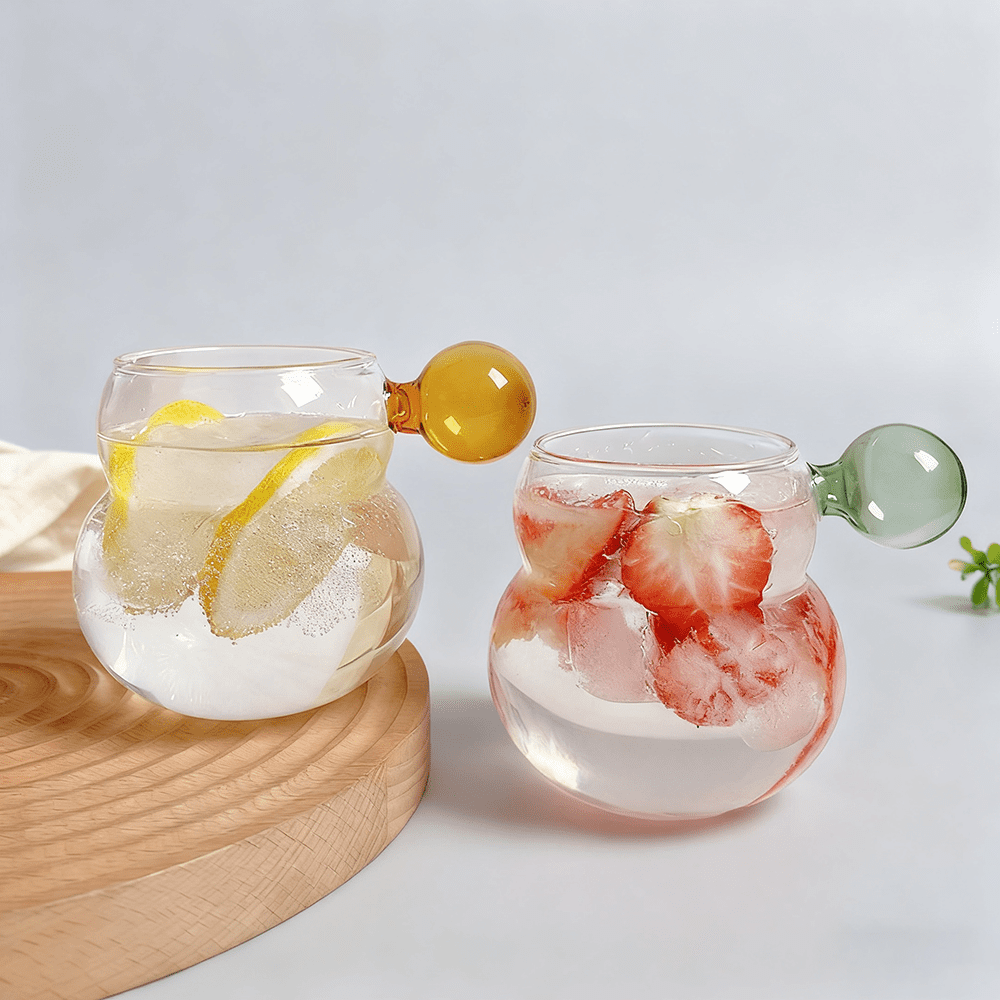
Soda-lime glass is common among low-cost suppliers, but borosilicate glass beer mugs handle thermal shock far better. When a hot dishwasher cycle ends and the mug is immediately filled with cold beer, standard glass often cracks at the temperature transition. Borosilicate glass, rated from -20°C to 300°C, takes that stress without failing. In our production lines, we use 3.3 borosilicate glass (BPA-free, food-grade) to manufacture drinkware that lasts. Over a year of commercial use, bars that switch to borosilicate typically see breakage drop from 10-15% to 3-5% of inventory. That figure comes from customer feedback and reorder patterns, not lab estimates. The material itself costs more, a 15-20% premium per unit, but the reduction in replacement orders makes the total cost of ownership lower in high-volume settings.
| Eigentum | Soda-Kalk-Glas | Borosilikatglas |
|---|---|---|
| Thermal shock resistance | Cracks at ~60°C sudden change | Withstands >100°C sudden change |
| Dishwasher durability | Surface etching after 200-300 cycles | Minimal etching, rated for 500+ cycles |
| Breakage rate (annual, bar setting) | 10-15% | 3-5% |
| Unit cost (relative) | Base | 15-20% higher |
Drinking establishments that wash hundreds of mugs per night see the savings compound quickly. A bar using 1,000 mugs with a 12% breakage rate replaces 120 mugs yearly. Dropping to 4% breakage cuts that to 40 replacements, freeing budget for other equipment.
How Glass Manufacturing Quality Controls Breakage Costs
Not all borosilicate mugs perform equally. The annealing process, where glass is slowly cooled to relieve internal stress, determines whether a mug survives daily use or shatters unexpectedly. In our 40,000 sq.m facility, automated annealing furnaces follow precise temperature curves verified by batch strain testing. I’ve reviewed production data where poorly annealed mugs from other lines showed breakage rates five times higher than well-annealed ones, even though both used the same borosilicate composition. When sourcing, ask the factory about annealing cycle parameters and whether they perform polariscope stress checks on every batch.
Mold design also plays a role. Sharp angles where the handle meets the body or at the base create stress concentration points. We use rounded transitions and uniform wall thickness to spread mechanical impact. Our 100 molding machines maintain consistent dimension tolerances, which prevents weak spots from forming. A mug with a 2mm wall variation may fail under routine stacking pressure.
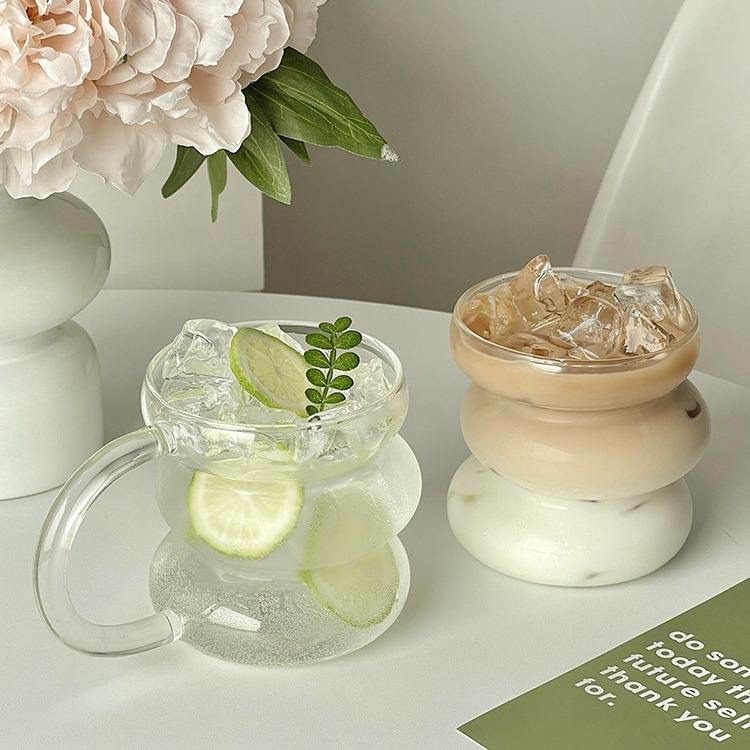
If your current mugs show consistent handle or rim breakage, it may be a manufacturing flaw rather than staff handling. We test samples by dropping them from 1 meter onto a tile floor and running them through 200 dishwasher cycles. Asking your supplier for their internal durability test results, or running your own sample batch, reveals real-world reliability before you commit.
Comparing Glass Beer Mug Designs for Different Beverage Programs
Selection goes deeper than choosing a shape. Breweries offering tasting flights need lightweight 250-300ml glasses. Bars pouring pints require 500-600ml mugs with sturdy handles that can hold 900 grams of filled weight. Restaurants often prefer stackable designs that save shelf space and reduce chipping between uses.
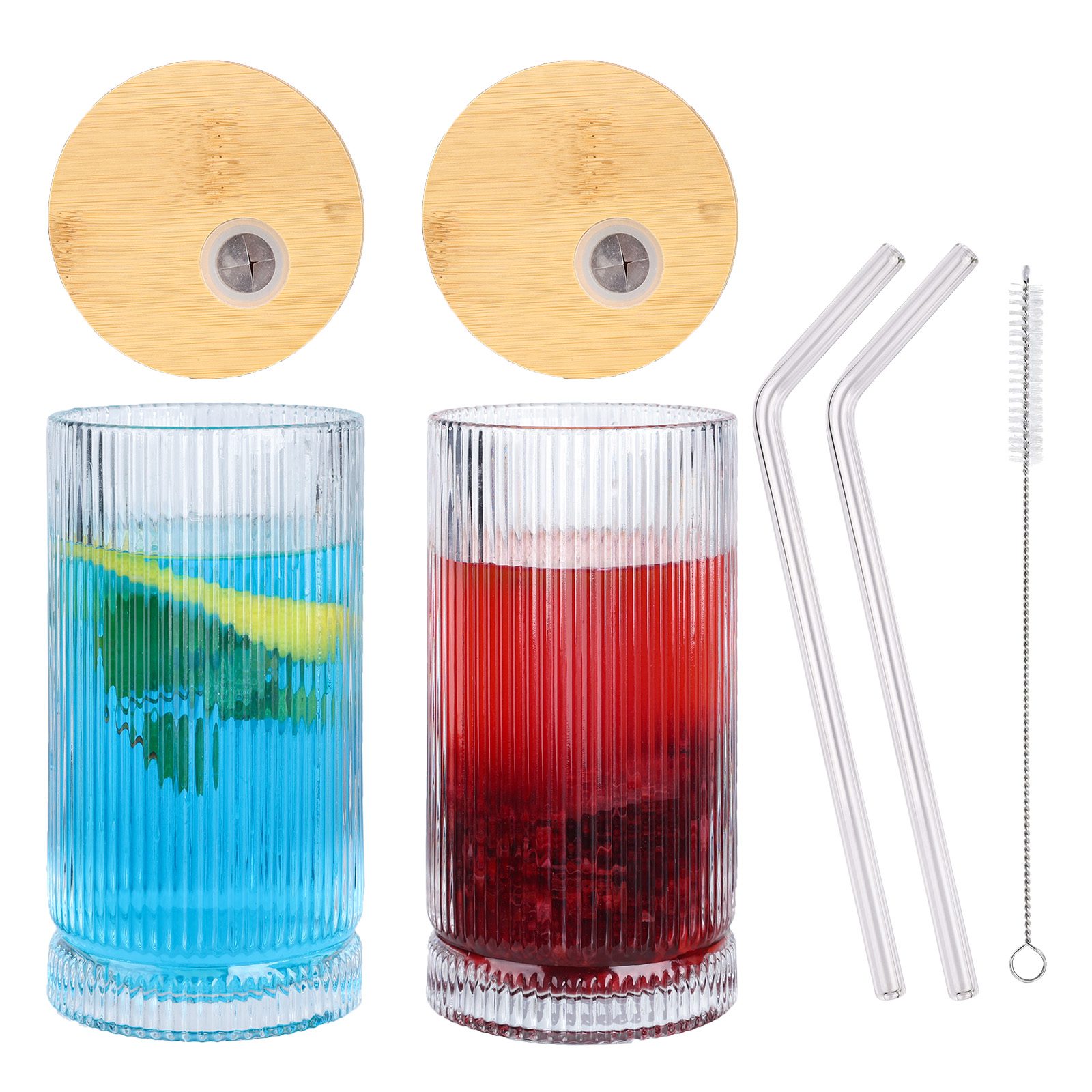
Our product range includes customizable dimensions. The table below lists typical design parameters we produce.
| Kapazität | Typische Anwendung | Approx. Height × Diameter |
|---|---|---|
| 250ml | Tasting flights | 12 × 7.5 cm |
| 330ml | Half-pints | 14 × 8 cm |
| 500ml | Pints | 16 × 9 cm |
| 600ml | Large pours | 18 × 9.5 cm |
Beyond capacity, consider handle design, single or double handle for stability, and rim thickness. A rim of at least 3mm improves resistance to chipping from glass collars or stacking. Custom molds allow you to create a distinct silhouette, from classic conical to curved gourd shapes. We hold 45 appearance patents, many for drinkware designs that started as client sketches.
Sourcing Custom Logo Beer Mugs from a Reliable Manufacturer
Customization drives brand identity. Silkscreen printing, laser engraving, and decal application are our standard decoration methods. Silkscreen is cost effective for large volumes and holds up well through dishwashing if cured properly. Laser engraving adds a permanent mark but works best on frosted bands. Decals allow full-color logos but require a protective overglaze. Our team can advise which method suits your design and usage.
Mold customization opens exclusive shapes. Tooling costs for a new mold start around $500-1,500 depending on complexity, and minimum orders for custom molds typically begin at 5,000 pieces. For standard shapes using existing molds, MOQs can be as low as 500-1,000 pieces, which lowers entry cost for smaller taprooms. When requesting a pre-production sample, run it through your own dishwasher cycle, pour a hot beverage into it, and examine print adhesion after ten washes. These tests expose flaws that spec sheets miss.
What Certifications and Quality Checks Matter for Commercial Glassware
Food-contact safety and mechanical reliability demand verifiable certifications. We maintain FDA, LFGB (EU food contact), CE, and SGS testing reports. Each production lot is checked for lead and cadmium migration using ISO 6486-1 methods. For European imports, LFGB compliance is mandatory for drinkware, and our facility passes random third-party audits.
Thermal shock testing per ASTM C149 is part of our outgoing quality control. We sample 5% of each shipment through rapid thermal cycling, 20°C to 95°C to 20°C, rejecting any lot with failure above 0.5%. BSCI certification confirms ethical labor practices, a requirement for many EU and Australian buyers. Before finalizing a supplier, request their latest audit reports and a third-party pre-shipment inspection. A factory that refuses to share this documentation is one you should walk away from.
Cutting Long-Term Mug Costs with the Right Glass
Breakage is not an unavoidable fixed cost. A switch to properly annealed borosilicate beer mugs from a manufacturer that owns its annealing and molding processes reduces replacement expenses and keeps your bar service consistent. If you are ready to evaluate a change, send your annual volume, preferred mug dimensions, and any customization ideas to [email protected]. We will provide a tailored quote and can send sample units for in-bar testing under your actual conditions.
Practical Questions Bar Owners Ask About Glass Beer Mug Durability
Are borosilicate glass beer mugs heavier than standard Glasbechers?
Borosilicate mugs do weigh slightly more than soda-lime glass of identical volume. The added mass, usually 10-15 grams per mug, comes from denser material composition and thicker wall profiles needed for thermal resistance. In practice, this extra weight feels premium in hand and reduces tipping, a benefit in busy service environments.
Can I mix different beer mug styles in one shipment?
Yes, we combine products that share the same base glass type and similar packaging requirements. For instance, 500ml pint mugs and 250ml tasting glasses can travel in one container with partitioned cartons. However, mixing drastically different shapes may require separate mold runs or packing configurations, which affects the production timeline. It is worth confirming compatibility with your account manager.
How should I test a beer mug sample for durability before bulk ordering?
Run the sample through at least 100 dishwasher cycles using commercial detergent and a sanitizing rinse. Pour near-boiling water into a mug straight from a 5°C refrigerator, and drop the mug five times from 1 meter onto a stone or tile floor. Any hairline cracks, crazing on printed areas, or handle loosening signal problems. Reject samples that fail any of these tests.
What lead time should I expect for a custom mold beer mug order?
Tooling and pre-production sampling take 30-45 days, depending on design complexity. Mass production follows in 25-35 days after sample approval, though simpler designs can ship faster. Air freight adds 5-7 days, while sea freight to North America or Europe runs 25-35 days. Planning a launch six months ahead gives you buffer for design iterations.
Do borosilicate beer mugs affect beer taste?
No. Borosilicate glass is taste-neutral and does not absorb aromas or cleaning residues. The surface remains non-porous through hundreds of wash cycles, unlike plastic or some ceramics that can retain detergent traces. This neutrality ensures each pour tastes exactly as the brewer intended. If your bar program includes barrel-aged or sour beers, glass is the safest serving material. Share your beer program details and we will confirm the mug specifications that preserve flavor integrity.
Wenn Sie daran interessiert sind, sollten Sie sich diese verwandten Artikel ansehen:
„Sustainable Sips 2025“ – Kuratierte Kollektion umweltfreundlicher Trinkgefäße
Jianmei-Glas-Serie aus Borosilikatglas