 German
  English
  Arabic
  Spanish
 OEM vs ODM glassware is not just a business model choice — it is a manufacturing reality that shapes your product cost, lead time, and design protection. Most brand owners focus on definitions, but the real difference lies in mold ownership, glass forming, and quality control. As a production manager who has overseen hundreds of custom glassware runs, I have seen brands waste time and money by choosing the wrong model without understanding the technical requirements of borosilicate glass production. This article explains when OEM delivers unique value and when ODM is the smarter path, with practical insights from the factory floor.
What OEM and ODM Actually Mean for Glassware Brands
OEM (Original Equipment Manufacturing) means you provide the design, and the factory produces to your specification. ODM (Original Design Manufacturing) means you select from the factory’s existing designs and add your branding. In glassware, this distinction matters even more because glass forming depends on mold tooling. A new mold for a Borosilikatglas-Becher costs differently from modifying an existing ODM mold, and the lead times diverge significantly.
A common misconception is that ODM products are generic and OEM products are fully custom. In practice, many glassware factories offer flexible ODM modifications, such as changing the lid material, adding a logo via screen printing, or adjusting the capacity within an existing mold range. For example, Jianmei Glass’s ODM catalog includes a borosilicate glass tea tumbler available in 420ml, 500ml, and 1000ml capacities — all from one mold family — allowing brand owners to create SKU variety without new tooling.
Key Differences Between OEM and ODM That Impact Your Brand
The following table summarizes the core differences from a manufacturing perspective:
| Faktor | OEM | ODM |
|---|---|---|
| Mold Investment | High, one-time mold fee; brand owns the mold | Low or none; factory owns the mold |
| Mindestbestellmenge | Higher, typically 5,000–10,000 units per design | Lower, can be 500–1,000 units |
| Vorlaufzeit | 6–10 weeks for mold creation + sample + production | 2–4 weeks for adapted ODM sample + production |
| Design Uniqueness | Exclusive shape and structure | Shared mold; design may appear under other brands |
| Schutz des geistigen Eigentums | Stronger if patent filed; mold exclusivity contract | Weak; factory can sell same design to others |
| Cost Per Unit | Higher initially; decreases at larger volumes | Lower per unit; stable pricing |
Beyond these business factors, the glassware-specific technical reality often shifts the balance. Borosilicate glass requires annealing at controlled temperatures to prevent cracking. A new mold demands careful testing to ensure the glass flows evenly and the annealing cycle yields consistent results. I have seen cases where a well-designed CAD model produced a glass cup with uneven wall thickness because the mold cooling channels were not optimized — a setback that added weeks to the timeline and extra cost. This risk is lower with ODM molds that have already been proven through production.
If your program involves complex shape requirements or needs a specific annealing profile to meet FDA or LFGB standards, it is worth confirming details early with your manufacturer. Send your design drawing and material requirements to [email protected] for a technical feasibility review before finalizing your BOM.
When OEM Is the Right Choice for Your Glassware Line
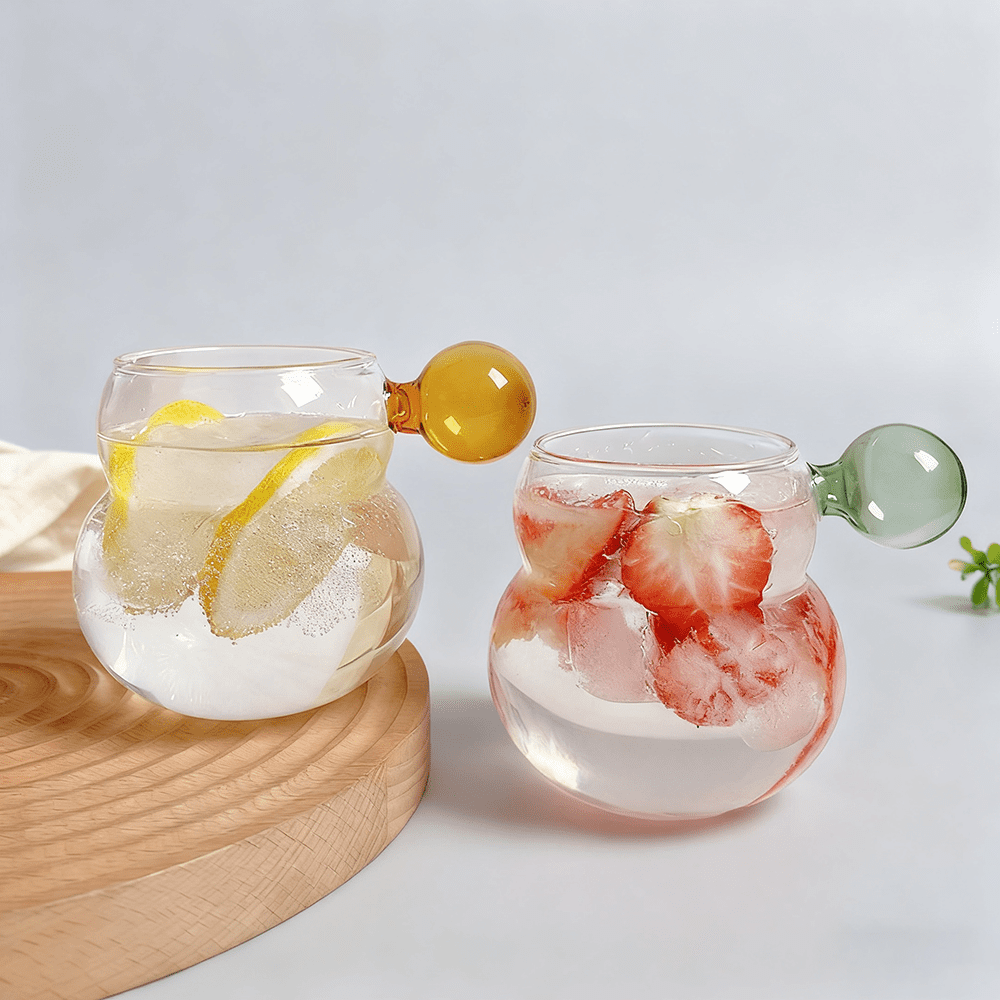
OEM becomes the obvious choice when your brand requires a unique shape that sets you apart on the retail shelf. For instance, if you want a gourd-shaped beer mug or a ribbed glass cup with a precise optical pattern, molding the exact geometry from scratch is necessary. Jianmei Glass’s product line includes a borosilicate glass gourd-shaped beer mug, which originated as a custom OEM project for a European buyer. The mold cost was amortized over a 50,000-unit order, making the per-unit premium manageable.
OEM is also the right path if you have a patentable design and plan to protect it across markets. With OEM, you own the mold and can contractually prohibit the factory from making the design for others. However, this protection is only as strong as your legal agreement and the factory’s compliance. Always include a mold ownership clause and avoid leaving the mold at the factory without a written contract.
When ODM Makes More Sense for Your Brand
For brand owners entering the market or testing a new category, ODM is the faster, lower-risk entry. Instead of spending $3,000–$10,000 on a new mold and waiting 6–10 weeks, you can select an existing borosilicate glass cup with a wood lid — available in 300ml to 1000ml — and have your logo laser-engraved within two weeks. This allows you to validate demand before committing to tooling.
ODM glassware also simplifies scaling. Since the mold already exists, the factory can ramp production quickly. Our factory produces 200,000 pieces daily across various ODM lines, meaning a 30,000-unit reorder can ship within 30 days. For seasonal launches or holiday gift sets, this speed is critical.
How to Combine OEM and ODM for a Flexible Product Line
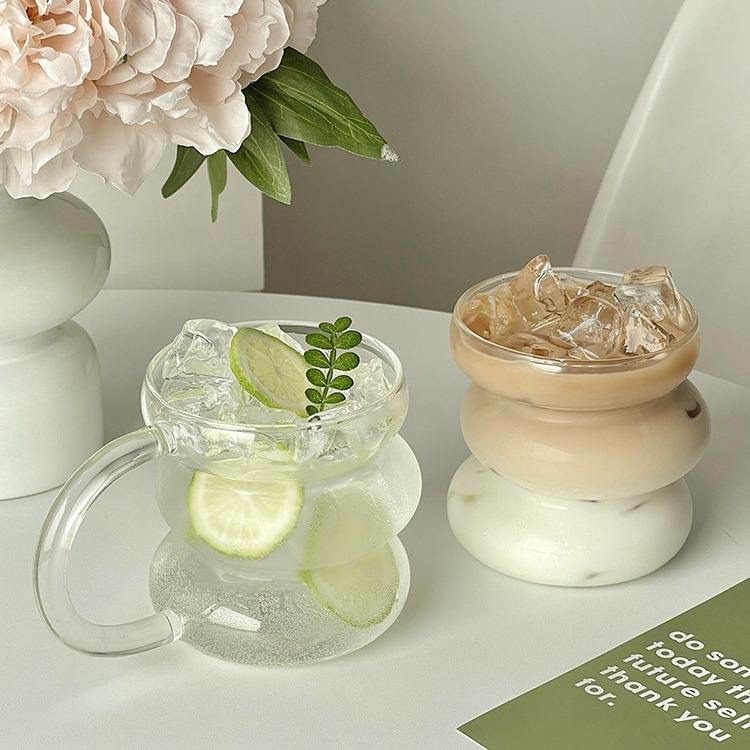
The most sustainable approach I recommend to brands is a hybrid: start with ODM core items, then add OEM hero products. For example, you could launch a kitchenware brand with a 500ml Wasserflasche aus Borosilikatglas (ODM) and a 1000ml double-wall coffee cup (ODM) from existing molds, and simultaneously develop a unique 750ml glass storage jar with a custom airtight seal (OEM). The ODM products generate revenue while the OEM product builds brand differentiation.
Jianmei Glass supports this hybrid model. We have 45 appearance patents and 32 intellectual property rights, so we understand how to manage both proprietary and shared designs within the same supply relationship. When you source mixed OEM and ODM products from one factory, you consolidate shipping and reduce per-unit freight costs.
Practical Steps to Start Your Custom Glassware Sourcing
Before contacting a glassware manufacturer, prepare the following:
- Target specification sheet: capacity, dimensions, lid type, material grade (3.3 borosilicate), and any special requirements like double-wall or measurement markings.
- Branding requirements: logo format (vector file preferred), printing method (silk screen, laser engraving, or decal), and packaging preferences.
- Order forecast: approximate annual quantities and first order size. This helps the factory recommend ODM vs OEM.
- Certification needs: confirm which standards apply (FDA, LFGB, SGS) so the factory can include relevant test reports.
- Sample budget: OEM pre-production samples typically cost more than ODM samples because they involve mold setup.
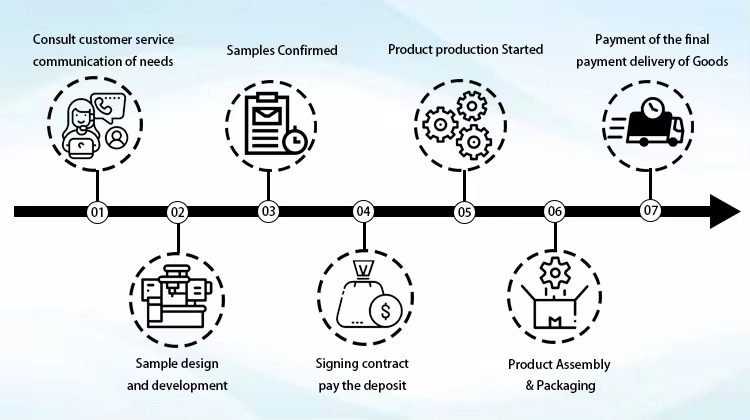
Send your part numbers, quantities, and timeline to [email protected]. Our engineering team reviews each inquiry and provides a realistic mold estimate and production schedule within three working days.
Common Questions About Glassware Sourcing Models
How long does it take to get a custom OEM glass sample?
For a standard borosilicate glass item, mold design and manufacturing take 4–6 weeks, followed by an initial sample run within 2 weeks. The total sample-ready time is typically 6–8 weeks. Modifying an existing ODM mold for decoration changes reduces this to 2–3 weeks. Shipping adds 5–7 days by air. If you need samples urgently, ask the factory if they have a similar ODM sample that can represent the material and quality while the custom mold is being built.
Can I order different OEM and ODM products in one shipment?
Yes, and this is standard practice. As a manufacturer, we frequently combine custom OEM items with off-the-shelf ODM products in a single container to reach FCL (full container load) and lower per-unit freight cost. There is no issue as long as all items are from the same factory and packed securely. Keep in mind that OEM items may require a longer lead time, so plan the order accordingly to avoid splitting shipments unnecessarily.
Is it possible to start with ODM and later switch to OEM for the same product?
It depends on the mold. If the ODM product uses a standard mold that can be modified to create a unique variant, the transition is straightforward. A brand may initially sell a popular ODM Becher aus Borosilikatglas with their logo, and after proving demand, decide to create an exclusive version with a unique handle shape. The factory can then develop a new mold based on the original design. Since the production line and material specifications are already established, the per-unit cost increase is easier to calculate. Share your requirements at [email protected] and we will confirm the feasibility and mold cost before you commit.
Wenn Sie daran interessiert sind, sollten Sie sich diese verwandten Artikel ansehen:
warum 60 der Käufer ihre Aufträge an diese chinesische Fabrik übertragen haben
best jam glass jars how to keep bulk jam fresh
Was sind die Vorteile der Verwendung von isolierten Glasbechern?
der ultimative Leitfaden für tägliche Aktionen zum Schutz der Erde
valentines day and year round hot sellers