 German
  English
  Arabic
  Spanish
 Private label glassware packaging is the final but most visible touchpoint between your brand and the customer—a custom box, label, and insert set does more than protect the product; it defines how your brand is perceived. At Xuzhou Jianmei Glass Products, we have seen a single packaging decision change a client’s shelf presence and return rate. A well-designed unboxing experience builds loyalty, while packaging that arrives damaged or looks generic undermines the premium you built into the glass itself. The options available from a factory-integrated supplier cover box construction and finish, label technique and color registration, and insert material and die-cutting accuracy, and each choice carries its own cost, lead time, and minimum order consequence.
Why Packaging Design Defines Your Brand’s First Impression
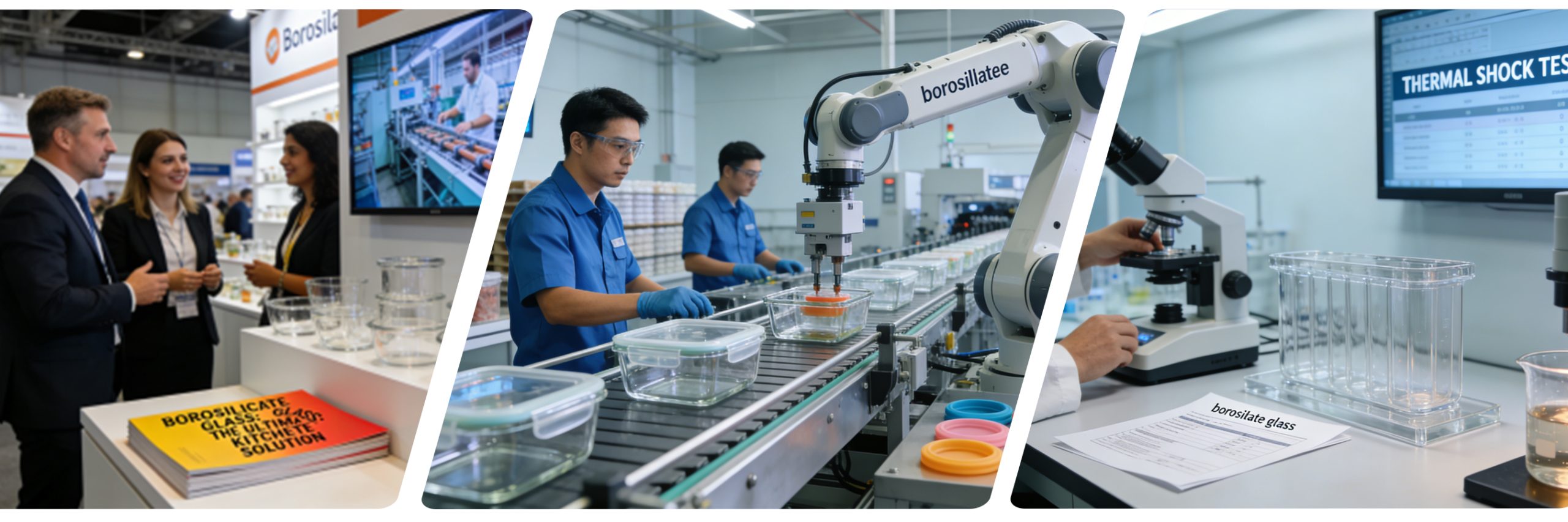
The box, label, and insert are often the first physical interaction a buyer has with your private label product. If the outer box has inconsistent color or the label shows poor adhesion, the perception of quality drops before the glass is even touched. In our production facility, we treat packaging as an extension of the manufacturing quality system—the same attention to dimensional tolerance and material consistency we apply to borosilicate glass forming also governs how we handle custom packaging.
Three elements directly influence the impact of packaging: structural integrity, print registration, and tactile finish. Structural integrity means the box resists crushing during shipping and retail handling. Print registration means colors align across panels, and Pantone matching is accurate. Tactile finish covers soft-touch coatings, embossing, or a high-gloss varnish that communicates value when the box is held. Each of these can be specified to match brand positioning, but they also increase packaging cost and production time.
Box Customization: From Gift-Ready Boxes to Retail-Ready Cartons
Box construction determines how the product is displayed, protected, and perceived. The three most common box styles we produce for private label glassware are:
| Box Type | Material | Typische Anwendung | Protection Level |
|---|---|---|---|
| Rigid setup box | 1.5–2.5 mm grey board with paper wrap | Gift sets, premium drinkware | Hoch |
| Corrugated mailer box | B or E flute corrugated | E-commerce, subscription | Medium-High |
| Cardstock folding carton | 300–400 gsm coated paper | Retail shelf, display | Mittel |
Rigid boxes offer the highest perceived value and are used for luxury Glasbecher sets or corporate gift programs. The paper wrap on a rigid box can be printed in CMYK plus spot Pantone, and we can add a magnetic closure or ribbon pull. These boxes have a higher unit cost and a longer lead time because they are hand-assembled. Corrugated mailer boxes are the workhorse for direct-to-consumer brands; they can be printed with a single brand color and logo, and they integrate with an insert to hold the glass securely. Folding cartons are the most cost-effective for retail chain distribution, but they require careful insert design to prevent movement.
When ordering custom boxes from our factory, the technical handoff includes a die-line drawing, artwork in Adobe Illustrator format with 3 mm bleed, and a physical sample for seal and tear testing. The minimum order for a custom printed box typically starts around 1,000 pieces. For small-brand launches, we often recommend starting with a stock box size and a printed sleeve to manage upfront cost while maintaining a branded look.
Label Printing Options for Glassware: Silk Screen, Decal, and More
Labels and direct printing are where the brand identity becomes permanent on the glass itself. The choice of technique depends on the glass surface, the number of colors, and the post-production handling the product will face.
Silk screen printing on glass is the most durable option for logos and simple artwork. We use a UV-cured ceramic ink that fuses to the glass surface during a low-temperature bake cycle after the annealing furnace process. This creates a label that is dishwasher-safe and scuff-resistant. The limitation is color count: each color requires a separate screen, so designs with four or more colors become expensive per unit. Decal printing allows full-color photographic reproduction and is the right choice for illustrated jars or decorative drinkware. The decal is applied after forming and fired onto the glass. The durability is good but not as scratch-proof as silk screen, particularly for products that will be stacked frequently.
Some private label programs combine both methods—a silk screen logo on the front and a decal on the bottom showing care instructions or origin. We also offer laser engraving for a subtle, premium mark on thick-walled borosilicate cups and mugs. Cost for labeling starts low but rises sharply with multi-color registration and complex placement. A single-color silk screen logo may add only $0.12–$0.20 per piece, while a full-wrap decal with fine artwork can add $0.60–$1.00 or more, depending on run length.
If your brand involves both Glasgefäßs and glass cups, it is worth confirming color matching across different glass shapes and label techniques before finalizing your bill of materials—reach out at [email protected] with your artwork concept and we can advise on the most consistent approach.
Custom Inserts: Protecting Glassware While Elevating the Unboxing Experience
Inserts are the most overlooked component of private label packaging, yet a poor insert is the primary cause of transit damage claims. We stock and cut several insert materials in-house, matched to the product weight and the distribution channel.
Die-cut EVA foam inserts provide the best protection for heavy Becher aus Borosilikatglass and water bottles. The foam is cut to the exact profile of the glass piece using a steel rule die, with a tolerance of ±0.5 mm. This prevents lateral movement inside the box and absorbs vibration. For lighter items like glass spice jars or tea tumblers, a corrugated die-cut insert is sufficient and more cost-effective. We also produce molded pulp inserts for clients targeting a zero-plastic unboxing message; molded pulp is biodegradable and carries a texture that reads as eco-conscious, though it offers less shock absorption than foam.
A two-piece rigid box with a custom-fit foam insert and a satin pull-ribbon creates an unboxing sequence that feels like a jewelry-grade product. We have run this configuration for a European coffee glass set that retails at €45 and receives consistently positive packaging reviews. The trade-off is cost per unit and storage volume; foam inserts are bulky, and shipping costs scale quickly for international orders.
How to Manage Custom Packaging with Your Glassware Factory
Coordinating packaging production within the same factory that manufactures the glass reduces a major supply chain handoff point. Instead of ordering boxes from one vendor, labels from another, and inserts from a third—then reconciling their separate timelines and quality issues—a single-source approach aligns everything to the glass production schedule.
Our typical workflow for a new private label packaging project starts with a packaging brief: brand guidelines, target retail price point, preferred box style, and any unboxing video references. From there, we generate a packaging specification sheet that includes box construction, insert material and die layout, label type and color codes, and the required safety markings for the destination market. We then produce a pre-production sample—the fully assembled box with the actual glass piece, the label applied, and the insert in place. This sample goes through vibration testing and a simulated drop test before approval.
One decision that affects both cost and packaging appearance is whether the box is shipped flat-packed or pre-assembled. Flat boxes reduce shipping cube and protect against crushing in transit, but they require the brand to assemble at the destination, which adds labor. Pre-assembled boxes arrive ready to insert product but take up more container space. We default to flat-packed for international orders unless the brand has local assembly capacity or the box design cannot be knocked down.
If your program involves multiple glass shapes, color variations, or mixed sets, confirm packaging compatibility during the sample phase—sharing your product list and dimensions with us at [email protected] or at +8618251725750 will let us provide a feasibility analysis before you commit to tooling.
Common Questions About Private Label Glassware Packaging
Why does the minimum order quantity for custom boxes seem high compared to the glass itself?
The MOQ is driven by the printing plates and die-cutting tooling, not the material. A rigid box requires a steel rule die and printing plates that cost the same whether you run 500 or 5,000 units. Running fewer than 1,000 boxes does not spread the setup cost effectively. For smaller budgets, we often recommend a stock box with a custom sleeve—the sleeve uses digital printing with near-zero setup, and it still delivers a branded look at a lower entry point.
Can I change my label design after the first order?
Yes. Label artwork is not tied to tooling unless you are using a silk screen that requires a permanent screen frame. Decals and digitally printed labels carry no long-term tooling commitment. That said, if you are running a silk screen logo and you redesign the logo, you will pay for a new screen frame. We keep client screens on file for 24 months after the last production run, and we can reuse them for repeat orders at no additional screen charge within that window.
How do I know my packaging will pass Amazon’s packaging drop test?
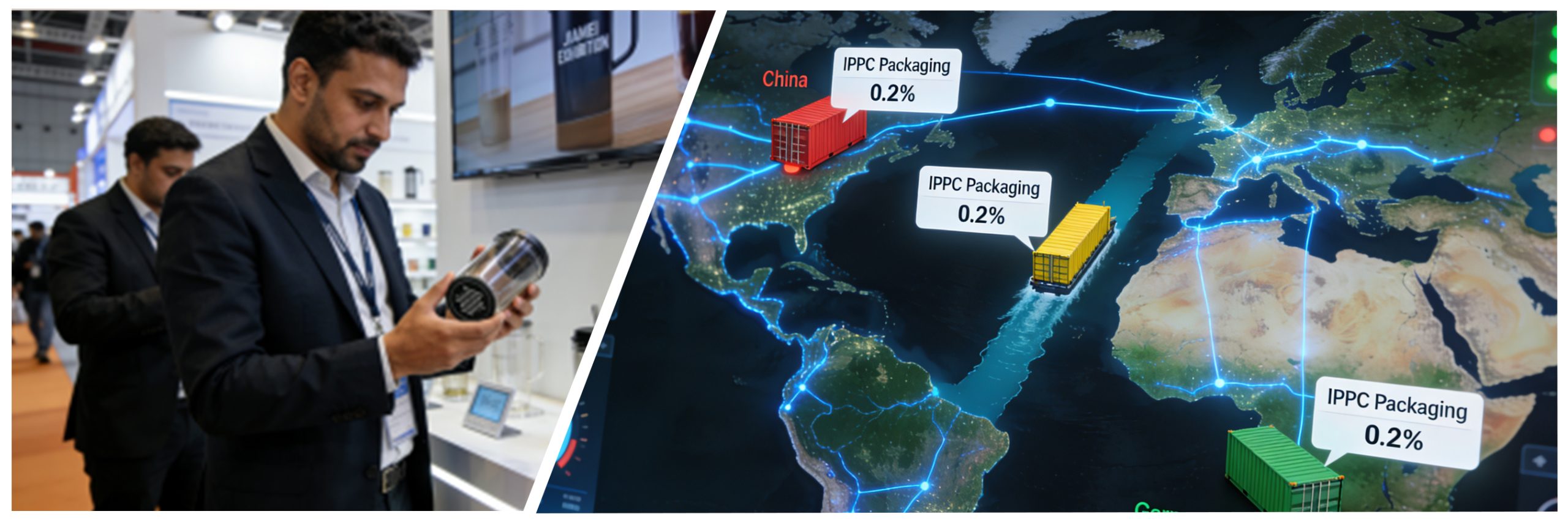
Amazon’s ISTA-6-Amazon.com-SIOC standard requires the package to withstand a series of drops and vibrations without product damage. We design inserts and outer boxes with ISTA protocols in mind. In our sample approval process, we perform a 125 cm drop test on three faces, three edges, and one corner of the assembled package. If the glass survives intact, the design is approved. For any packaging intended for Amazon fulfillment, mention this during the brief stage so we can factor in the extra protection requirements. Share your product list and FBA requirements at [email protected] and we will include the drop-test report in the sample documentation.
What is the lead time for a fully customized packaging and glass order?
From final artwork approval and deposit receipt, a typical first production order of custom glass with custom boxes, labels, and inserts takes 35–45 days to ex-factory. The glass production itself is 20–25 days; the boxes and inserts run in parallel, and final assembly and inspection take 5–7 days. Sample production before bulk approval adds 7–10 days. Repeat orders with existing tooling can shorten to 25–30 days. Seasonal planning matters—August through October is the busiest window for holiday retail programs, and lead times can extend by 10–15 days.
What if my glass product line includes jars, cups, and mugs—can all packaging be sourced from one factory?
Yes, and this is where factory integration saves the most time. Because we control both the glass forming and the packaging sourcing, we can fit-check every product with its insert and box before shipment. A mixed container with 500 glass jars, 1,000 glass cups, and 300 Glasbechers, each with a distinct box and insert set, is a complex order, but it is exactly the type of multi-SKU program our production planning team handles regularly. The precondition is that all packaging specifications are locked before the glass production run begins. Share your product assortment and we will provide a packaging compatibility matrix as part of the quote.
Wenn Sie daran interessiert sind, sollten Sie sich diese verwandten Artikel ansehen:
geschmack nachhaltigkeit warum glas wählen
Style-Funktion: Ihr Leitfaden zur Beschaffung von Thermosflaschen
valentines day and year round hot sellers
warum bpa-risiko umarmen glas 100 sicher nachhaltig und stilvoll
warum Glas ein unverzichtbares Starprodukt für Ihre Regale ist