
 Spanish
  English
  Arabic
  German
 Iced coffee vaso de cristals are emerging as the standout drinkware trend for cafes in 2026, driven by a customer preference for clear, premium presentation and a push toward reusable options. While social media drives the visual appeal, cafe owners need more than just a trendy cup — they need glassware that survives high-volume service, resists thermal shock, and stacks efficiently in tight storage. Our experience in borosilicate glass production shows that not all glass cups are equal. Selecting the right cup means understanding material quality, manufacturing processes, and the operational demands of a busy coffee shop.
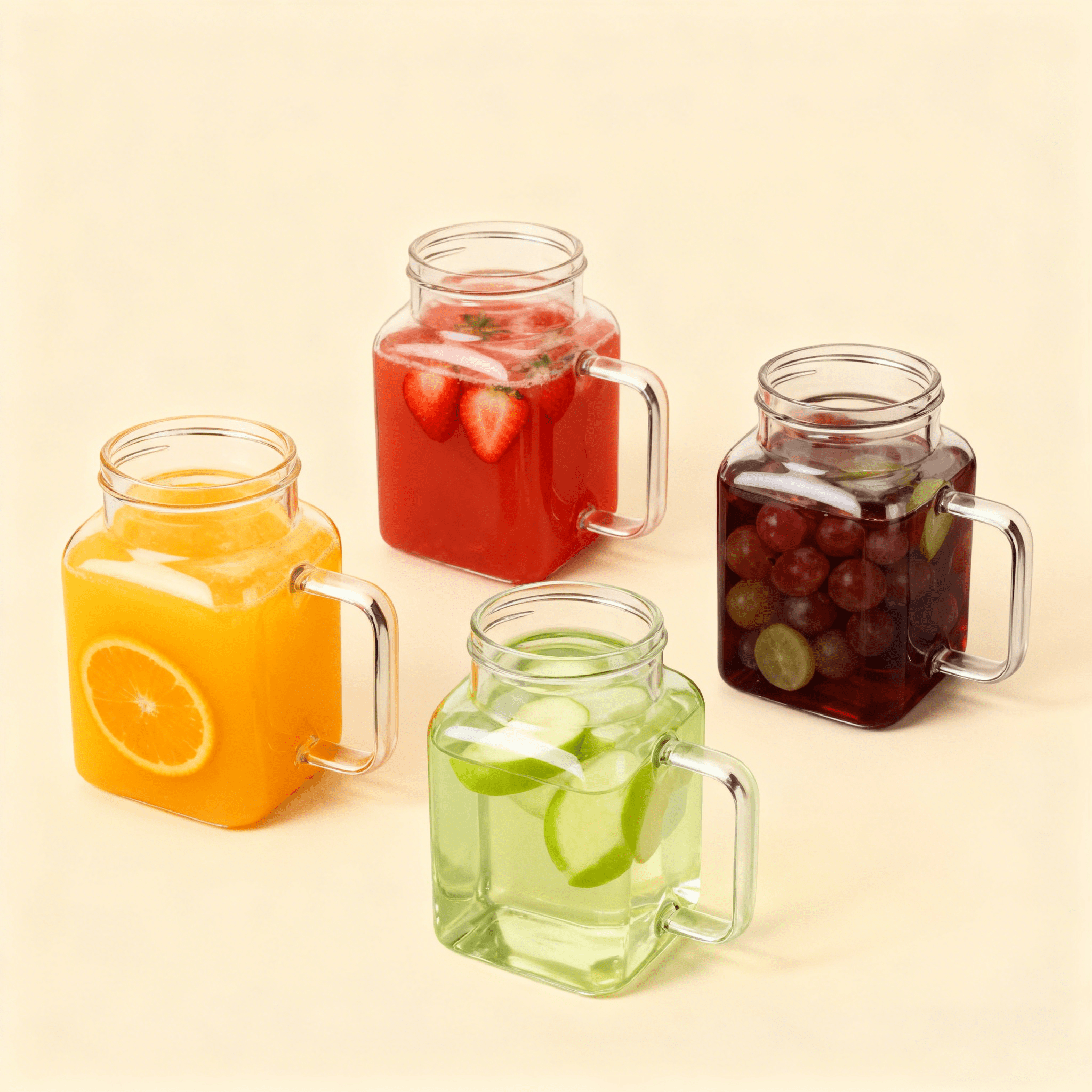
Why Iced Coffee Glass Cups Are Taking Over Cafes in 2026
The acceleration of iced coffee culture is impossible to miss. Cold brew, iced lattes, and flavored iced drinks have moved from seasonal specials to year-round staples, and the cup they are served in has become part of the product. Unlike opaque paper or plastic cups, a crystal-clear glass shows off the drink’s layers, colors, and garnishes, which matters when a single customer photo can reach thousands of followers. Glass also aligns with the growing consumer expectation for reusable, sustainable options. For a cafe, adopting glass cups signals a shift toward premium, authentic service. It is not merely about following a trend — it is about offering a tactile experience that disposable cups cannot match.
However, that aesthetic preference collapses if the cups crack after a week of use or cannot handle rapid hot-to-cold transitions during service. That is where borosilicate glass comes in, a material originally developed for laboratory glassware, now selected by cafes that understand the real demands of a commercial kitchen.
What Makes a Glass Cup Suitable for Daily Cafe Use
Borosilicate glass differs fundamentally from standard soda-lime glass. Its lower thermal expansion coefficient means a cup filled with ice and then rinsed with hot water will not shatter from thermal shock. In a production environment, we test every batch by subjecting random samples to a 180°C temperature swing — immersion in boiling water followed immediately by an ice water bath. Soda-lime glass fails this test consistently. Borosilicate passes it. That simple reliability is the difference between a cup that lasts one rush shift and one that stays in rotation for months.
We produce double-wall versions specifically for iced coffee. The air layer between the inner and outer wall suppresses condensation entirely. In a humid cafe, that means no water rings on tables, no wet hands for the barista, and no slippery stacking after washing. Single-wall borosilicate cups are lighter and lower cost but will sweat with iced drinks; the choice depends on whether the cafe prioritizes a completely dry exterior or a lower unit price.
The following table compares attributes that matter most for cafe operations:
| Característica | Single-Wall Borosilicate | Double-Wall Borosilicate |
|---|---|---|
| Condensation control | Forms external moisture | No condensation |
| Resistencia al choque térmico | Excelente | Excelente |
| Breakage resistance in daily use | Bien | Higher (inner wall protected) |
| Dishwasher safety | Safe (top rack recommended) | Safe (top rack recommended) |
| Stackability | Depends on shape; ribbed designs stack securely | Usually not stackable due to double wall |
We have seen cafes initially order single-wall cups to control cost, only to reorder double-wall a few months later after complaints about wet tabletops and slippery handling. The extra cost of double-wall borosilicate cups is typically recovered quickly through improved customer perception and lower replacement frequency.
How to Source Quality Iced Coffee Glass Cups for Your Coffee Shop
Sourcing reliable glass cups for a commercial setting begins with verifying the manufacturer’s material specification and certification record. We recommend requiring at minimum a 3.3 borosilicate glass composition, documented with batch testing reports. Certifications like FDA (for U.S. market) and LFGB (for Europe) confirm the glass is food-contact safe and free of heavy metal leaching. A manufacturer that has also undergone BSCI social compliance audits adds a further layer of supply chain transparency.
When evaluating a factory, we advise cafes to request a pre-production sample before committing to a bulk order. The sample should be tested in the cafe’s actual workflow: filled with ice and espresso repeatedly, run through the dishwasher, and handled by the team under rush conditions. We produce samples in 7–12 business days, allowing buyers to observe wall thickness, lid seal, and logo clarity under realistic use. A common oversight is verifying that the lid and straw fit securely across the full production run; tolerances can drift if tooling is not maintained, so specifying a lid-fit inspection during final inspection is a practical safeguard.
If your program involves both hot and cold beverages, confirming the thermal shock rating of the exact cup model is essential. Sending your size and lid requirements to [email protected] will get you detailed test data and sample availability for your planned cup configuration.
Operational Benefits of Switching to Vaso de vidrio borosilicatos
Beyond the consumer-facing appeal, a shift to borosilicate glass cups changes the economics of a cafe’s disposables and breakage line items. Where paper or plastic cups are a recurring expense that scales with volume, a glass cup is a one-time purchase that can serve hundreds of drinks before retirement. In practice, borosilicate cups in cafes break less often than ordinary glass, not because borosilicate is unbreakable, but because it absorbs the repeated small impacts of stacking, sink handling, and accidental drops without developing micro-stress cracks. A soda-lime cup that survives a fall once may crack two weeks later because the damage accumulated invisibly. Borosilicate avoids that failure mode more consistently.
Stackability matters more than many new cafe owners realize. When a cafe goes through 200 iced coffees in an afternoon, being able to nest cups securely in storage shelves and dish racks cuts the time spent on cup handling and reduces collisions that cause chipping at the rim. We design our ribbed glass cups with a slight taper for stable stacking without jamming.
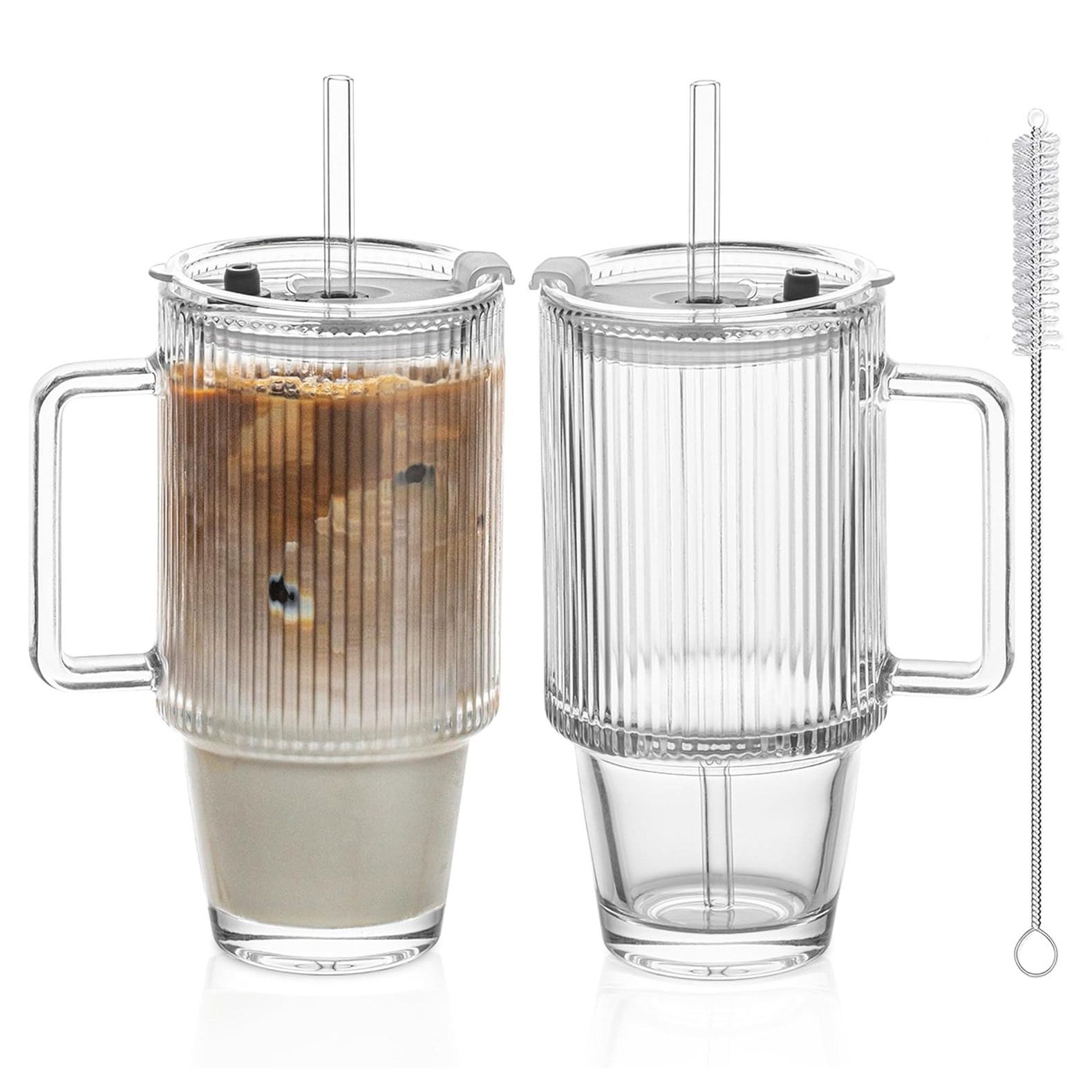
Customizing Your Cafe’s Glass Cups: Branding and Packaging Options
A plain clear glass cup functions well, but a cafe’s logo printed on the cup converts every drink served into a miniature billboard. We support multiple decoration methods. Silk-screen printing applies the logo directly onto the glass surface in up to three colors and fires it at high temperature so it withstands dishwasher cycles without fading. Laser engraving produces a subtle, permanent mark — effective for minimalist branding but less visible at a distance. We also offer pre-designed packaging options, including branded boxes with foam inserts, that allow the cup to be sold as a retail item at the counter alongside coffee beans or merchandise.
The moq for custom logo silk-screen printing starts at a few hundred pieces per design, which makes it accessible for a single-location cafe. Color customization of the silicone sleeve or lid is also possible, matching a brand’s palette. Our design team can review your logo file and advise on the most durable decoration technique for your specific use case; contacting us at [email protected] with your artwork and projected order volume will get the process started.
Choosing the Right Partner for Long-Term Cup Supply
Cafes that plan to scale across multiple locations need a glass cup supplier that can maintain consistency as order volumes grow. We operate from a 40,000-square-meter facility in Jiangsu, with 100 automated manufacturing lines and a daily output of 200,000 pieces. That scale means a cafe chain opening a fifth location will receive the same cup specifications, lid fit, and print color as the first. Long-term supply stability depends on manufacturing depth, not just a responsive sales contact, and our investment in molding automation and in-house annealing furnaces delivers that repeatability. When you are ready to discuss your cup specifications, send a note to [email protected].
Common Questions from Cafe Owners About Iced Coffee Glass Cups
Do borosilicate glass cups keep iced coffee colder?
Glass itself does not insulate better than plastic, but a double-wall borosilicate cup creates an air gap that slows external heat transfer. In our tests, a double-wall cup kept an iced drink below 5°C about 25% longer than a comparable single-wall glass. More importantly, the dry exterior eliminates the barista’s need to wipe each cup before serving, which speeds up counter throughput.
How do I clean glass cups without scratching them?
Borosilicate glass is harder and more scratch-resistant than soda-lime glass, but using non-abrasive scrubbers and a standard commercial dishwasher is still the right approach. We recommend top-rack placement to avoid direct contact with metal rack surfaces. Over time, silk-screen printed logos may show slight fading if washed daily for two years, but laser engraving and high-temperature fired prints hold up indefinitely.
Can I order different cup sizes in one container?
Yes. We can mix capacities such as 420ml, 500ml, and 1000ml in a single shipment. This is common for cafes that want a small cup for espresso-based iced drinks and a larger cup for cold brew or iced tea. Mixing capacities does not affect the per-unit price as long as the total order volume meets the production minimum for the smallest size.
What if my logo design has too many colors for silk-screen printing?
Silk-screen printing works best with up to three spot colors. If your logo contains gradients or photographic elements, we can convert it to a simplified version that retains brand recognition, or we can discuss decal application as an alternative. Sending your artwork to [email protected] early helps avoid last-minute redesign costs.
Are these cups safe for hot beverages as well as iced coffee?
Borosilicate glass cups are safe for hot drinks up to 300°C, so the same cup can serve hot lattes in the morning and iced coffee in the afternoon. This multi-use capability matters for cafes that want a single type of glassware across their entire menu. If you are building a year-round menu that needs both hot and cold cup function, sharing your projected drink mix with our team will help confirm the right wall configuration.
Si le interesa, consulte estos artículos relacionados:
vidrio borosilicato vsvidrio ordinariovidrio sodocálcico
Serie de artículos de cristal de borosilicato de Jianmei
Cómo adquirir las botellas de agua más populares del mercado
¿Por qué arriesgarse con el BPA? Apuesta por el vidrio: 100 % seguro, sostenible y elegante.
cinco reglas de oro para encontrar proveedores excelentes guía de adquisición de productos de vidrio borosilicato