 Spanish
  English
  Arabic
  German
 The Japanese-style glass spice jar has moved beyond a kitchen organization fad and is now a staple of premium home goods retail. Minimalist kitchen design and demand for sustainable materials are pushing these small, transparent containers into consistent seller status for boutique stores and online marketplaces. But the quality that underpins real demand comes down to the glass itself, and that’s where most trend-focused articles stop. I want to fill that gap from the production floor. Sourcing jars that survive daily use and hold customer trust requires understanding the material, the manufacturing process, and the certifications that separate a premium product from a commodity.
Japanese-style glass spice jars are reshaping kitchen retail in a way that benefits brands willing to go beyond surface-level aesthetics. The design language draws on the clean lines and functional purity of Japanese kitchen culture, where every object earns its place. Jars are typically compact, stackable, and fitted with airtight bamboo or stainless steel lids. This look appeals to consumers who treat kitchen storage as part of home decor, and retailers are responding: in the last two years, we have seen order volumes for stackable jar sets increase by around 40% from North American and European buyers. Sales data from home goods platforms supports this shift, with glass storage outperforming plastic in both search growth and basket value. The profit opportunity here is not just in the jar itself but in the cross-sell potential with coordinated racks, label sets, and matching pantry containers. A customer who buys one jar often returns for a complete set.
Borosilicate glass provides the durability premium spice jars need, and skipping this spec is the fastest way to lose repeat business. Standard soda-lime glass, common in low-cost jars, has a thermal shock resistance of around 40°C to 50°C before cracking. A customer runs a jar under hot water after emptying chili flakes, and the base splits. Borosilicate 3.3 glass—the same material used in laboratory ware—handles a temperature range from -20°C to 300°C. It resists thermal shock, scratches, and clouding from dishwasher cycles. Our factory uses only this grade for storage containers, and the difference shows in return rates. The clarity also matters. A spice jar that turns foggy after six months no longer looks premium on the shelf, and the customer replaces the product—or the brand. The table below compares the two glass types on four dimensions that directly affect retail performance.
| Propiedad | Borosilicate 3.3 Glass | Vaso de sosa y lima |
|---|---|---|
| Thermal shock range | -20°C a 300°C | 40°C to 50°C max |
| Durabilidad del lavavajillas | High, no clouding | Low, becomes hazy |
| Clarity retention | Excelente | Good, degrades over time |
| Food safety compliance | Inert, BPA-free, lead-free | Inert but may require additional coatings |
If your product line includes jars that move between freezer, fridge, and hot washes, the glass type is the single specification that determines long-term customer satisfaction. I’ve seen importers switch from soda-lime to borosilicate after a single season of returns, and they rarely go back.
Certifications that separate premium tarro de cristals from commodity products are not paperwork. Before placing a container order, I recommend verifying three documentation types. First, food-contact safety certifications: FDA (U.S.), LFGB (Germany/EU), and SGS testing for lead and cadmium migration. Second, production management standards: ISO 9001 confirms process consistency; BSCI covers social compliance and ethical sourcing. Third, material composition reports: these confirm the glass is BPA-free and contains no heavy metals beyond permitted limits. At Jianmei, we maintain 120 testing certifications covering all three categories, updated per production batch. When a buyer receives a shipment with incomplete documentation, customs clearance can stall, and a retailer’s compliance team will reject the product. The cost of missing certificates compounds well beyond the purchase price.
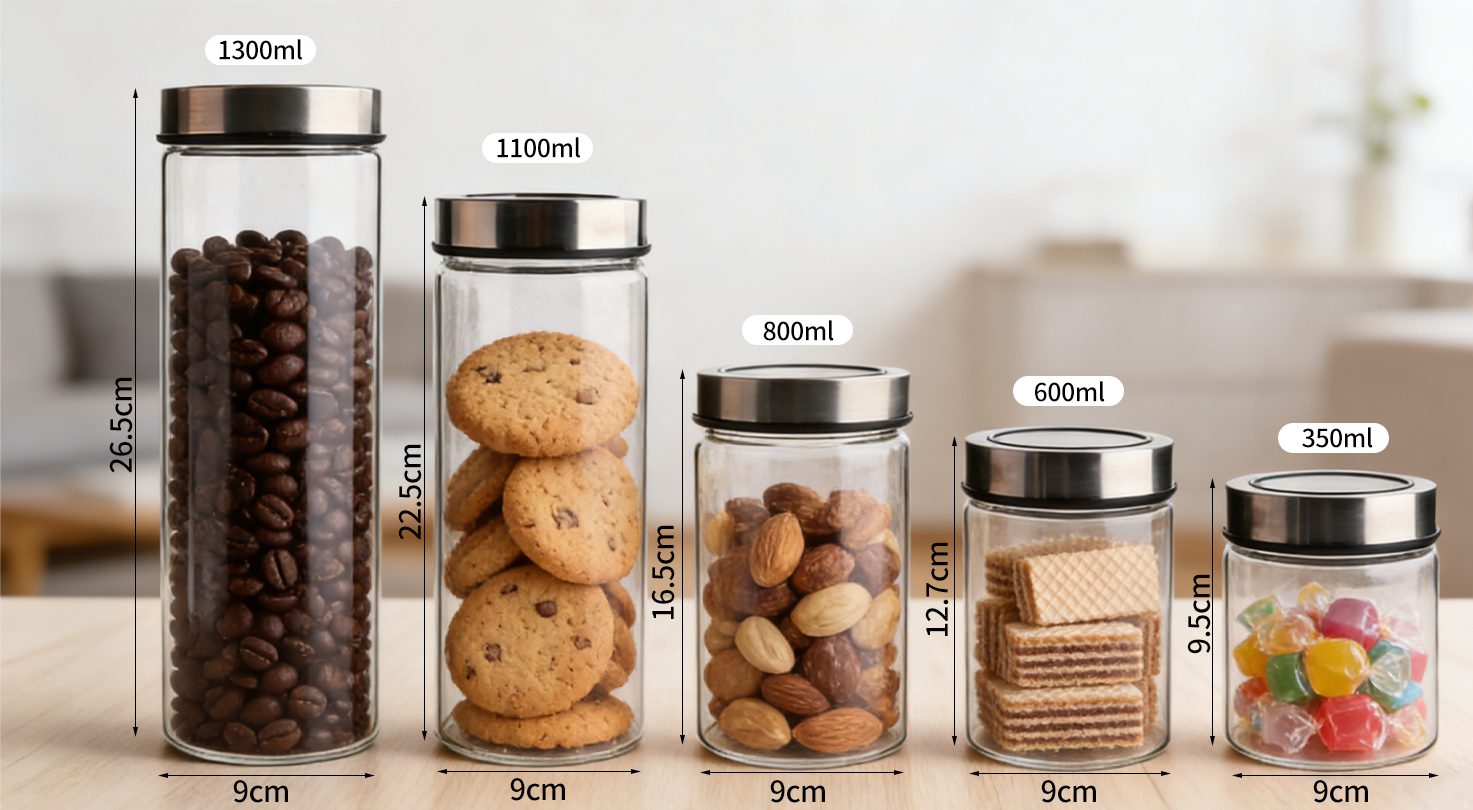
Finding a manufacturer that delivers consistent quality at scale is a different challenge than negotiating price. For a container as visible as a spice jar, surface defects and dimensional drift create more customer complaints than most buyers expect. Our facility in Xuzhou operates 100 specialized machines across a 40,000-square-meter plant, producing 200,000 pieces daily. This capacity means we can absorb large seasonal peaks without pushing unfinished products into shipments. The production line starts with automated melting and molding, followed by controlled annealing that relieves internal stress in the glass, and ends with human inspection under calibrated lighting. At each stage, we measure wall thickness uniformity and rim flatness to the millimeter. A lid that does not seal completely because the jar rim is off by half a millimeter will lose shelf appeal immediately. We have 45 appearance patents and 32 intellectual property rights, which reflect the customization depth we offer but also the process control required to maintain exact shapes.
Customization options to build your own spice jar brand begin with the jar body itself. We can modify neck diameter, height, capacity, and base shape from a single mold family, which means a retailer can create five distinct SKU silhouettes without paying for five separate molds. Lid options include natural bamboo, acacia wood, and 304 stainless steel with silicone seals, each tested for airtight performance after 5,000 open-close cycles. Logo application is available through silk screen, laser engraving, or UV printing directly on the glass. For packaging, we offer custom-fitted boxes with foam inserts and full-color printed sleeves that survive drop testing. The minimum order quantity for fully custom designs starts at a level that suits mid-sized brands, and we encourage new partners to begin with a pre-production sample to validate the look and seal before committing to volume.
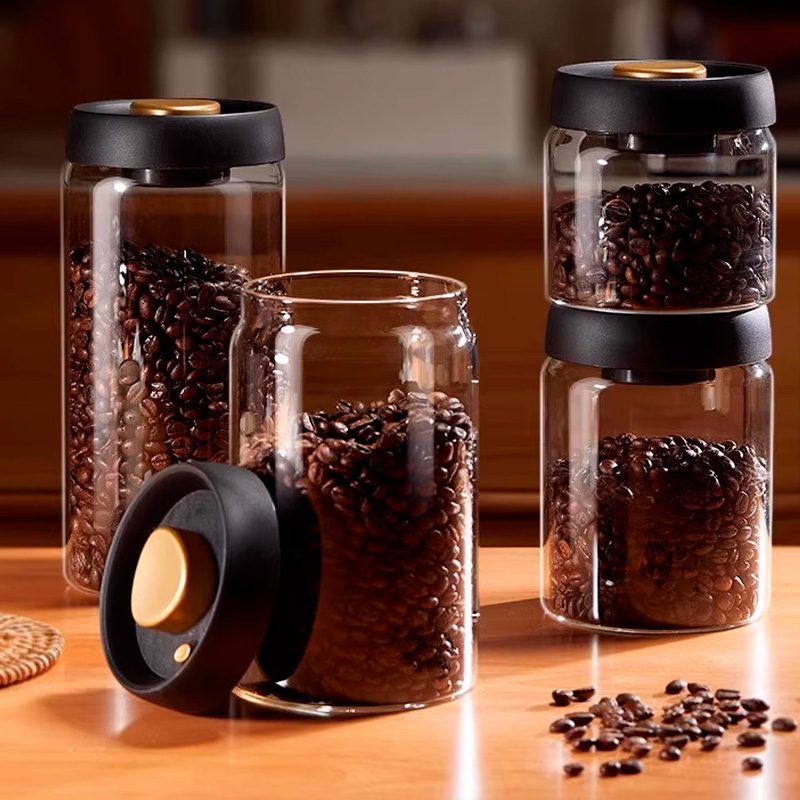
Running out of stock on a best-selling kitchen organizer set during Q4 can cost a brand more than a rushed reorder. A supplier with documented production capacity and multiple backup lines ensures your holiday orders ship on time. We ship to North America, South America, Europe, and Oceania, and we coordinate mixed-container shipments so that one purchase order can include jars, matching botella de agua de cristals, and coordinated storage sets without splitting logistics. If you are currently evaluating a category expansion into premium glass kitchen storage, send your target jar dimensions and lid preference to [email protected]. We will confirm material grade, sample lead time, and volume pricing within one business day.
What Buyers Ask About Ordering Glass Spice Jars
Borosilicate glass jars cost more than soda-lime jars. Is the margin difference justified? For a product sold at a premium price point, the higher raw material cost of borosilicate is offset by fewer returns and higher repurchase rates. I’ve seen retailers recover the difference within the first reorder cycle because customers trust the jar to last. A soda-lime jar that cracks in transit or after the first wash generates a refund and a lost customer. The unit cost difference is typically under 15%, and the brand protection it provides is worth multiples of that.
How do I verify a Chinese factory’s certifications before visiting in person? Request digital copies of the certificates with the issuing body’s logo and certificate number. Then verify those numbers on the issuing body’s public database. For FDA, the manufacturer must be registered and list the product category; LFGB and CE require migration testing reports with batch numbers that match the jars you receive. A factory that hesitates to share certificate numbers before an order is a red flag. We provide all certifications as part of the quotation package.
What is the smallest quantity I can order for a custom spice jar shape? Our minimum order for custom molds is 1 piece because we want you to test the sample before committing to production quantities. For mass production, the MOQ depends on jar complexity and lid type but typically starts at a level that works for boutique retailers launching a private label line. We adjust quantities based on your market entry plan, and you can combine multiple SKUs into one shipment to reach the volume threshold.
How long does it take from finalizing a design to receiving a commercial shipment? A pre-production sample ships within 7 days of design approval. Once the sample is confirmed, full production lead time is 30 to 45 days depending on order complexity and our current production schedule. Sea freight adds transit time on top, so planning 90 days from design freeze to your warehouse is a safe benchmark. If you have a specific launch date, share it early and we will build the production slot to match. Send your timeline and we will confirm availability at [email protected].
Si le interesa, consulte estos artículos relacionados:
Cómo adquirir las botellas de agua más populares del mercado
elegir una fábrica china de vidrio
por qué el vidrio es un producto estrella esencial para sus estanterías