
 Spanish
  English
  Arabic
  German
 La adquisición de vasos de cristal de 800 ml con pajita para tu negocio minorista o de restauración no se limita a elegir una forma y una tapa. La calidad del cristal, la uniformidad en la producción y la fiabilidad de la fábrica determinan si tus clientes reciben un producto duradero y seguro o si te enfrentas a una avalancha de devoluciones. Durante más de diez años gestionando la producción de vidrio de borosilicato, he sido testigo de cómo pequeños atajos en la fabricación provocan fallos por choque térmico, una transparencia irregular y quejas que tu equipo de atención al cliente tiene que gestionar. Esta guía se centra en lo que la mayoría de las fichas técnicas no mencionan: los indicadores de fabricación que distinguen a los proveedores fiables de vasos de cristal con pajita al por mayor del resto.
¿Qué debes tener en cuenta a la hora de elegir un vaso de cristal de 800 ml con pajita?
El material no es negociable. El vidrio de alto contenido en borosilicato (3.3) soporta cambios térmicos de -20 °C a 300 °C sin agrietarse, lo que significa que tus compradores pueden servir café frío un día y café recién hecho al siguiente. El vidrio sodocálcico es más barato, pero no resiste los cambios de temperatura —un problema de calidad inherente que se pone de manifiesto cuando los usuarios finales enjuagan una taza caliente con agua fría—. Por motivos de seguridad alimentaria, todos los componentes que entran en contacto con el líquido deben estar libres de BPA y contar con la certificación correspondiente. Analizamos cada lote según las normas de la FDA y la LFGB, ya que un solo incumplimiento puede retener todo un envío en la aduana.
| Característica | Vidrio de borosilicato (3.3) | Vaso de sosa y lima |
|---|---|---|
| Resistencia al choque térmico | Alta (-20°C a 300°C) | Bajo (propenso a agrietarse ante cambios bruscos de temperatura) |
| Claridad | De una transparencia cristalina, no se empaña con el paso del tiempo | Inicialmente transparente, puede volverse opaco con el uso repetido del lavavajillas |
| Resistencia química | Alta (resistente a las manchas y a la retención de olores) | Moderado |
| Coste | Aumento del coste de los materiales | Menor coste de los materiales |
| Uso habitual | Vajilla de alta gama, material de laboratorio, bebidas frías y calientes | Cristalería económica, aplicaciones de temperatura única |
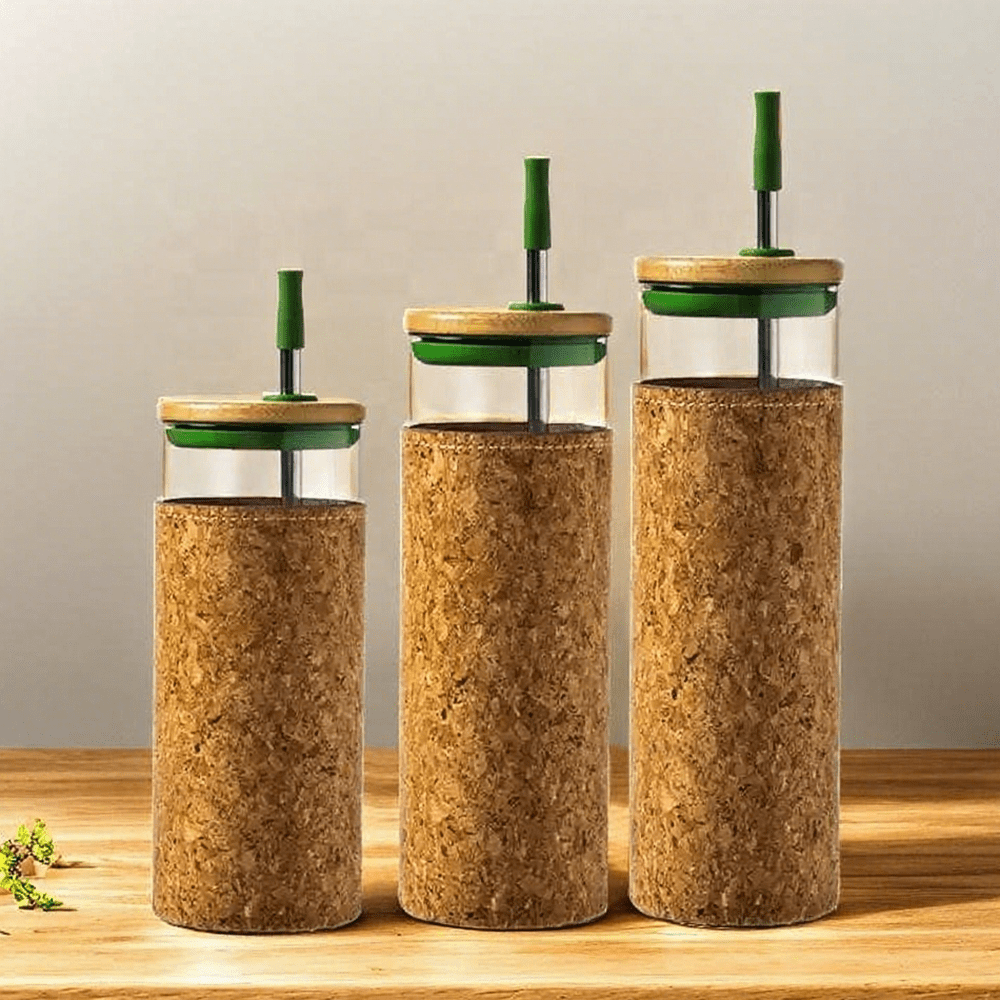
El conjunto formado por la pajita y la tapa es igualmente importante. Las pajitas de silicona evitan el inconveniente del sabor a plástico y son más resistentes que las de polipropileno. Nuestra fábrica combina vasos de cristal con una tapa de acero inoxidable 304 y una junta de silicona que garantiza un cierre hermético, lo que elimina las quejas de los clientes derivadas de las tapas con sellado de baja calidad.
Si gestionas varias líneas de productos con diferentes requisitos en cuanto a materiales, confirmar desde el principio la composición adecuada del vidrio evita costosas reformulaciones más adelante. Envía tu ficha técnica y las certificaciones necesarias a [email protected] y te recomendaremos un tipo de vidrio adecuado para tu entorno comercial.
¿Cómo se puede evaluar la calidad de la fabricación sin visitar la fábrica?
Las muestras de producto solo cuentan una parte de la historia, pero la verdadera diferencia de calidad se aprecia en la planta de producción. Siempre recomiendo preguntar a los proveedores sobre el recocido, es decir, la etapa de enfriamiento controlado que elimina la tensión interna del vidrio moldeado. Si se omite o se realiza de forma apresurada, el recocido da lugar a vasos que pueden romperse en las estanterías de las tiendas, no por un golpe, sino por la tensión residual. Tu proveedor debería describir el perfil de su horno de recocido, y no limitarse a decir “recocemos”.”
La documentación de certificación solo tiene validez si es verificable. Contamos con 120 certificaciones de ensayo vigentes, entre las que se incluyen la FDA, la LFGB y la CE, todas ellas expedidas por laboratorios acreditados y trazables. Antes de firmar un contrato, solicita el último informe de auditoría, no solo el número de certificado. Una fábrica que produce 200 000 piezas al día con 100 máquinas automatizadas, como la nuestra, genera una producción constante, ya que la integración de los equipos elimina los cuellos de botella que obligan a recurrir a atajos manuales. Las líneas menos automatizadas suelen acortar el ciclo de recocido u omitir los controles dimensionales para poder mantener el ritmo.
Nuestras instalaciones cuentan con 45 patentes de diseño y 32 derechos de propiedad intelectual, no porque seamos una empresa de diseño, sino porque el propio proceso de moldeo implica mejoras exclusivas en el control del grosor de las paredes y la uniformidad de los bordes. Ese nivel de dominio del proceso dice más sobre la consistencia de lo que jamás podría decir una simple foto de muestra.
¿Qué opciones de personalización hay disponibles para los vasos de cristal al por mayor?
Los vasos de cristal al por mayor con pajita pueden transmitir la identidad de tu marca mucho más allá de un simple logotipo. Color: el cuerpo de borosilicato se puede teñir para que coincida con la paleta de colores de la marca sin afectar a su resistencia al calor. Superficie: el acabado esmerilado aporta un tacto suave y de alta calidad, al tiempo que permite ver el contenido. Modificación del molde: para pedidos por lotes que superen un determinado volumen, creamos perfiles personalizados —boca más ancha, silueta cónica, textura acanalada— sin tener que empezar desde cero.
La técnica de aplicación del logotipo es fundamental para el atractivo comercial. La serigrafía ofrece colores vivos y opacos, ideales para una imagen de marca de alto contraste. El grabado láser crea una marca sutil y permanente en la superficie del cristal sin necesidad de tinta, muy popular para los lotes de regalo corporativos. La aplicación de calcomanías permite diseños multicolores y degradados, pero la calcomanía debe ser apta para uso alimentario y resistente al lavavajillas. Sometemos los vasos decorados a más de 50 ciclos de lavavajillas para comprobar la adherencia antes de su envío.
El embalaje completa la experiencia de marca. Las opciones incluyen cajas de regalo con la marca, fundas listas para la venta al por menor con códigos de barras e insertos interiores de espuma que protegen la pajita y la tapa de posibles daños durante el transporte. Si vendes a través de Amazon, hemos diseñado un embalaje resistente a los golpes que cumple con sus requisitos de pruebas de caída: un paso adicional de ingeniería que la mayoría de los proveedores extranjeros se saltan hasta que llega un envío con productos rotos.
Si tu marca necesita un perfil de cristal a medida que aún no existe, envíanos tu boceto y el precio de venta al público previsto. Realizaremos un análisis de viabilidad y te facilitaremos una estimación del coste del molde en un plazo de dos días laborables. Ponte en contacto con nosotros en [email protected] o llámanos al número que aparece en nuestra página web.
¿Cómo se evalúa a un proveedor de vasos de cristal antes de realizar un pedido?
Empieza por las certificaciones de fábrica, no por las impresiones de las ferias comerciales. El registro en la FDA y el cumplimiento de la normativa LFGB son requisitos mínimos para el vidrio en contacto con alimentos en los mercados de EE. UU. y la UE. Se deben solicitar informes de ensayo de SGS sobre la lixiviación de metales pesados (plomo y cadmio) para cada nueva composición de vidrio. Un proveedor que no pueda presentar un informe de ensayo de lote reciente en un plazo de 24 horas no merece la pena.
La envergadura de nuestra planta es sinónimo de fiabilidad. Con 40 000 metros cuadrados de superficie de producción y una plantilla de 200 empleados, hemos fabricado productos para mercados de América del Norte, América del Sur, Europa y Oceanía. Esa dispersión geográfica nos obliga a cumplir con múltiples normas al mismo tiempo, lo que supone una auténtica prueba de resistencia para los sistemas de calidad.
La flexibilidad en cuanto a la cantidad mínima de pedido (MOQ) distingue a las fábricas orientadas a la producción de las empresas comerciales. Nuestro pedido mínimo es de una sola pieza para muestras, y las cantidades mínimas de producción varían en función de la complejidad, no de normas arbitrarias. A la hora de evaluar presupuestos, busca fábricas que diferencien la amortización del molde del precio por unidad: las estructuras de costes transparentes son más difíciles de manipular.
¿Cuál es el proceso habitual para realizar un pedido de vasos de cristal al por mayor?
Hemos estructurado nuestro flujo de trabajo en función del calendario de compras al que se enfrentan la mayoría de los importadores.
Primero se realiza la aprobación de la muestra. Facilítanos tus especificaciones de diseño y elaboraremos una muestra de preproducción en unas dos semanas, dependiendo de si es necesario utilizar utillaje nuevo. Prueba esa muestra: sométela a ciclos térmicos, comprueba que la pajita encaja bien, mide el peso y el grosor de la pared. Si algo no cumple los requisitos, ajustamos las especificaciones antes de cortar el molde de producción.
Una vez aprobada la muestra, un depósito 30% da lugar a la fabricación del molde y a la adquisición de los materiales. El plazo de producción oscila entre 25 y 35 días para los moldes estándar; los moldes a medida añaden entre 10 y 15 días al plazo. Durante la producción, realizamos controles dimensionales en línea y pruebas aleatorias de tensión por recocido.
La inspección previa al envío es el último control del comprador. Animamos a los clientes a que envíen a su propio inspector o utilicen un servicio externo; facilitamos el acceso al laboratorio y nos encargamos de la coordinación sin coste adicional. Una vez aprobada, el transporte marítimo a la mayoría de los puertos de EE. UU. y Europa tarda entre 14 y 28 días. Los certificados de conformidad, las listas de embalaje y los documentos del seguro se entregan el mismo día en que se carga el contenedor.
Si tu pedido incluye productos mixtos —por ejemplo, vasos de cristal y tarros de borosilicato a juego—, los agrupamos en un único envío para simplificar la logística. El proceso es el mismo, y el ahorro en los gastos de transporte suele compensar con creces cualquier recargo por unidad.
Para los compradores que estén planificando sus ventas navideñas, calculen este plazo a partir de la fecha de salida al mercado. Nuestra capacidad de producción de 200 000 unidades diarias garantiza que podamos ampliar la producción sin comprometer el tiempo de recocido ni la frecuencia de las inspecciones. Envíen su previsión de volumen a granel a [email protected] y elaboraremos un calendario de fabricación que se adapte a su demanda estacional.
Preguntas frecuentes sobre la adquisición de vasos de cristal con pajita
¿Puedo pedir productos diferentes en un mismo envío? Sí. En nuestra fábrica solemos agrupar vasos de cristal, botellas de agua y tarros de conservación en contenedores combinados. Empaquetamos cada línea de productos por separado, pero los cargamos juntos para ahorrar en gastos de transporte y trámites aduaneros. Indica a tu gestor de cuentas qué referencias (SKU) deseas agrupar y prepararemos una única lista de embalaje que cumpla con los requisitos aduaneros.
¿Y si la muestra personalizada no cumple con las expectativas? La muestra de preproducción es un prototipo funcional, no un producto final. Si no se ajusta a tus especificaciones —grosor de pared incorrecto, color erróneo, tapa con fugas—, revisamos el utillaje o el proceso y te enviamos una muestra revisada. Solo después de que apruebes la segunda muestra procedemos a fabricar el molde de producción. Las rondas de muestras múltiples no aumentan el coste del utillaje, solo el de los gastos de envío, que suele ser inferior a us$50 por lote.
¿Cómo puedo comprobar que los productos de vidrio cumplen con las normas de seguridad alimentaria? Solicite el último informe de ensayo por lotes de un laboratorio acreditado según la norma ISO 17025. El informe debe indicar los límites de migración para el plomo, el cadmio y los coliformes totales, junto con el método de ensayo (por ejemplo, la norma EN 1388 para la cerámica, aunque el vidrio sigue principios similares). JM Glass proporciona estos informes para cada lote; sin informe, no hay envío. Si las autoridades reguladoras locales exigen un análisis adicional específico, lo organizamos con nuestros socios de ensayo, corriendo los gastos a su cargo.
¿Merece la pena visitar la fábrica antes de hacer el pedido? No es obligatorio, pero muchos compradores lo consideran útil en el caso de contratos de gran volumen. Una visita te permite inspeccionar los hornos de recocido, observar al equipo de control de calidad en tiempo real y comprobar la eficiencia del flujo de trabajo desde el moldeado hasta el embalaje. Organizamos visitas a la fábrica de forma habitual; solo tienes que ponerte en contacto con tu gestor de cuentas y nos encargaremos de concertar la cita. Si no te es posible desplazarte, te enviamos, previa solicitud, vídeos en directo con un recorrido por tu línea de producción.
¿Cuáles son las condiciones de pago habituales? Para los primeros pedidos, trabajamos con un depósito inicial del 30% y el pago del 70% restante antes de la carga. Una vez que se haya generado un historial de compras, podemos ofrecer condiciones de pago a 30 días netos sobre el importe restante. Todos los pagos se realizan mediante transferencia bancaria o carta de crédito, según lo que prefiera su equipo financiero. Para solicitar un presupuesto formal con sus especificaciones y volumen personalizados, envíe sus requisitos a [email protected]. Le responderemos con una factura proforma en un plazo de 24 horas.
Si le interesa, consulte estos artículos relacionados:
los mejores materiales para las copas vidrio cerámica o acero inoxidable
sabe a sostenibilidad: ¿por qué elegir el vidrio?
innovaciones en vidrio de borosilicato impulsadas por el auge de la sostenibilidad en europa
cómo distinguir el vidrio sódico-cálcico del vidrio borosilicato
Las mejores botellas de agua artísticas personalizadas al por mayor