 Spanish
  English
  Arabic
  German
 Smoothie bars depend on a single detail that most buyers underestimate: cup rim geometry. A wide-mouth vaso de cristal that clears a blender spout without splashing, fits standard splash sticks, and stacks efficiently for high-volume service is not a generic product. Getting the specification right the first time prevents expensive stock that sits unused. At Jianmei Glass, we produce vaso de vidrio borosilicatos for commercial foodservice programs across North America, Europe, and Oceania. Our team has learned through over a decade of production that three specifications determine whether a cup survives a smoothie bar environment: mouth diameter tolerance, thermal shock resistance, and base stability. Everything else adjusts around these.
What Makes a Glass Cup Suitable for a Smoothie Bar
The most common failure we see in smoothie bar programs is a cup that looks right on the spec sheet but cracks inside the first week. The problem usually traces back to thermal shock. Blending generates friction heat that pushes a smoothie to 40–45°C, and the cup may go straight into a sanitizer at 85°C. Standard soda-lime glass cannot handle that delta without stress fractures. Borosilicate glass with a coefficient of thermal expansion below 3.3×10⁻⁶/K eliminates the risk because it tolerates temperature swings from -20°C to over 300°C without structural change. A wide-mouth design adds a secondary benefit: it cuts blending directly into the cup, removing the transfer step that costs bar staff 6–8 seconds per order. When you multiply that by 200 servings daily across three peak hours, it is the difference between a line clearing and customers walking.
Mouth diameter matters more than capacity. We recommend a minimum 75mm inner diameter for smoothie bar cups. This allows a standard immersion blender head to enter and exit without contacting the rim. Narrower diameters force the blender against the glass, causing micro-scratches that weaken the wall over repeated cycles. We have replaced entire shipments of 68mm cups for clients who initially selected the smaller opening because it looked more “drinkable.” The narrower rim cracked at the 900-cycle mark in accelerated testing, while 75mm cups cleared 3,000 cycles without failure. That data came from an in-house fatigue test we ran on a popular 500ml wide-mouth model using a 120-beverage-per-hour duty cycle, simulating a busy franchise location.
Why Borosilicate Glass Outperforms in High-Turnover Environments
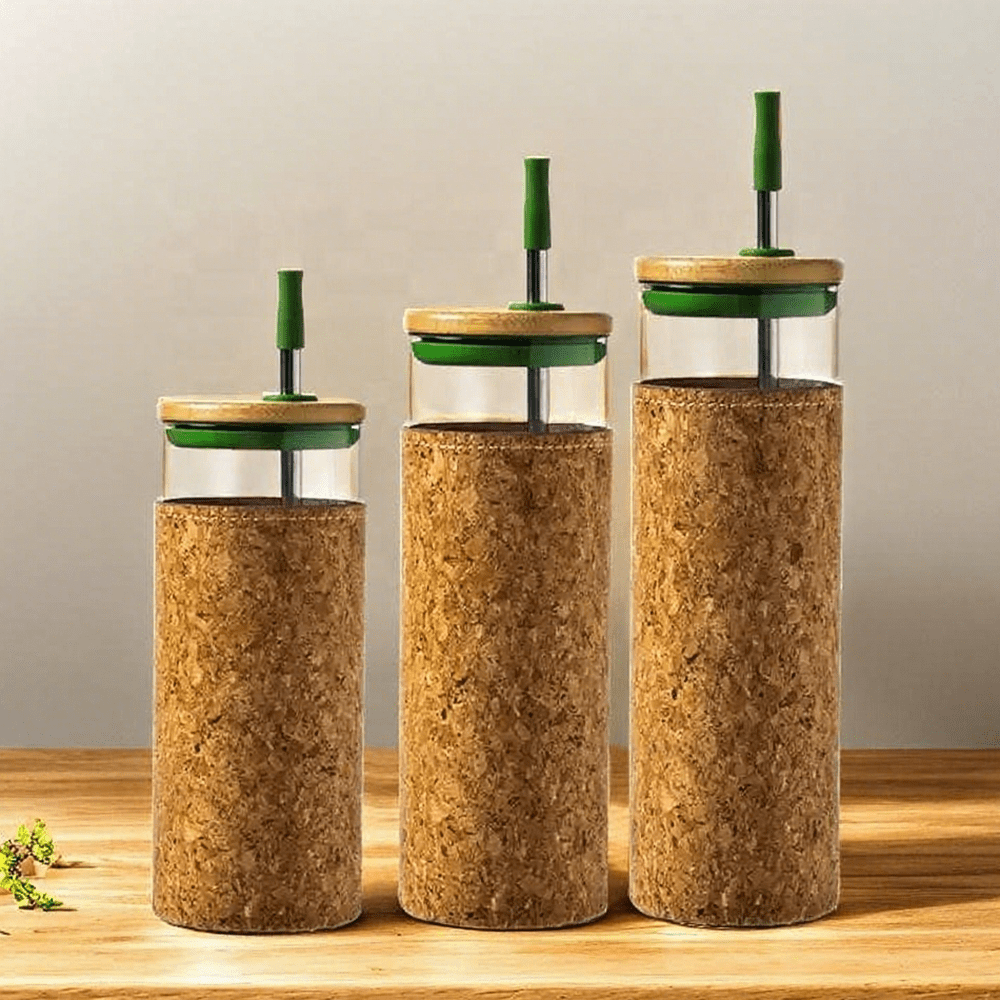
Smoothie bars run on throughput, and glassware that breaks mid-service costs more than its replacement price. Staff stop to clean shards, customers get nervous, and the brand looks careless. Borosilicate glass absorbs impact differently than soda-lime glass because of its boron trioxide content, which distributes stress more evenly across the molecular network. In practical terms, a borosilicate cup dropped onto a rubber bar mat from counter height survives roughly 8 out of 10 impacts. Soda-lime glass manages about 3 out of 10 under identical conditions. That gap closes fast if the cup has a silicone sleeve, which we offer as a factory-fit option for our 500ml and 750ml wide-mouth models. The sleeve also insulates, reducing condensation that makes cups slippery during peak hours.
The material switch also matters for dishwashing throughput. Commercial glass washer cycles expose glassware to rapid heating, alkaline detergents, and mechanical jostling. Borosilicate holds its clarity through approximately 60% more cycles before showing visible clouding compared to soda-lime glass, according to our quality control team’s accelerated wash testing. For a smoothie bar washing 800 cups per day, that translates to replacing a full inventory every 14 months instead of every 9 months. That is a measurable operating cost reduction.
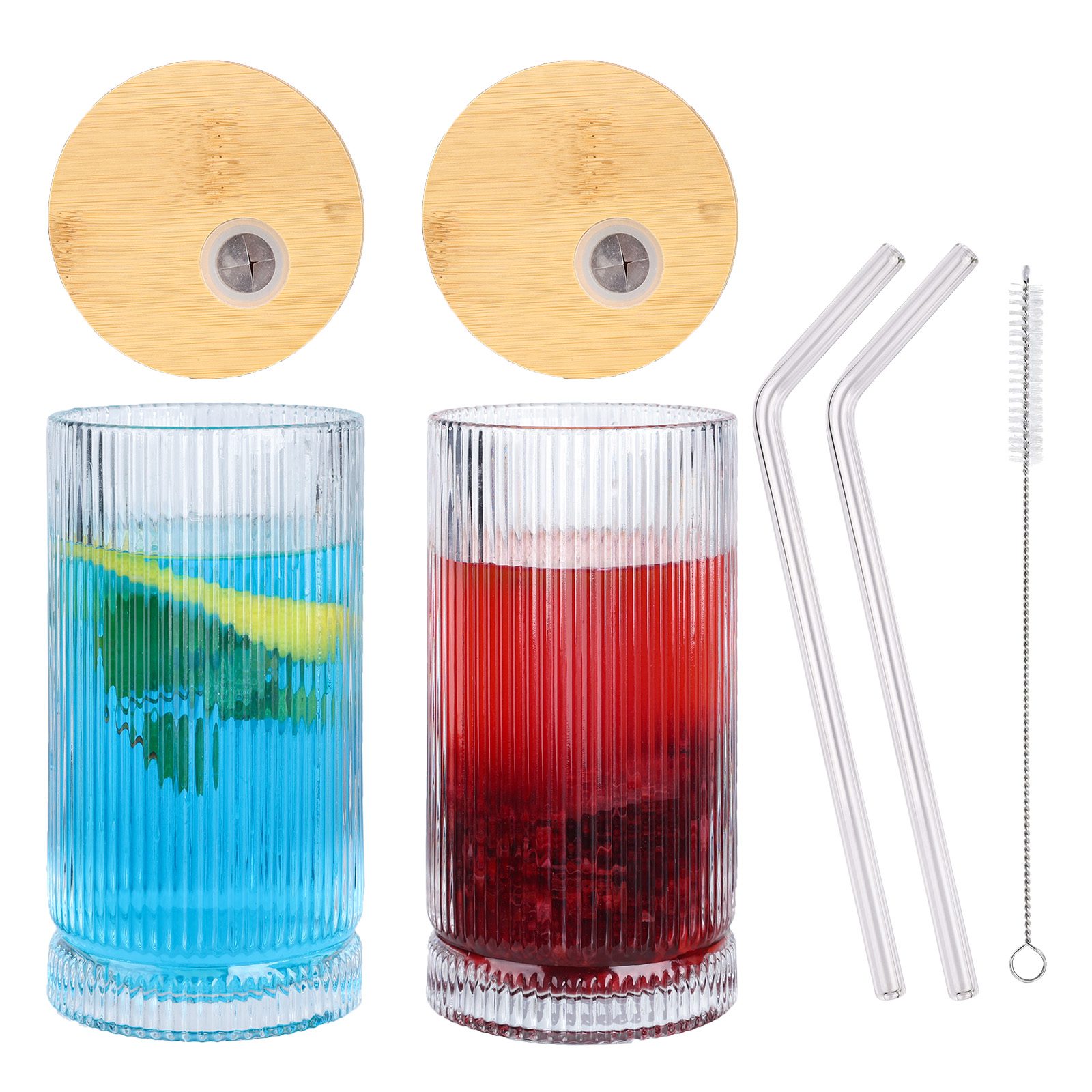
Volume flexibility is another factor we recommend considering early. A smoothie bar may need 375ml cups for kid-size portions, 500ml for standard smoothies, and 750ml cups for meal-replacement bowls. If the manufacturer cannot deliver all three sizes from the same mold series with consistent wall thickness and color, visual mismatches across cup sizes become obvious on the counter. We maintain a family mold system for our wide-mouth borosilicate glass cup line that anchors a shared bottom diameter and rim profile across four capacities: 300ml, 420ml, 500ml, and 750ml. That allows a franchise buyer to order a full cup program in one run, with identical appearance and stacking compatibility.
Our standard capacity range for smoothie bar cups:
| Capacidad | Mouth Diameter | Uso habitual |
|---|---|---|
| 300 ml | 75mm | Kids’ smoothies, tasting flights |
| 420 ml | 75mm | Small smoothies, cold-pressed juices |
| 500 ml | 80mm | Standard smoothie serve |
| 750 ml | 85mm | Meal-replacement bowls, layered bowls |
All dimensions are within ±1mm tolerance, which we verify on every production batch using go/no-go ring gauges. That consistency is what keeps stacking stable and blending seamless across hundreds of stores.
Structuring a Custom Cup Program Without Overcomplicating Production
Most buyers contact us wanting a fully unique shape, but after discussing lead time and mold amortization, they often realize that customizing an existing wide-mouth base mold with their brand elements yields a faster, lower-cost path to market. The customer-facing changes that create brand distinction are logo decoration, lid and sleeve color, and packaging. The safety-critical and mechanical dimensions are better left to a proven production mold because they have already passed thermal shock validation and fatigue cycling.
We offer three decoration methods that cover most smoothie bar branding requirements. Silk-screen printing applies a single-color or multi-color logo onto the glass surface and is suitable for orders of 2,000 pieces and above. Laser engraving produces a frosted, permanent mark without consumables and works well for minimalist brand marks. Decal application enables full-color, photo-quality graphics—more commonly used for seasonal promotions where the same cup base carries different artwork runs. For a smoothie chain planning a Q4 holiday campaign, we typically recommend decal decoration on a 500ml wide-mouth cup because the per-unit cost increase is offset by the ability to order the cup blank in bulk early and apply decals later when artwork is finalized.
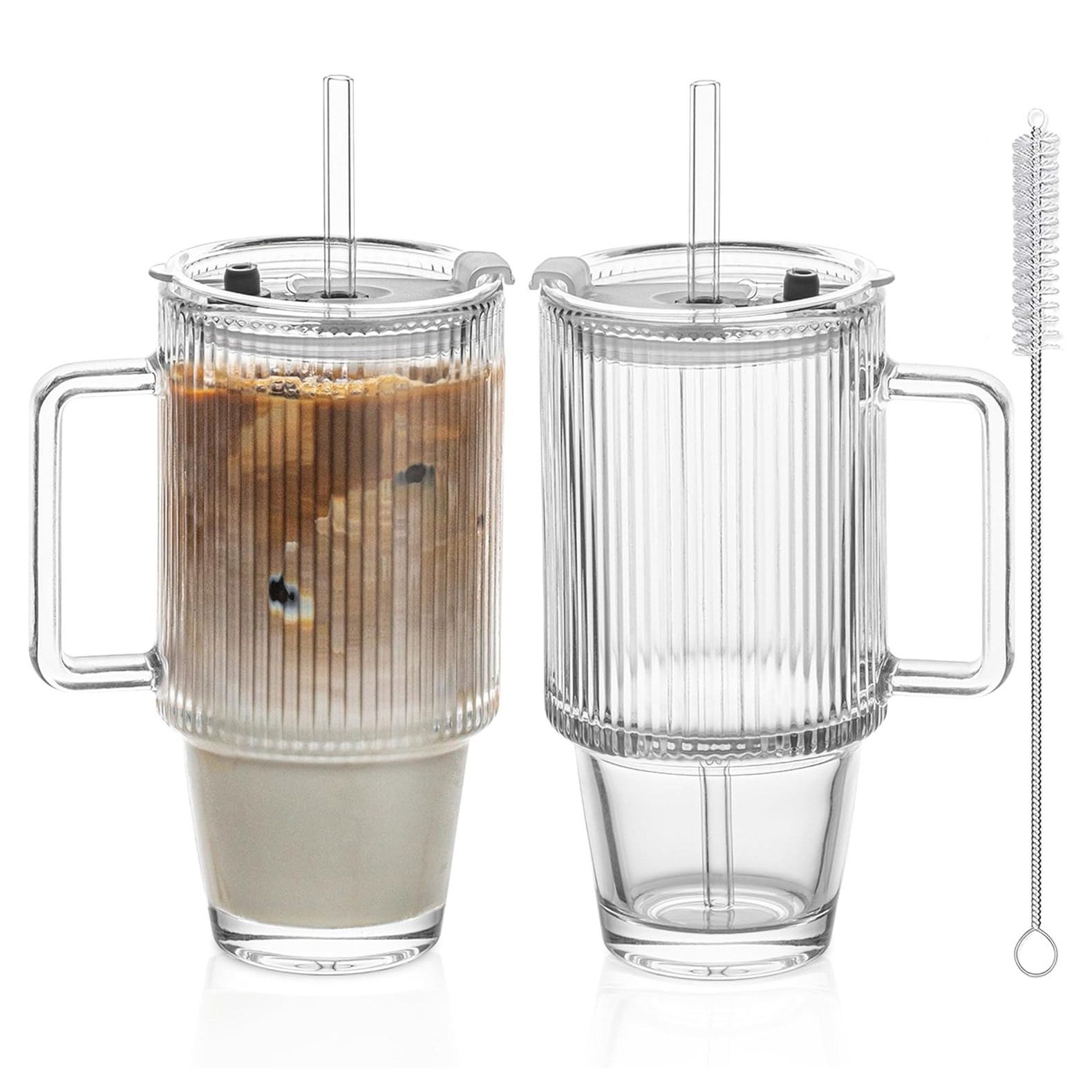
The decision that often surprises first-time importers is lid compatibility. Smoothie bars use flat lids with a straw cross-slit, domed lids for topped drinks, and sometimes press-on seal lids for delivery. Each lid type requires a slightly different rim profile. Confirm your lid supplier’s gasket design before locking the cup rim spec. We stock universal rim tooling compatible with three common lid series used in North American and European smoothie chains, which reduces the risk of a mismatch that forces a remold.
If your smoothie bar program involves multiple drink categories—say a layered açai bowl and a iced latte line—it is worth confirming whether a single wide-mouth cup can serve both. Often a taller 420ml cup with a 75mm mouth works for coffee-based drinks while keeping the same rim profile as the larger smoothie cup, simplifying inventory. Reach out at [email protected] with your menu and we can check rim compatibility against your existing lids.
Certifications That Protect Your Import
Glass cup imports entering the U.S., EU, or Australia must document food-contact safety and mechanical reliability. The three certifications we recommend requesting for every smoothie bar program are FDA compliance for food-contact materials, LFGB for European market access, and a heavy-metal leachate test report (commonly performed to EN 1388 standards). Ask for the test report directly rather than just a certificate. A certificate can be renewed without new testing, but a dated report with batch-level traceability tells you the glass lot you are buying actually passed.
At Jianmei Glass, our wide-mouth borosilicate cups are tested for lead and cadmium migration below 0.01 mg/L, which is well under the EU limit of 0.5 mg/L for food-contact glass. We run this test quarterly on production samples as part of our ISO 9001 quality management system, and we send the full report with every export shipment. We have 120 testing certifications covering FDA, CE, LFGB, and SGS standards, and our factory holds BSCI social compliance audit clearance. That matters if your brand publishes a supplier code of conduct—having a BSCI-audited manufacturer saves you the cost and time of arranging an independent audit.
Thermal shock resistance should be confirmed with a documented test, not just a material claim. We test production samples to a 160°C thermal shock differential: cups are heated to 180°C in a furnace, then immediately immersed in 20°C water. Pass means no cracks or structural deformation across a 100-piece sample. This test is more aggressive than the 100°C differential commonly quoted for consumer-grade borosilicate, and it reflects the real stress of a commercial kitchen where a cup goes from freezer-cold to sanitizer-hot within 20 seconds. I have personally witnessed cups from lower-tier factories fail this test with micro-cracks visible only under polarized light. Those cracks do not cause immediate failure, but they propagate until the cup fails without obvious cause, usually during a busy service period.
Building a Long-Term Supplier Relationship
Smoothie bar chains expand in phases, and the cup supplier must match that rhythm without forcing you to carry excess stock. We structure production runs so that the same mold set can deliver both a 10,000-piece test shipment for a regional pilot and a 200,000-piece monthly reorder for national rollout. The key is mold ownership. When you pay for a custom mold, ensure the factory agreement states you own the mold and can transfer it. That gives you leverage to move production if quality ever drifts, and it prevents the factory from using your mold to produce for a competitor.
We produce 200,000 glass pieces daily across 100 manufacturing lines in a 40,000-square-meter plant, so we schedule custom runs within standard lead times rather than pushing them into overflow periods. That consistency is not just capacity; it is a function of having dedicated annealing furnaces with precise thermal profiling for borosilicate glass. Standard soda-lime anneal at 550°C, but borosilicate requires 560–580°C with a slower cooling ramp to relieve internal stress fully. A furnace tuned to soda-lime will under-anneal borosilicate, producing cups that are permanently tensioned and prone to spontaneous fracture. We run separate annealing lines for borosilicate products, which is an operational investment that smaller factories cannot justify.
When you are evaluating factories, ask how many borosilicate-specific annealing lines they operate and request an annealing curve chart for a recent production batch. The curve should show a peak temperature of at least 565°C held for 20–30 minutes, followed by a cooling rate not exceeding 3°C per minute through the glass transition range. If the factory cannot produce that chart or the cooling rate is steeper, the cups they ship will carry residual stress that may not show for months. That is the sort of quiet defect that damages trust between a brand and its franchisees.
Common Questions from Smoothie Chain Buyers
Is borosilicate glass worth the higher per-unit cost for a smoothie bar?
In short, yes, when you measure cost per serving rather than cost per cup. A borosilicate cup lasts roughly three times longer than soda-lime in a commercial environment, so the effective cost per serving is lower even with a 20–25% higher unit price. We have worked with chains that saw their annual glassware spend drop 40% after switching, simply because breakage and clouding-related replacements fell.
What is the minimum order for a custom wide-mouth glass cup?
For a new mold, we typically require a minimum order of 5,000 pieces per capacity after the mold is approved. However, for buyers testing a new market, we can run a smaller 1,000-piece trial using an existing mold with decoration applied, so you avoid mold amortization until the concept is proven. The mold itself costs between $800 and $2,000 depending on complexity, and that fee is usually refunded against a full production order.
How do I ensure the cup fits my existing blender equipment?
Measure the widest point of your blender’s mixing blade assembly and add 15mm to determine the minimum safe mouth diameter. If your blade measures 60mm across, an 80mm mouth provides enough clearance. Send us your blender model and we will confirm compatibility against our mold database before you commit to a sample. We have already checked popular bar blenders from Vitamix and Blendtec against our 80mm and 85mm cup openings.
Can the factory ship direct to multiple franchise locations?
Yes, we offer split-container shipping to multiple addresses within the same country, with full packing lists and HS codes for each consignee. This is a feature we built specifically for franchise operations because it eliminates a central warehouse step. Lead time extends by 3–5 business days for split shipments, but the logistics savings usually outweigh the delay.
What happens if the sample fails during in-store testing?
We replace the sample set at no cost and work with your operations team to identify whether the issue is cup specification, lid fit, or an unexpected usage pattern. Over the past three years, fewer than 2% of sample sets have required a second round, and in most cases the fix was a lid change rather than a cup redesign. Share your test results at [email protected], and we will get a corrected sample out within 10 business days.
Si le interesa, consulte estos artículos relacionados:
Serie de artículos de cristal de borosilicato de Jianmei
cómo distinguir el vidrio sódico-cálcico del vidrio borosilicato
vidrio borosilicato vsvidrio ordinariovidrio sodocálcico
¿Por qué arriesgarse con el BPA? Apuesta por el vidrio: 100 % seguro, sostenible y elegante.